Oslo clicks into place when you walk it. This 3-hour private tour is a smart way to see the city’s headline sights and get context for what you’ll explore later, all at an easy pace with a guide in English.
I especially like the small private group up to 6, which makes it feel like you’re simply walking with a friend who knows the story behind each building. I also like that major stops are free to enter, including Oslo City Hall and the Opera House area. One possible drawback: it’s mostly outdoors, so you’ll want good shoes and a rain-ready attitude for Oslo’s quick weather swings.
In This Review
- Key things you’ll love about this Discover Oslo on Foot tour
- How this tour helps you get your bearings in 3 hours
- Royal Palace to the Parliament and Cathedral zone: the city’s power-and-culture belt
- Oslo City Hall: Nobel Peace Prize history and the chance at the Blue Room
- The Norwegian National Opera & Ballet: rooftop views with local context
- Bjørvika’s Deichman library: books plus media, cinema, and hangout zones
- Private tour pacing: what up to 6 people really changes
- Price and value: what $397.36 per group buys you
- Practical tips so your walk goes smoothly
- Should you book Discover Oslo on Foot?
- FAQ
- How long is the Discover Oslo on Foot tour?
- Is this tour private or shared?
- Where can you be picked up?
- What language is the tour offered in?
- Are there admission fees at the main stops?
- Can I cancel for a full refund?
Key things you’ll love about this Discover Oslo on Foot tour
- Private group up to 6: you set the pace, and you can ask questions without getting rushed.
- A tight landmark loop: Royal Palace area, Parliament, National Theater, the university zone, and the cathedral area.
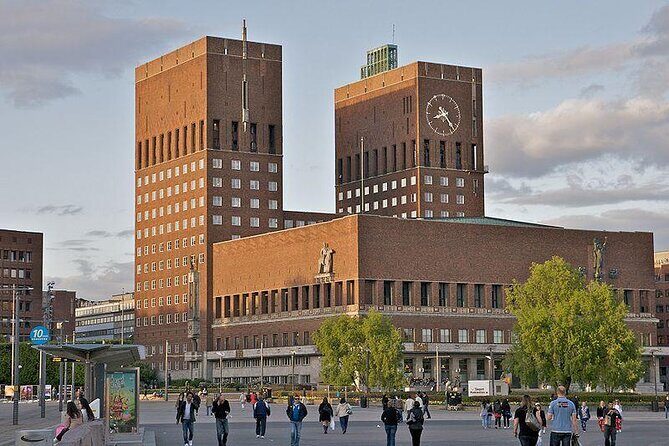
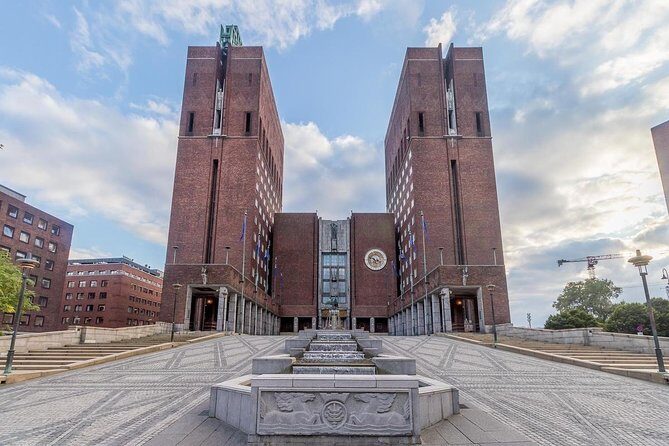
- Oslo City Hall stop with Nobel connections: you’ll see key rooms and hear how the ceremony fits Norway’s identity.
- Opera House rooftop walk: a free way to get big views over the fjord city.
- Bjørvika’s modern Deichman main library: books plus movie, media workshops, gaming zones, lounges, and a restaurant.
- Pickup in central Oslo: meet at a hotel, port, or another agreed spot in the city center.
How this tour helps you get your bearings in 3 hours
Oslo can look orderly at first glance: clean lines, crisp signage, and a city plan that feels designed. The trick is learning what’s where and why it matters. That’s exactly what this walk-style tour does. You move through the political and cultural core, then pivot into the newer waterfront district so you understand both halves of the city.
This is also a practical length. At about 3 hours, you’re not stuck in “tour-burnout” territory. You’ll leave with a mental map of the city’s center, plus a handful of stories you can use when you’re choosing your own museums, neighborhoods, and harbor walks later.
And because it’s private, you’re not watching through a crowd. You can slow down for details, ask quick questions, and adjust the pace based on energy level.
You can also read our reviews of more tours and experiences in Oslo.



Royal Palace to the Parliament and Cathedral zone: the city’s power-and-culture belt
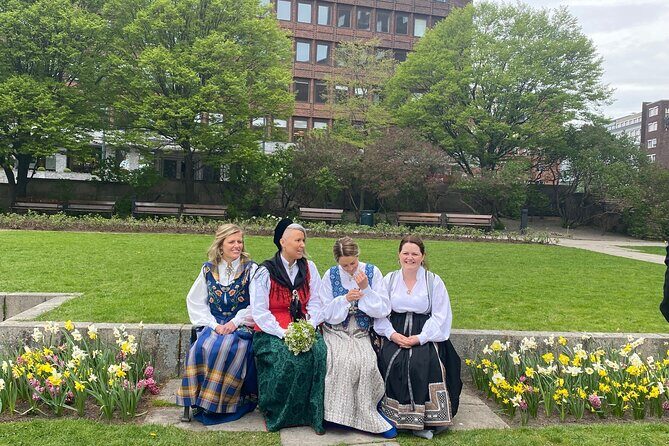
Early on, you’ll walk Oslo’s main street area, passing several of the city’s signature institutions. It’s a short stretch on the ground, but it covers an important idea: Oslo’s center is built around government, education, performance, and religion all close together.
Here’s what you’re seeing as you go:
- Royal Palace area: a strong symbol of Norwegian monarchy and continuity.
- Norwegian Parliament: where the political center of the country shows up in everyday city life.
- National Theater: the arts and public culture aren’t tucked away—they’re part of the city’s main conversation.
- University area: education sits in the same broad loop as government and landmarks.
- Cathedral area: spiritual history and civic identity share the same urban stage.
The value of this section is simple: after this, your future self won’t wander around Oslo like a tourist with no map. You’ll recognize the core buildings quickly, know what each one represents, and feel less lost when you spot them again later from a distance.
If you like history but don’t want a lecture, this pacing is good. You get orientation first, then deeper stops later.
Oslo City Hall: Nobel Peace Prize history and the chance at the Blue Room
Stop one is Oslo City Hall, and it’s not just a pretty building. It’s tied to one of the most internationally recognized events connected to Norway, the Nobel Peace Prize ceremony.
You’ll have about 50 minutes here, with free entry. That time matters, because you’re not rushing through. You can take in the building’s atmosphere, then connect the dots between politics, public values, and national identity.
What to watch for during your visit:
- Art Gallery: It’s part of the City Hall experience, so you’re not only hearing stories—you’re also seeing.
- History of the building: You’ll learn how City Hall fits into Oslo’s civic life, not just as a venue but as a statement about Norway.
- The Blue Room (if you’re lucky): this is known for weddings, and your guide may help you spot it depending on access.
This stop is one of the best “wow, I get it now” parts of the tour. Even if you aren’t a museum person, Nobel-related context and the idea of ceremony space inside a working civic building makes the whole experience feel real.
The Norwegian National Opera & Ballet: rooftop views with local context
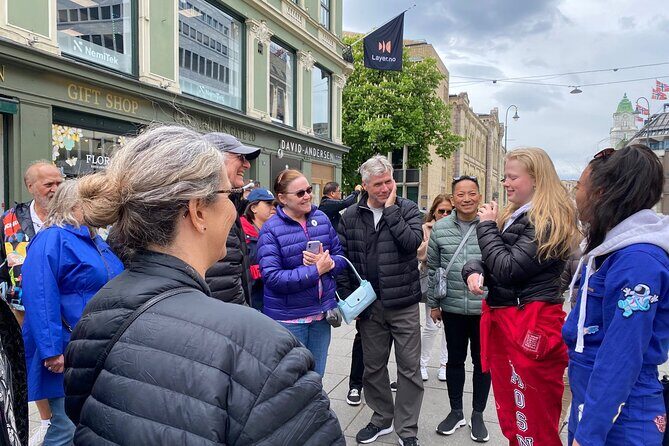
Next you’ll head to the Norwegian National Opera & Ballet. You’ll spend around 40 minutes here, again with free admission.
The highlight is walking up the rooftop. This is one of those Oslo moves that feels both modern and practical: instead of just staring up at a landmark, you’re allowed to walk into the viewpoint yourself.
Why this stop is worth your time:
- Views that actually help you navigate later. From up there, you’ll understand how the city’s waterfront connects to the newer districts.
- Local history and everyday life context. The guide connects what you’re seeing with how Oslo functions now, not just what it looked like decades ago.
- Opera House architecture you can feel. Even without a formal guided show inside, the building’s design language becomes clearer when you’re standing where visitors are meant to stand.
If weather is good, this is the stop where you’ll want your camera ready. If weather is bad, don’t panic. This rooftop segment still offers perspective, but you’ll probably appreciate good footing and a quick pace.
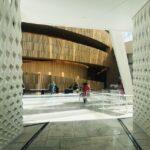
Bjørvika’s Deichman library: books plus media, cinema, and hangout zones
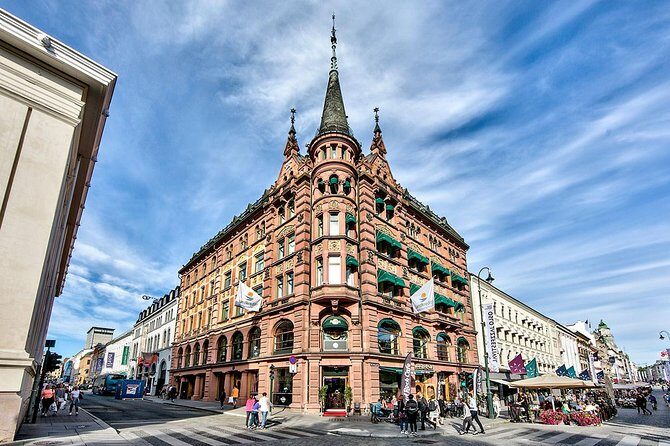
The final main stop in the loop is Oslo’s newer main library area in Bjørvika, close to the iconic Opera House. This is a different kind of landmark, and that contrast is why it works so well after City Hall and the Opera.
This library isn’t presented as a quiet building where you whisper and leave. It’s described as modern and dynamic, with:
- Deichman’s extensive book collections
- a movie theatre
- media workshops
- gaming zones
- lounges
- a restaurant
You can think of it as a cultural hub that matches how younger city life actually feels. The guide’s approach here is likely to help you see why this matters for Norway’s ideas about education and public space—learning isn’t limited to classrooms or museums.
In practical terms, it’s also a smart way to break up the walking rhythm. You get a chance to slow down, refuel, and reset your brain before continuing your independent exploration.



Private tour pacing: what up to 6 people really changes

This is a private tour, meaning it’s just your group—no mixing schedules with strangers. The group size limit of up to 6 sounds like a small detail, but it changes the whole experience.
With a compact group:
- You’re less likely to feel rushed at photo spots.
- You can ask follow-up questions without the guide having to keep a strict line moving.
- The route can be adjusted to match your interests. People often want more history, more architecture, or more “what should we do next,” and this format supports that.
One common theme from the guide style is asking what you want before moving on. If you’re the type who likes to steer, you’ll probably appreciate that.
Also, pickup is handled in a flexible way. Your meetup can be arranged at a hotel, port, or anywhere in central Oslo, so you’re not spending the first part of the tour trying to locate a generic meeting point.
Price and value: what $397.36 per group buys you
The tour costs $397.36 per group (up to 6) for about 3 hours. That price can feel steep if you assume a per-person cost. But in a small-group private setup, the math shifts quickly.
Here’s the practical way to think about it:
- If you have 6 people, it’s roughly $66 per person.
- If you have 3 people, it’s roughly $132 per person.
At that range, you’re paying for three things you can’t easily replicate on your own:
1) A guided walk through the city’s political-and-cultural core, with context you can’t easily piece together from signage.
2) Access to time-efficient stops that cover a lot of ground in a short window.
3) The flexibility of a private format—meaning you can ask questions as you go.
For solo travelers or couples, it’s a bigger spend. But if you’re trying to make the most of a limited time window in Oslo, it can still be a solid “time saver” investment—especially compared to piecing together multiple self-guided tours with research between each one.
Practical tips so your walk goes smoothly

A few things to plan for make this tour easier.
Wear shoes you trust. You’ll be walking between major central sights and spending time at buildings where you’ll move around indoors and outdoors. Oslo can be slippery when it’s wet.
Bring a light layer. Even when the temperature is fine, the wind off the waterfront can change how your body feels, especially near the Opera area and Bjørvika.
Use the tour to plan your next steps. After this kind of orientation loop, you’ll be in a better position to choose where to spend extra time—museums, neighborhood walks, harbor viewpoints, or other civic sites.
Should you book Discover Oslo on Foot?
Book it if you want a clear, guided orientation of central Oslo with real context, and you like walking at a comfortable pace. It’s a strong choice if your time is short, your group is up to 6, or you want to understand the city’s mix of old institutions and newer waterfront culture.
Skip it (or consider a different format) if you hate walking in cool or wet weather, or if you prefer to explore everything entirely on your own with no structured route. Since this is designed as a 3-hour walk, it assumes you’re comfortable covering ground.
If you’re deciding between spending hours researching sights and transit routes versus getting a guided loop that sets you up for the rest of your trip, this one is built for that second option.
FAQ
How long is the Discover Oslo on Foot tour?
It runs for about 3 hours.
Is this tour private or shared?
It’s private, so only your group participates, with a maximum group size of up to 6.
Where can you be picked up?
Pickup is agreed with you in advance and can be arranged at a hotel, port, or anywhere in central Oslo.
What language is the tour offered in?
The tour is offered in English.
Are there admission fees at the main stops?
Oslo City Hall has free admission, and the Norwegian National Opera & Ballet rooftop visit is also listed as free. The library stop doesn’t specify admission details.
Can I cancel for a full refund?
Yes. You can cancel up to 24 hours in advance for a full refund. If you cancel less than 24 hours before the start time, the amount paid is not refunded.