REVIEW · TROMSO
Cross-Country Ski Lesson for Beginners in Tromso
Book on Viator →Operated by Tromso Outdoor AS · Bookable on Viator
Skiing in Tromsø feels surprisingly doable. This 3-hour beginner lesson turns winter panic into smooth, controlled motion, with small groups and patient coaching.
What I like most is the focus on real fundamentals, not just standing on skis. You’ll cover how bindings work, how to fall safely, and how to get back up fast.
One possible drawback: winter clothes and any extra protective gear aren’t included. You’ll need warm, windproof layers, and you should ask questions if you’re hoping for helmets or other add-ons.
In This Review
- Key highlights worth planning for
- Where You Start In Tromsø (And How Close It Really Feels)
- The 3-Hour Plan: What You Actually Learn on Skis
- First, you learn the stuff most people skip
- Then you move: walking, running, and gliding
- Flat Trails Now, Small Hills Only When You’re Ready
- The Instructor Factor: Why Clear Coaching Changes Everything
- Gear and Transport: Included, But Not Everything You Need
- Clothing, Sun, and Weather Reality in Northern Norway
- The sun can be strong even in winter
- Snow conditions can change
- The Break: Hot Drink and Lefse After You Work
- Who Should Book This Lesson (And Who Might Want a Different Option)
- Price and Value: Is $134.97 Reasonable?
- Small Safety Reality: No Extra Protective Gear Is Provided
- Tips That Will Make Your Lesson Easier
- Should You Book This Tromsø Beginner Cross-Country Ski Lesson?
Key highlights worth planning for
- Small group size (max 8): more time with the instructor when your balance gets wobbly
- Beginner-first teaching: bindings, falling the right way, and how to get up
- Progression that makes sense: flat trails first, small hills only if you’re ready
- Included equipment and transport: skis, boots, poles, plus a ride to and from the city centre
- Warm drink and lefse: a proper pause after working hard in the cold
Where You Start In Tromsø (And How Close It Really Feels)
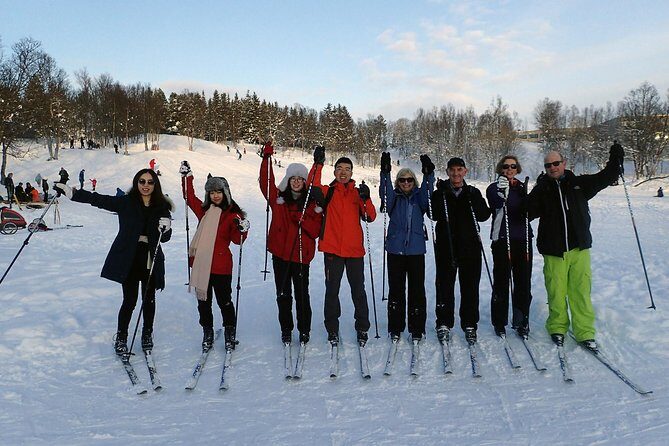
Your lesson begins at Fredrik Langes gate 14, 9008 Tromsø. The meeting point is close to public transportation, which matters in Tromsø because weather and daylight can make “winging it” harder than you’d expect.
From there, you’re picked up for transport to the ski area and brought back afterward. In practice, it feels like a short hop from the city to a beginner-friendly track—close enough that you don’t lose half the day to getting there, but far enough that the trails actually look like winter Norway.
If you’re arriving from a hotel, note that hotel pick-up/drop-off isn’t included. That sounds minor, but it’s the kind of detail that affects how smooth your day feels. If you want a simple day, plan to meet at the start location and let the operator handle the rest.
A few more Tromso tours and experiences worth a look

The 3-Hour Plan: What You Actually Learn on Skis
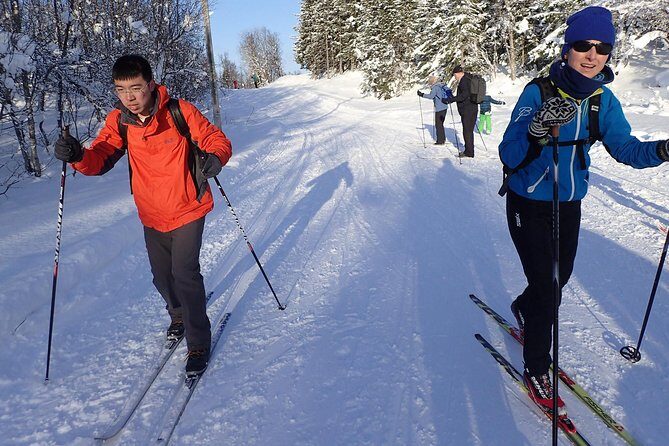
This is a cross-country ski lesson for beginners, built to get you moving without turning your day into a long lecture. The pacing is the big value here: you learn a skill, then you practice it immediately.
Here’s how the lesson generally flows:
First, you learn the stuff most people skip
Before anyone tries to glide, your instructor walks you through essentials like using ski bindings. That matters more than it sounds. Getting comfortable with how the system works helps you feel safer and more in control before you start traveling anywhere.
You also learn how to fall the “right way.” Instead of treating falling as failure, the lesson frames it as part of learning—then gives you a method to reduce chaos and avoid unnecessary injury. You’ll also practice how to get back up on your own, which is one of those skills that boosts confidence fast.
Then you move: walking, running, and gliding
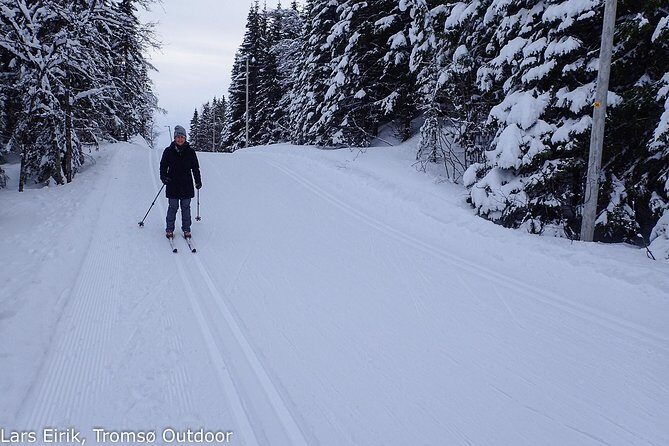
Once you’re set with the basics, you practice on prepared flat trails. Expect drills that start with simple movement patterns and then progress toward gliding. If you’ve ever tried to learn Nordic skiing before, you know the hardest part is coordinating everything at once. This lesson breaks the coordination down, step-by-step.
And yes, you’ll likely fall. But you’ll fall while you’re practicing a skill, not while you’re still guessing what to do.
Flat Trails Now, Small Hills Only When You’re Ready
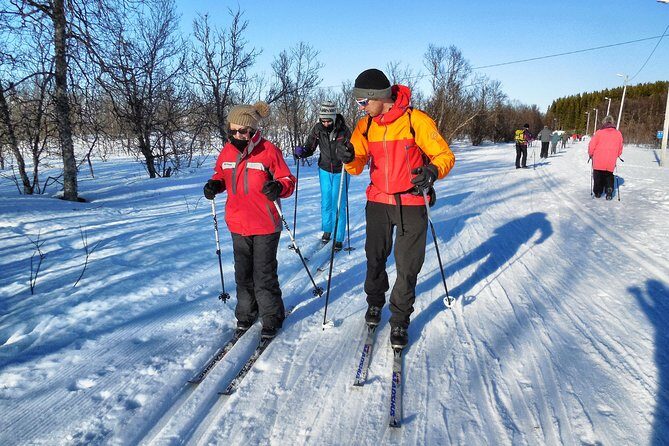
The route and difficulty are designed for beginners, with a smart progression. You start on flat terrain so you can build balance and rhythm.
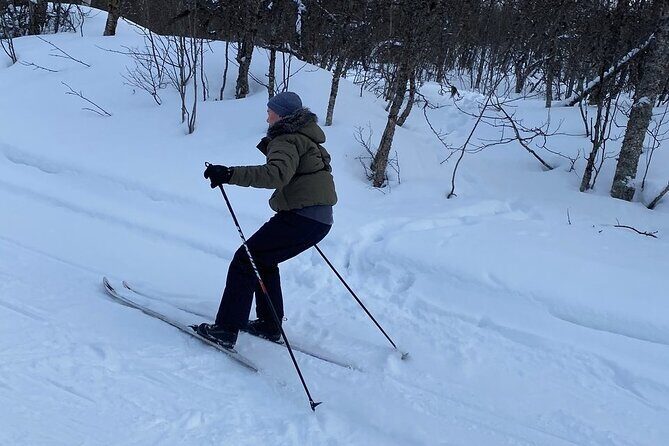
As you get more confident, the lesson offers a chance to try small hills. This is a key part of the experience because hills are where cross-country skiing can start to feel scary—unless you’re taught the technique.
On the small hills, you’ll learn how to walk up and then slide down safely. The “safe” part is important: the goal isn’t speed, it’s control. If you’re feeling unsure, you can keep practicing on the track instead of forcing a challenge that doesn’t fit your comfort level that day.
A few more Tromso tours and experiences worth a look


The Instructor Factor: Why Clear Coaching Changes Everything
A huge chunk of why this lesson earns a near-perfect score is the teaching style. Multiple instructors are referenced in past participants’ experiences—names like Thomas, Joana, Marta, Leia, Cris, Heli, Lukas, Lucas, Mariam, Chris, and Tomi come up repeatedly. Even if you don’t get one specific person, the pattern is consistent: patient instruction, clear feedback, and encouragement when you’re clearly not in control yet.
What stands out is how the instructors handle the most common beginner problems:
- balancing issues that lead to repeated tumbles
- confusion about how to position yourself for gliding
- fear around hills (solved by teaching you a technique, not by daring you to try)
If you’re learning your first Nordic ski skillset, you’ll appreciate the fact that the lesson isn’t rushed. People also note that you can go at different speeds in the group, which is exactly what you want in a skill class.
Gear and Transport: Included, But Not Everything You Need
Included in the price:
- ski instructor
- transport to and from Tromsø city centre
- cross-country skis, ski boots, and ski poles
- a hot drink and lefse (a local sweet snack)
This is where the value starts to make sense. In Scandinavia, renting complete ski gear can add up quickly, and you also save time by not having to coordinate rentals yourself.
Not included:
- winter clothes (you can rent separately at Tromsø Outdoor Rental Center if arranged in advance)
- hotel pick-up/drop-off
Here’s the practical part: most first-timers underestimate how cold wind can get on skis, and how much effort you’ll generate once you start moving. People repeatedly mention that you’ll get warm because skiing is physically demanding—so the goal is layering that you can manage without freezing.
Also, you’ll want gloves and a hat that stay put. In cold weather, small items like a hat flying off can become a whole distraction mid-lesson. (One participant even joked about retrieving their hat with help from the instructor.)
Clothing, Sun, and Weather Reality in Northern Norway
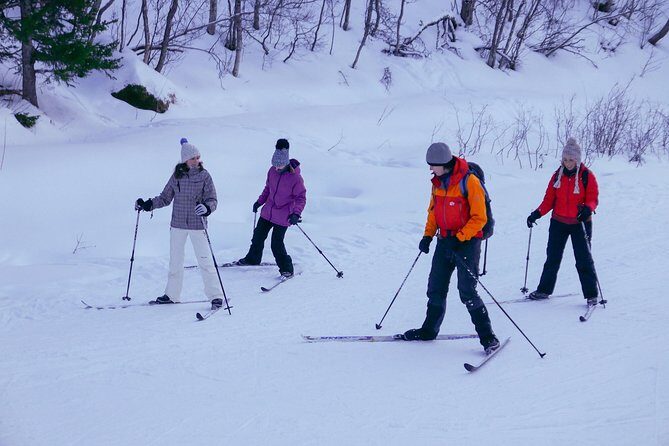
You’re expected to wear warm and windproof clothing. That’s not a suggestion—it’s part of what keeps the lesson comfortable and safe in Tromsø. Wind and rapidly changing weather are normal here, so come prepared for cold conditions even if the day looks calm when you leave your room.
Two extra notes that matter in Tromsø:
The sun can be strong even in winter
From mid-February onward, the sun can feel surprisingly intense because of reflection off snow. Bring sunglasses and sun cream. It sounds like a “nice to have” until you realize your face can burn faster than you expect while you’re outside.
Snow conditions can change
The lesson is weather-dependent. If there’s no snow in the area, you’ll get an alternative activity or a full refund. And on some days when conditions are tricky—like rain followed by cold—tracks may be icy or firm rather than fluffy. In those cases, the lesson can still go ahead, but the learning curve might feel harder because skis don’t glide the same way.
The Break: Hot Drink and Lefse After You Work
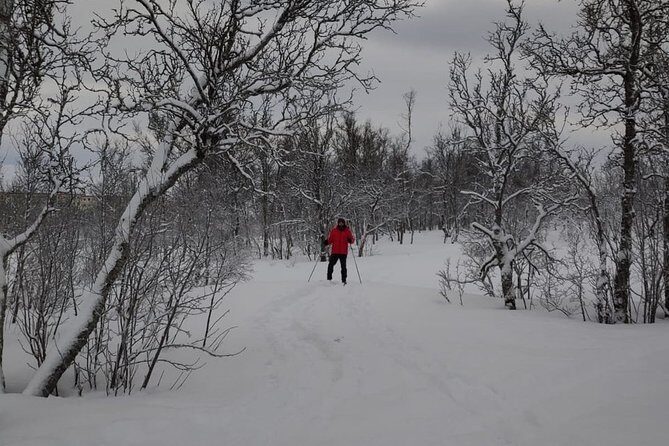
Most of the lesson is active, and cross-country skiing can be more tiring than people assume. That’s why the included hot drink and lefse is more than just a snack.
It’s a reset:
- You warm up your hands and face
- You catch your breath before the more challenging parts
- You get a little cultural comfort food at the end of a skill session
Past participants mention a stop for solbærtee (blackcurrant tea). If you’re the type who needs a reason to keep pushing through awkward first attempts, the warm drink at the right moment is a real morale boost.
Who Should Book This Lesson (And Who Might Want a Different Option)
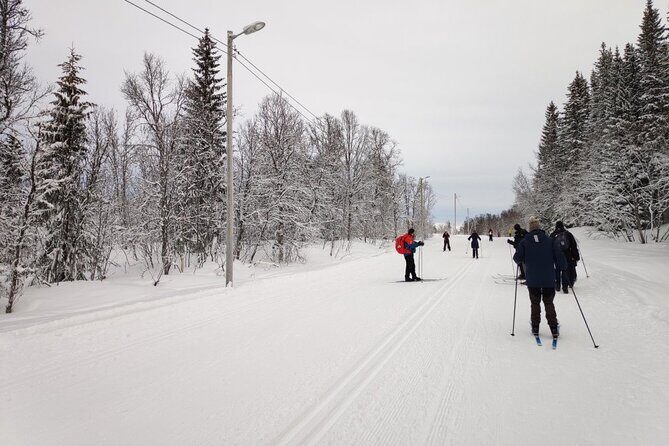
This lesson is built for beginners and works especially well if you:
- have never worn cross-country skis
- want to learn technique step-by-step instead of guessing
- prefer a small group with hands-on guidance
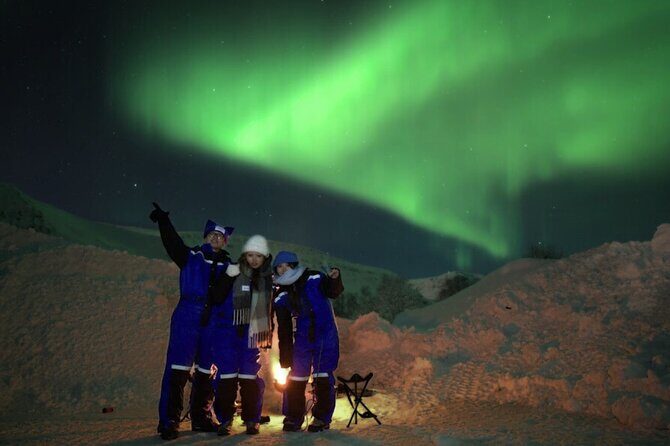
- want a daytime activity that’s fun even if your main goal is something like the northern lights
The best match is a first Nordic-ski try where you care about safety basics, basic movement, and building confidence. People also mention that it can work for a range of ages, including teens, because the instruction is adaptable and paced.
A consideration before you book: since this is a practical learning session, you should expect physical effort and a few tumbles. If you’re injury-prone, have balance limitations, or you’re worried about protective gear, read the safety info carefully and consider asking questions in advance.
Price and Value: Is $134.97 Reasonable?
At about $134.97 per person for around 3 hours, the price won’t feel like a bargain compared to renting skis and going on your own. But it does make sense when you look at what’s included.
You’re paying for:
- an instructor coaching you in real time
- gear (skis, boots, poles)
- transport to and from Tromsø city centre
- a warm drink and lefse
For most first-timers, the instructor is the difference between a fun day and an hour of frustration. Without coaching, you waste time figuring out basics like bindings, falling technique, and safe getting-up methods. With coaching, you get those fundamentals fast, then you spend the majority of the time practicing on the track.
One downside mentioned in feedback is that some people feel it may be slightly overpriced. If you’re purely cost-driven, you might compare it with cheaper snow activities or a rental-only option. But if your goal is learning efficiently, this lesson offers solid value for the time and support you get.
Small Safety Reality: No Extra Protective Gear Is Provided
One piece to be aware of: additional safety equipment is not provided. Some participants suggest protective gear like helmets should be included, but the provider’s position is that extra equipment isn’t standard for these ski trips and that it can create a false sense of security.
The practical takeaway for you:
- come with a “teach me how to do this safely” mindset
- wear the required warm, windproof clothing
- follow the instructor’s guidance closely
- if you’re concerned, contact the operator ahead of time with your questions
This lesson still focuses heavily on safety training, including falling correctly and getting up safely, which is exactly the kind of safety that helps most beginners.
Tips That Will Make Your Lesson Easier
If you want the best odds of leaving confident enough to rent skis again, here are the things I’d do:
- Wear windproof layers and don’t rely on just a warm jacket. Tromsø wind is the real boss.
- Bring sunglasses and sun cream if your lesson is from mid-February onward.
- Plan to manage sweat: you’ll likely get warm once you start moving.
- Take the falling and getting-up drills seriously. They’re not filler; they’re your confidence system.
- Ask your instructor to explain what you should focus on for the next attempt. Small corrections make a big difference on skis.
One more smart move: if you feel ready to keep practicing after the lesson, many people leave feeling confident enough to rent skis and hit the trails again on their own. That’s where a beginner class pays off.
Should You Book This Tromsø Beginner Cross-Country Ski Lesson?
I’d book it if you want a structured start to Nordic skiing in a place that makes winter feel magical instead of intimidating. The small group size, the practical coaching (including bindings + safe falling + getting up), and the progression from flat trails to gentle hills are exactly the right recipe for first-timers.
Skip it only if you’re looking for a self-guided activity or you don’t want to invest in proper winter clothing. Also be honest about your expectations: you’re here to learn, and you’ll probably fall at least a few times.
If you’re ready to trade a little awkwardness for real technique, this is a strong choice for a rewarding Tromsø day.