REVIEW · TROMSO
Tromsø: Cross Country Guided Skiing Course
Book on GetYourGuide →Operated by Tromsø Adventures AS · Bookable on GetYourGuide
Skiing past Tromsø at blue hour sounds right. This guided langrenn course turns a snowy walk into real technique, Arctic viewpoints, and Norwegian-style “hygge” breaks. I like that you get actual instruction, not just a trek, and I also like that the route includes scenic stops where you can look up and breathe.
What I really like is the gear is included—skis, poles, and boots—so you can show up without a bunch of shopping. And the coaching is built around beginners learning balancing and gliding step by step, with guides who are patient and encouraging (I’ve seen names like Sissel, Elias, Tuva, Elen, and Ellen tied to great groups).
One drawback to plan for: the meeting point is outside the center, so you’ll want to line up transportation to Charlottenlund Aktivitetspark in advance, especially if you’re relying on buses or you’re traveling as a group that needs extra time.
In This Review
- Key highlights you’ll feel on the snow
- Langrenn in Tromsø: why this winter activity hits different
- Price and value: what your $99 actually buys
- Getting there: Charlottenlund Aktivitetspark, free parking, and Bus 26
- What you learn: the langrenn basics that make the whole day work
- The route breakdown: Tromsøya, Prestvannet Lake, and the blue-hour loop
- Tromsøya first: 75 minutes of learning plus views
- Prestvannet Lake break: 15 minutes to warm up
- Tromsøya again: 1 hour of sunset/sunrise-style scenery
- Gear and clothing: how to stay warm without overpacking
- Guides and group pace: support that keeps beginners from falling behind
- Warm drink, Norwegian snacks, and why the breaks matter
- Wildlife, snow, and making the most of photo-stop moments
- Who should book this course, and who should skip it
- Should you book Tromsø’s cross-country skiing course?
- FAQ
- Where do we meet for the cross-country skiing course?
- How long is the skiing course?
- What’s included in the price?
- What should I wear to stay comfortable?
- Is this suitable for children?
- What languages do the guides speak?
- What are the age limits and any health restrictions?
Key highlights you’ll feel on the snow
- Beginner-focused technique: balancing, gliding, and how to navigate on slopes without panic
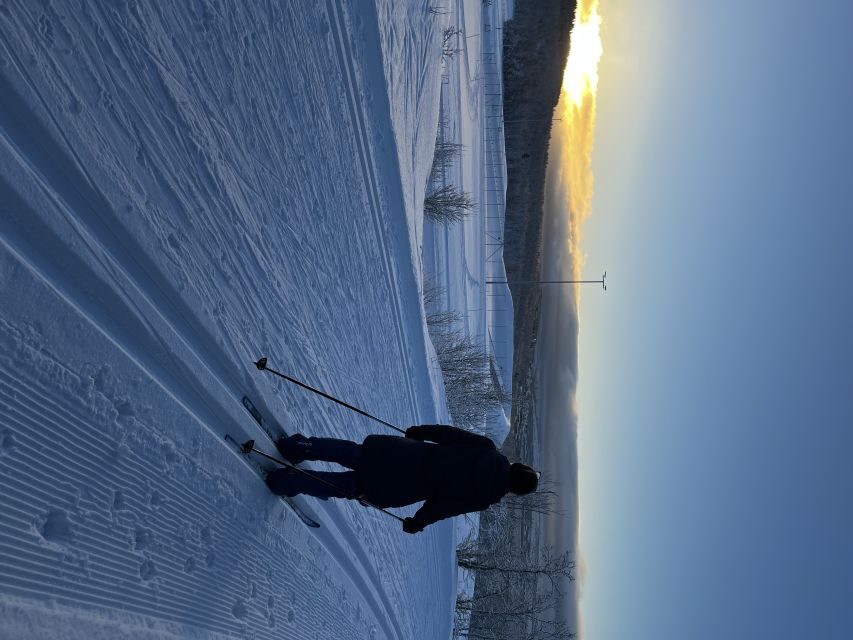
- Scenic route with real stops: Tromsøya photo breaks, then Prestvannet Lake pauses
- Blue-hour mountain and fjord views that make the cold feel worth it
- Warm drink and Norwegian sweets to reset your body mid-route
- Patient multi-guide instruction that helps different skill levels stay together
- Optional photo support if you ask, plus a chance for a fun end-of-session “race”
Langrenn in Tromsø: why this winter activity hits different
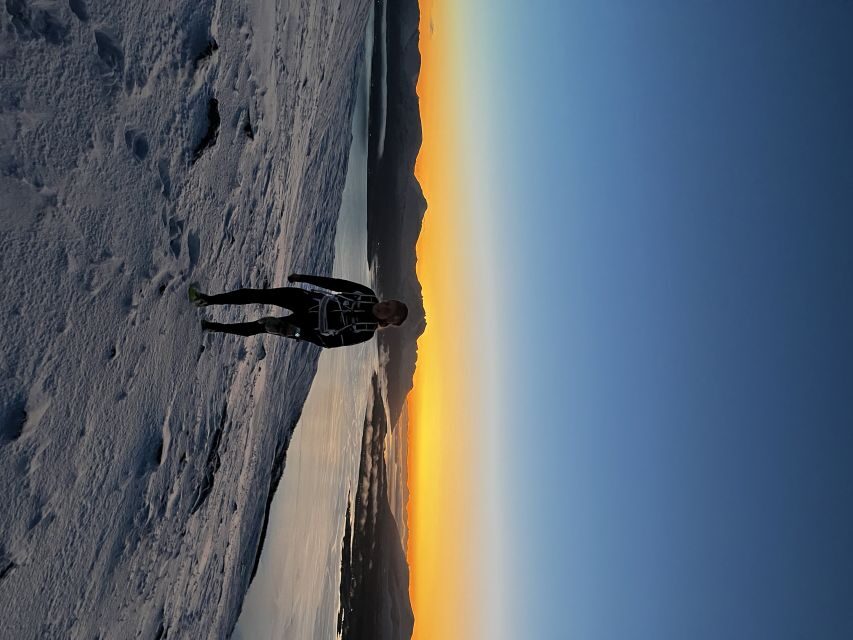
Cross-country skiing is one of those Norway things that feels practical and poetic at the same time. You’re moving under your own power through quiet snow, yet you’re still learning a skill locals treat as normal. In Tromsø, that meaning is even clearer: you get big Arctic scenery while you’re working on your glide, balance, and direction.
This course is built around the idea that you don’t need to be athletic to start. You’re taught the basics—how to stand right, how to weight your skis, how to use poles without fighting your own body—then you practice them on the trail. The vibe stays friendly and group-oriented, with breaks that let you look out at mountains and fjords instead of only staring at the snow in front of your boots.
You can also read our reviews of more guided tours in Tromso

Price and value: what your $99 actually buys
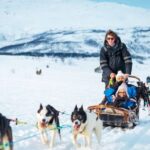
At $99 per person for about 2.5 hours, the value comes from what’s included. You’re not paying extra for equipment or for an instructor to stand there and correct your form. You get skis, poles, and boots, plus a guide, plus a warm drink and local sweets.
Norway winter costs can add up fast—especially when you’d normally need rentals, coaching, and maybe a warm drink at the end. Here, the bundle matters. You also get time built in for pauses at viewpoints, so the session isn’t just “ski, repeat, leave.” It’s instruction and sightseeing working together.
If you’re comparing to doing cross-country on your own, the big difference is safety and speed of learning. You’ll waste less time guessing which technique is wrong and more time getting it right.
Getting there: Charlottenlund Aktivitetspark, free parking, and Bus 26
You meet at Charlottenlund Aktivitetspark parking area. That location is handy because there’s free parking for participants, which makes it easier if you’re renting a car or using a rideshare and don’t want to drag gear through the city.
If you’re on public transport, use bus number 26 from Tromsø’s city center to the Skoglyst stop. From there it’s a short walk to the meeting point.
One small note: the tour info lists an address starting point at Conrad Holmboes veg 89 as well. In practice, plan your arrival around the Charlottenlund Aktivitetspark parking area, then double-check with your booking confirmation message if you want to be extra safe.
What you learn: the langrenn basics that make the whole day work
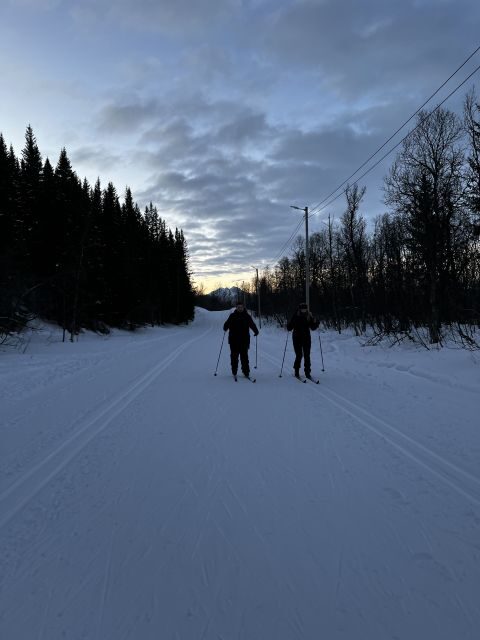
This isn’t just a “try skiing” stroll. The course is structured as an introduction to langrenn with time to practice. You’ll learn core movements like:
- balancing on moving skis
- gliding smoothly instead of chopping snow
- using poles in a way that helps your rhythm
- navigating slopes with better control
You also get guided stops that break up effort so you don’t turn the lesson into a workout you can’t enjoy. The pace is designed around groups learning together, and that’s why you’ll often see more than one instructor helping with technique for different abilities.
From what I’ve seen described by people who did this session, guides like Elias and Tuva (and others) tend to stay close to the group and coach individuals who are struggling, especially kids or first-timers. That matters because cross-country is simple once it clicks, but confusing right up until then.
The route breakdown: Tromsøya, Prestvannet Lake, and the blue-hour loop
The session runs about 2.5 to 3 hours, and it’s organized around two main areas plus breaks.
A few more Tromso tours and experiences worth a look

Tromsøya first: 75 minutes of learning plus views
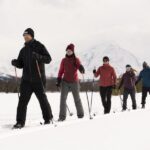
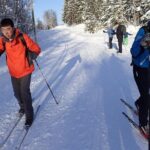
You start at the meeting area, then head to Tromsøya. This is where you get your early momentum: a mix of photo stops, guided trail time, and wildlife viewing when conditions allow. The 75-minute stretch is enough time to feel the rhythm of cross-country, not just walk a short segment.
Why this stop matters: you’ll likely spend your first stretch getting used to gliding, turning, and pole timing. Starting here also helps you settle in before the colder or more exposed feeling parts of the route.
Prestvannet Lake break: 15 minutes to warm up
Next is Prestvannet Lake for a short break (about 15 minutes). This is a recovery moment in the real sense: you pause, take a breath, and let your body cool down from the first practice push.
The tour includes a warm drink and sweet Norwegian snacks here, which is exactly what you want mid-winter when your hands feel like they’re auditioning for frostbite.
Tromsøya again: 1 hour of sunset/sunrise-style scenery
Finally you loop back toward Tromsøya for another guided stretch and additional breaks. This section includes photo stops and another guided tour, plus the schedule notes sunset/sunrise timing (depending on the day and daylight hours).
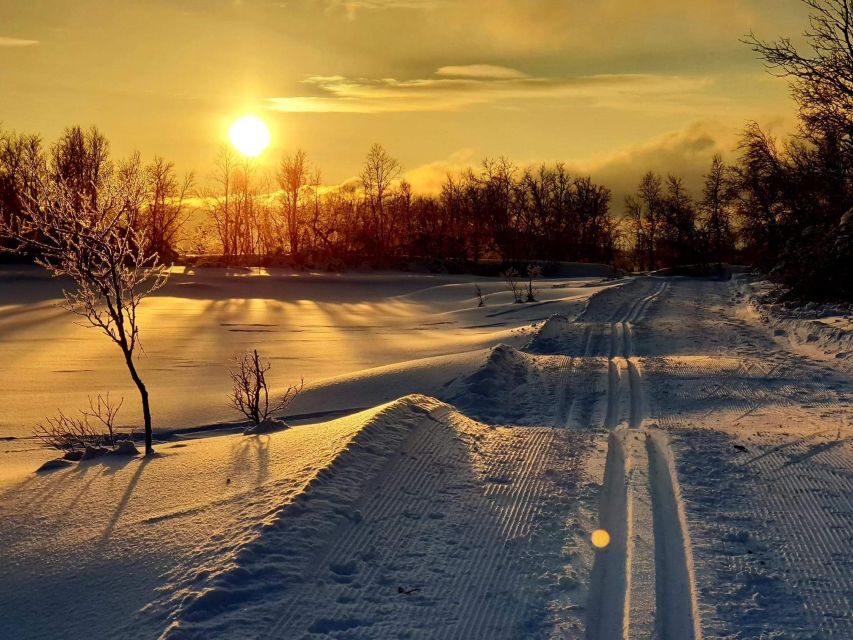
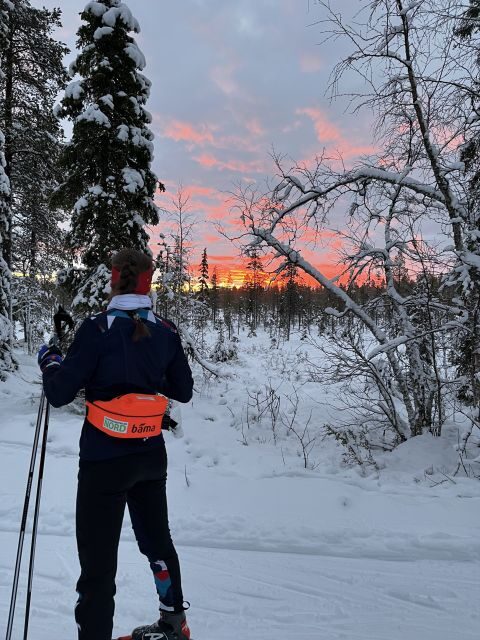
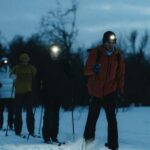
This is where the “blue hour” highlight shows up in a big way. You get the chance to look out at mountains and fjords while the light turns soft and dramatic. Even if you’re still learning technique, you’ll feel less like you’re working for the lesson and more like you’re experiencing Tromsø.
Gear and clothing: how to stay warm without overpacking
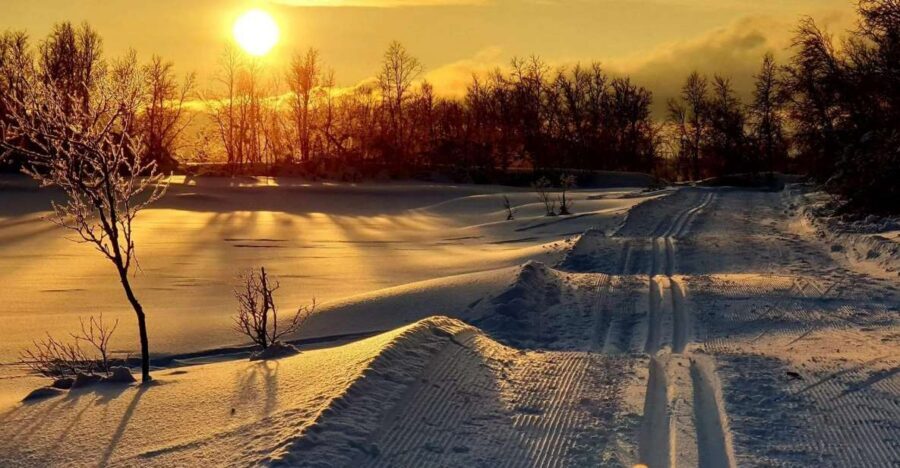
The tour provides skis, poles, and boots for everyone. You just need to be ready for the cold on your end. They can accommodate boots up to shoe size 47 (and you should share your shoe size in advance so the right gear is ready).
What to wear is simple, but don’t wing it. Stick to layers you can adjust:
- a waterproof outer layer
- warm socks
- gloves
- a hat
If you’ve only packed for “snowy sightseeing,” this is a different scenario. You’re moving. That means you need warmth without overheating, plus outer protection against wind and snow mist. The right base layer makes the difference between enjoying the lesson and spending the session thinking about your fingers.
Guides and group pace: support that keeps beginners from falling behind
A recurring theme from the people who’ve done this course is how patient and supportive the instructors are. You’ll see that in how coaching gets repeated when someone struggles, and in how guides adapt when the group includes a spread of abilities—adults and kids together, solo beginners, and people who pick up technique quickly.
Multiple guides may be involved, which helps because cross-country isn’t one-size-fits-all. Some people learn the glide fast; others need extra time with balance. When there’s more than one instructor, it’s easier to keep the slow learners from being rushed and the confident skiers from getting bored.
One more reality check: the pace can reflect the slowest person in the group. That’s not a problem if your goal is learning and enjoying the scenery. If you want a fast cardio burn, you might feel constrained, especially near the beginning when technique is still being built.
Warm drink, Norwegian snacks, and why the breaks matter
Cross-country skiing works your whole body. It’s not just legs; your core and arms have jobs too—especially when you’re learning pole timing. That’s why the breaks feel more than “polite pauses.”
The tour includes a warm drink (told as toddy) and local sweets. That’s a practical win: you reset your hands and lungs for the next stretch. It also supports the Norway winter culture side of the experience—short, cozy moments that make cold weather feel manageable.
If you care about photos, this is another reason to like the route. Stops are planned, so you don’t have to stop mid-ski line and awkwardly fumble your camera.
Wildlife, snow, and making the most of photo-stop moments
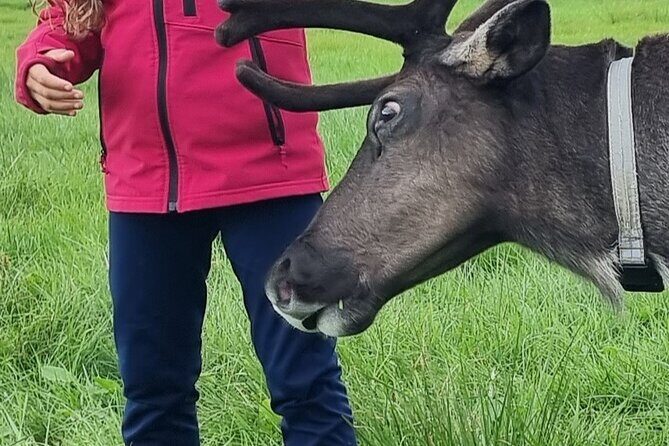
Tromsøya adds a bit of mystery because it’s where you get wildlife viewing during the guided time. You may or may not spot animals, but the trail setup makes it realistic to look up and scan along the way instead of focusing only on the ground.
For photos, your best windows are the planned viewing stops and the later segment around blue hour. That’s when the light helps mountains and fjords look dramatic instead of flat. If you want action shots, it helps to ask your guide. Some groups have had guides take pictures or video during the session.
Who should book this course, and who should skip it
This tour fits best if you want a guided intro to cross-country skiing in Tromsø and you value nature plus real technique coaching. It’s also a good fit if you’re traveling with family or friends because the structure includes breaks and you can often learn at a pace that matches your group.
It may not be right if you:
- need to avoid altitude-related strain (the tour lists altitude sickness as not suitable)
- are outside the age limits: under 7, over 80, or babies under 1
- don’t want to handle cold-weather movement for a couple of hours
Also keep in mind that you’re learning. Expect some falling if you’re brand new. That’s normal. The goal is getting you upright faster each time.
Should you book Tromsø’s cross-country skiing course?
If you want a genuine Tromsø winter experience without renting a full setup and guessing your way through technique, this is a strong booking. The main reasons are straightforward: included gear, instructor coaching, planned scenic stops, and warm breaks that make the session feel like a real outing instead of a chore.
Book it if:
- you’re a beginner and want structured guidance
- you care about views during blue hour, not just moving on trails
- you like the idea of ski learning with cozy pauses (warm drink and sweets)
Think twice if:
- you’re expecting a fast, individual tempo workout
- you don’t want to handle getting to Charlottenlund Aktivitetspark yourself
Overall, this is one of the better ways to experience Tromsø winter on snow, because it connects the skill-building to the scenery instead of treating them as separate events.
FAQ
Where do we meet for the cross-country skiing course?
You meet at the Charlottenlund Aktivitetspark parking area. The tour information also references Conrad Holmboes veg 89 as a starting point for the session.
How long is the skiing course?
The course is listed as about 2.5 to 3 hours.
What’s included in the price?
The package includes skis, poles, and shoes, plus a warm drink and local sweets, and the instructor/guide.
What should I wear to stay comfortable?
Wear layers that can be adjusted. You’ll need a waterproof outer layer, plus gloves, a hat, and warm socks.
Is this suitable for children?
The tour states it is not suitable for children under 7 years.
What languages do the guides speak?
The tour lists English and Norwegian.
What are the age limits and any health restrictions?
It lists not suitable for people over 80 years, babies under 1 year, and people with altitude sickness.