REVIEW · TROMSO
Tromsø: Responsible Whale Watching Cruise Aboard MS Alba
Book on GetYourGuide →Operated by Arctic Whale Tours AS · Bookable on GetYourGuide
Orcas in winter fjords sound unreal. This Tromsø whale watching cruise pairs responsible viewing with the classic Norwegian catamaran MS Alba, built for cold-weather wildlife trips.
What I like most: you get heated indoor lounges plus outdoor decks, so you can actually chase good viewing without freezing your hands off. I also appreciate the onboard focus on wildlife guidance and whale behavior, with hot drinks and biscuits keeping the whole day human-scale.
One thing to plan for: the weather and sea conditions drive everything, and winter glass and decks can be cold, icy, and a little slippery—bring the right boots and expect some time outside.
In This Review
- Key things to know before you go
- Tromsø in winter: the setting that makes whale watching matter
- Meeting under the Tromsø Bridge: quick check-in, cold-weather style
- MS Alba catamaran: heated lounges, outdoor decks, and a lot of glass
- How the timing works: a full day on the water without feeling rushed
- What you’re actually looking for: orcas and humpbacks in winter fjords
- The guide experience: whale behavior and Arctic ecosystems, explained in plain terms
- Hot drinks and biscuits: small comfort, big effect in the cold
- Responsible viewing in practice: what the rules protect
- The best viewing strategy: use the whole boat, not just one spot
- Price and value: is $215 worth it?
- What went well, and what you should watch out for
- Bring what matters: winter gear, camera, and a packed lunch
- Who this tour suits best (and who should skip it)
- The Whale Pass: what it actually does for your risk
- Should you book Tromsø Responsible Whale Watching on MS Alba?
- FAQ
- Where do I meet for the cruise?
- What is the total duration of the tour?
- What whales are you searching for?
- Are meals included?
- What’s included onboard besides the cruise?
- What should I wear in winter?
- Is the tour wheelchair accessible?
- What happens if no whales or dolphins are spotted?
- What’s the guide language?
- What about seasickness?
Key things to know before you go
- Responsible whale viewing: strict rules meant to keep whales behaving naturally and reduce disturbance.
- Heated comfort + open decks: warm lounges with panoramic windows, plus space outside when sightings happen.
- Orca and humpback search in winter fjords: routes aim for feeding grounds, based on conditions and recent reports.
- Hot drinks and biscuits: warm-ups are built into the trip rhythm as you move between indoors and out.
- Whale Pass rebooking: if no whales or dolphins are spotted, you get free rebooking for a future safari within two years (availability rules apply).
Tromsø in winter: the setting that makes whale watching matter
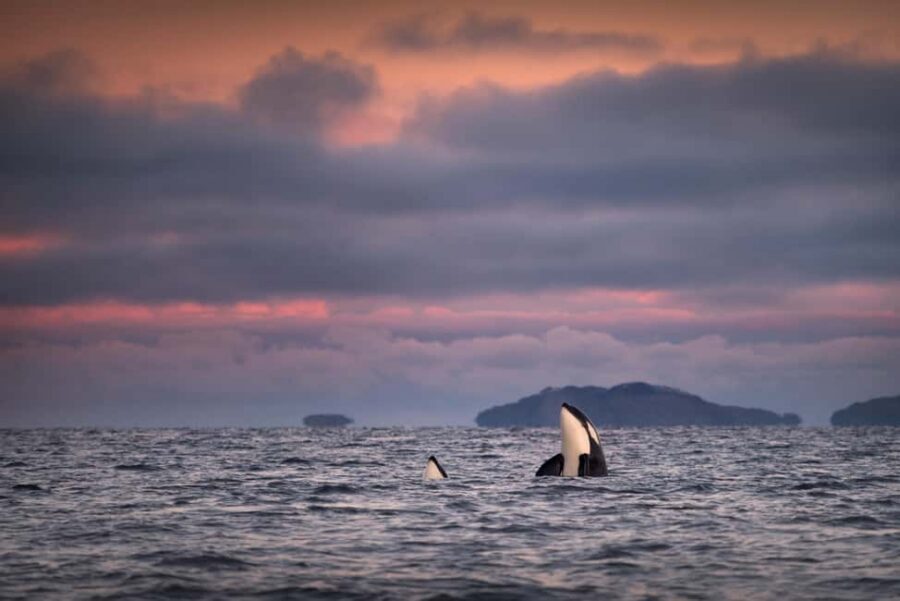
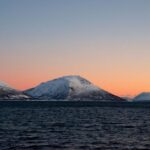
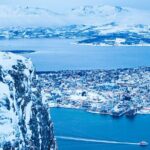
Tromsø is one of the few places where winter feels built for wildlife. The fjords are wide, dark-water deep, and the snowy hills frame the whole experience like a big moving window. When you add orcas and humpbacks into the mix, you’re not just sightseeing. You’re watching real Arctic behavior play out in real time.
This cruise leans into that reality with responsible wildlife viewing. That means you’re not chasing animals at all costs. Instead, the boat heads toward likely areas, guided by current conditions and sightings, while keeping a respectful distance. It’s the kind of approach that helps you see whales more naturally—and keeps the experience better for the animals.
You can also read our reviews of more boat tours in Tromso

Meeting under the Tromsø Bridge: quick check-in, cold-weather style
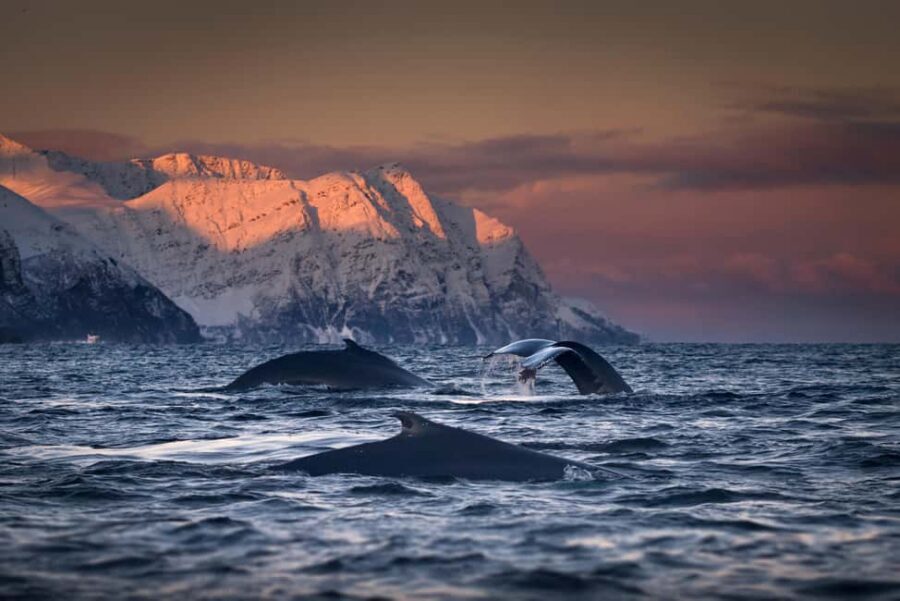
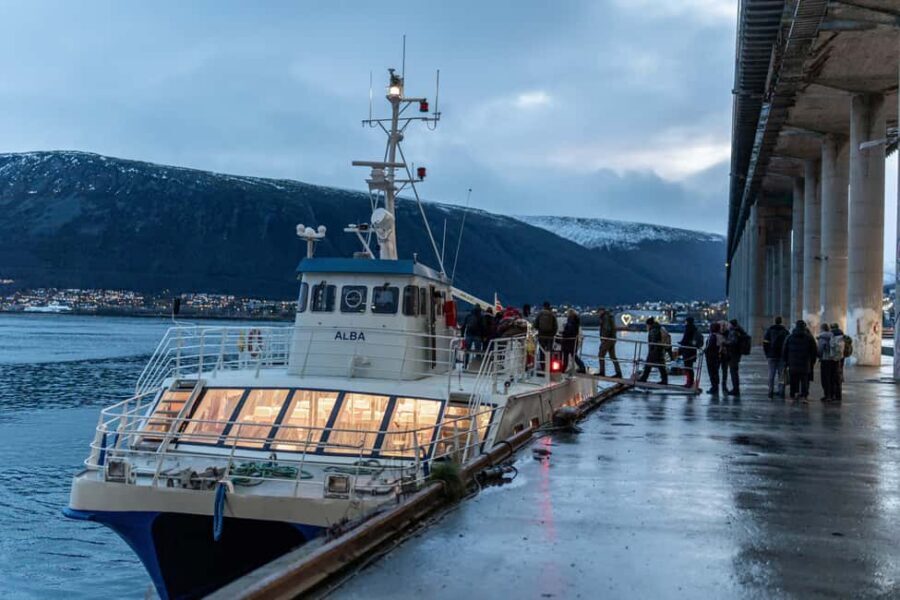
Your day starts at the dock under the Tromsø Bridge, next to The Dock 69°39’ by Scandic Hotel. There’s no reception area and no indoor check-in. You board directly at the boat, so aim to arrive 20–30 minutes early.
That might not sound glamorous, but it’s practical. You’ll get a quick warm-up in the lounge faster, and you won’t be standing around outside longer than needed. Look for the vessel MS Alba and crew wearing Arctic Whale Tours jackets.
Also: bring your winter setup with you right away. This is one of those tours where layering correctly matters more than being tough.
MS Alba catamaran: heated lounges, outdoor decks, and a lot of glass
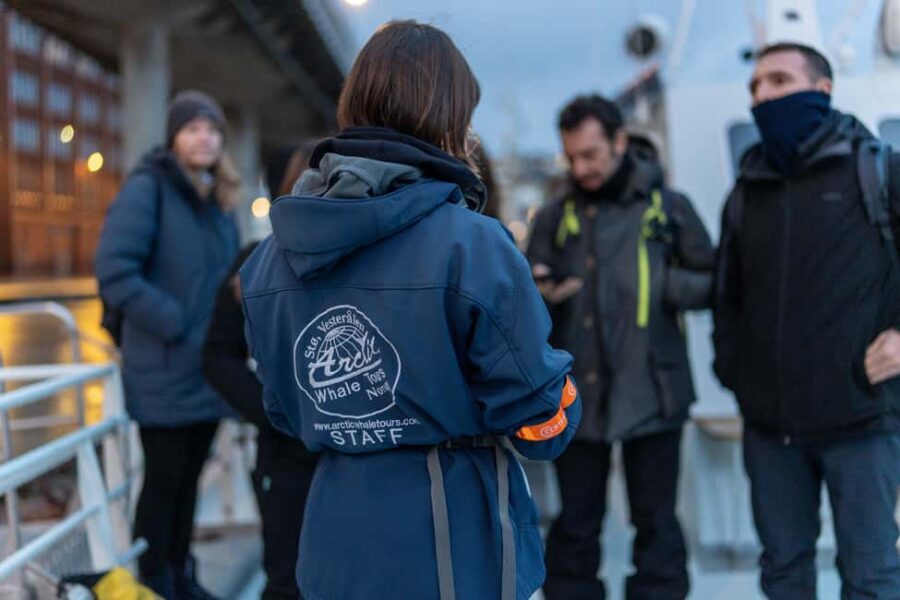
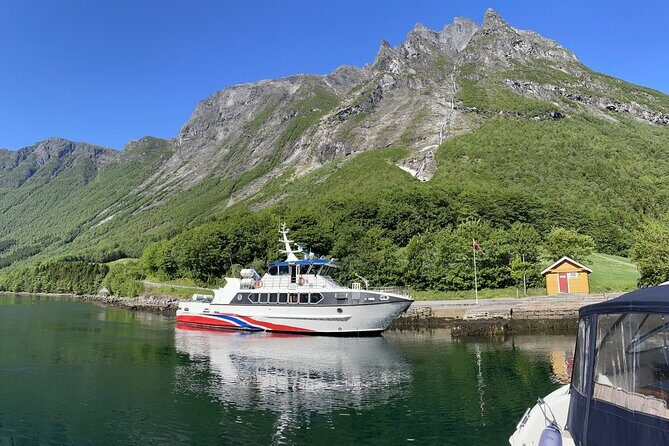
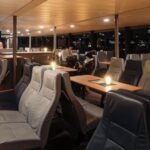
MS Alba is a classic Norwegian catamaran designed for winter whale watching. The standout is the balance between warm indoor space and places to look out. You’ll have heated indoor lounges and panoramic windows, plus spacious outdoor viewing decks when sightings are near.
There are also onboard toilets and safety equipment—small details, but they matter on an 8-hour day. On long wildlife trips, comfort isn’t a luxury. It’s how you stay alert enough to notice the behavior you came for.
One practical note from the real world: winter conditions can mean windows get iced or not perfectly clear. Plan to shift positions during the trip. And if you’re serious about photos, keep a lens cloth handy so you can wipe fog or frost when you have a chance.
How the timing works: a full day on the water without feeling rushed
The cruise runs about 8 hours (it can vary by about ±1 hour based on where whales are). You’ll spend time cruising out, a longer guided/photo stop period, then return to Tromsø Harbour.
A key part of your day is that there’s a 2-hour guided stop at a point used for photo and sightseeing, plus marine life and wildlife viewing. That’s built into the trip so you’re not just sitting in transit mode. It’s a chance to slow down, listen to the guide, and scan the water with purpose.
Between that stop and the two cruising segments, you get enough time on the water that a good sighting can happen even if the whales don’t show up immediately. Winter whale watching is still a search. The schedule is designed to give the search room to work.
What you’re actually looking for: orcas and humpbacks in winter fjords
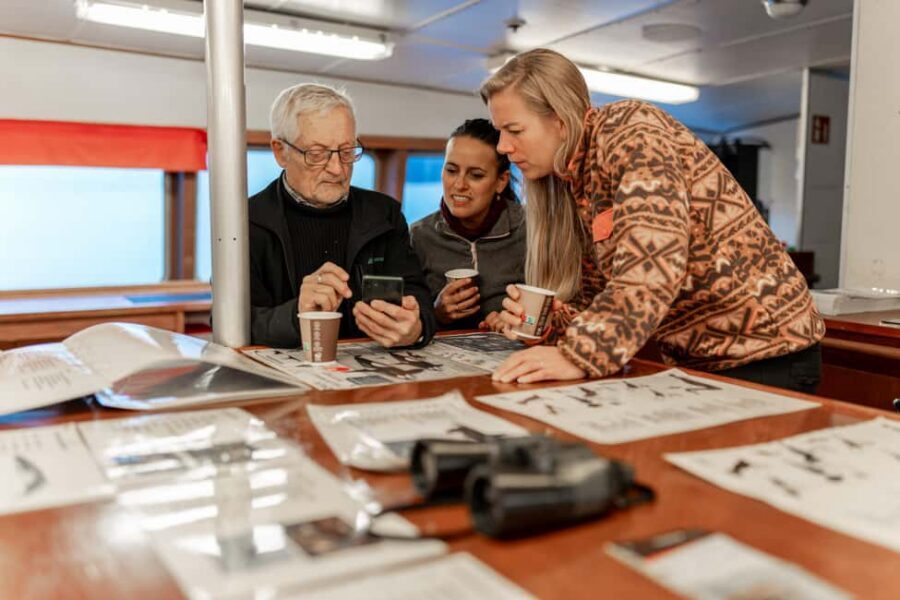
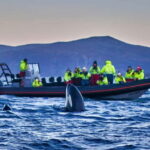
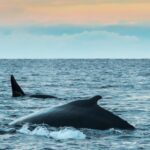
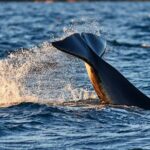
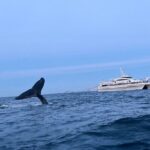
The target is clear: orcas and humpback whales. The crew and expert wildlife guides aim for winter feeding areas, and they adjust based on sea conditions and what’s been spotted recently.
That approach matters because whale behavior isn’t a predictable timetable. In cold months, feeding grounds can be active in pulses—winds can change visibility, and currents can shift where whales surface. This tour’s strength is that it doesn’t act like whales are guaranteed on cue.
When you do get sightings, the experience clicks for most people immediately: whales are big, movement patterns are obvious even from a distance, and when you see a confident surface or a repeated dive-and-breath rhythm, you start understanding the “why,” not just the “what.”
You can also read our reviews of more whale watching tours in Tromso

The guide experience: whale behavior and Arctic ecosystems, explained in plain terms
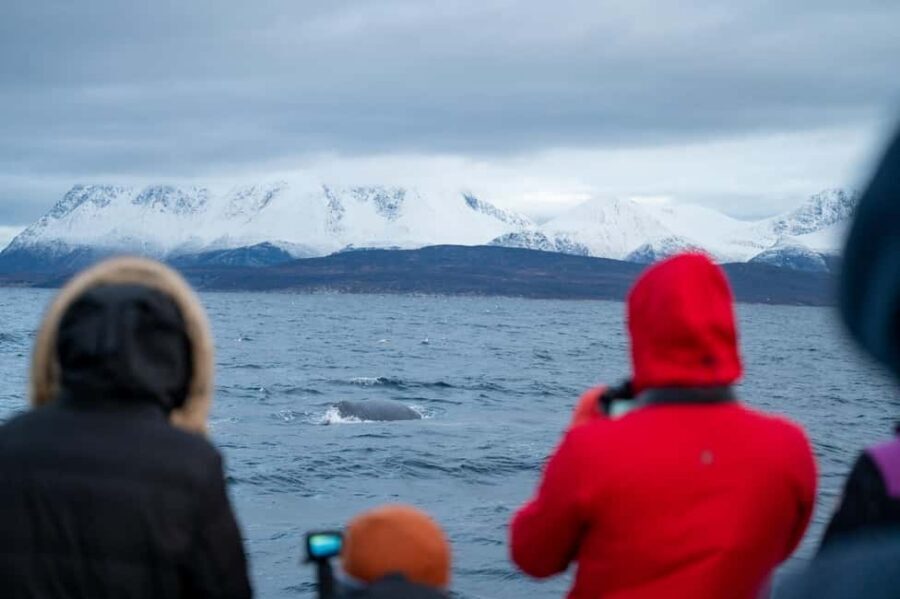
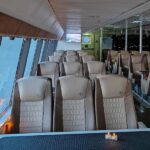
A big part of the value here is the professional wildlife guide onboard. You’ll learn about whale behavior and the broader Arctic marine ecosystem, plus the rules that keep viewing safe and respectful.
You don’t need a biology degree to get something out of this. The goal is to connect the patterns you see—surfacing intervals, grouping behavior, how whales respond to surroundings—with what’s happening in the water. Even if you’re just learning basics, the guide context helps you stop treating the trip like a lottery.
One small comfort: the guide team is available in English (and the overall format is multilingual, but English is the live guide language noted). That makes it easier to follow what’s being watched and why the boat is making particular moves.
Hot drinks and biscuits: small comfort, big effect in the cold
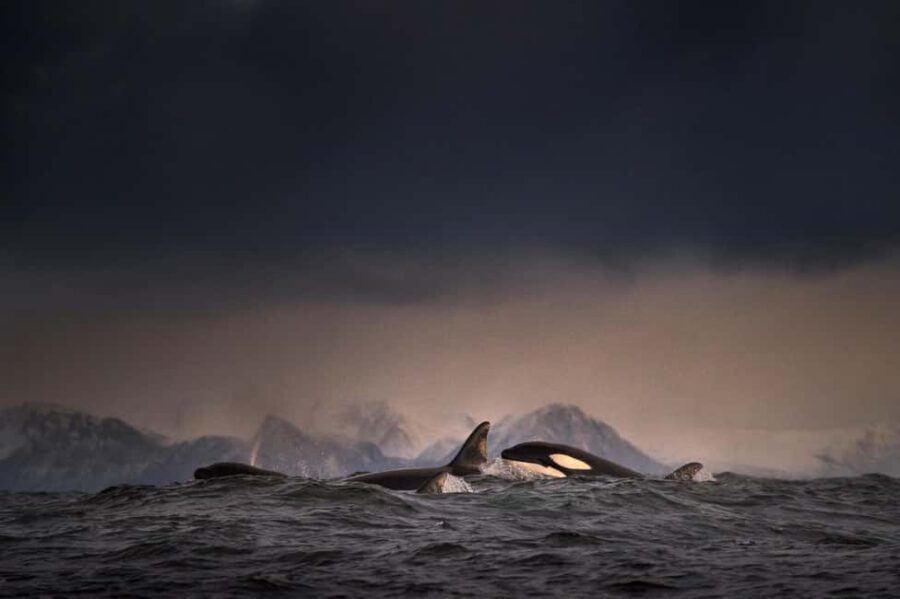
Cold weather whale watching has one job: keep you warm enough to pay attention. This cruise does that with hot drinks and biscuits served onboard.
It’s not a full meal plan, but it’s smart. When you’re rotating between the heated lounge and the outdoor deck, a warm drink helps you stay steady and comfortable. It also means you’re not stuck waiting for “some later time” to warm up.
Just remember: food is not included. Bring a packed lunch so you’re not hungry while the boat is hunting for whales. Hunger makes the cold feel worse, and a wildlife search is already mentally demanding.
Responsible viewing in practice: what the rules protect
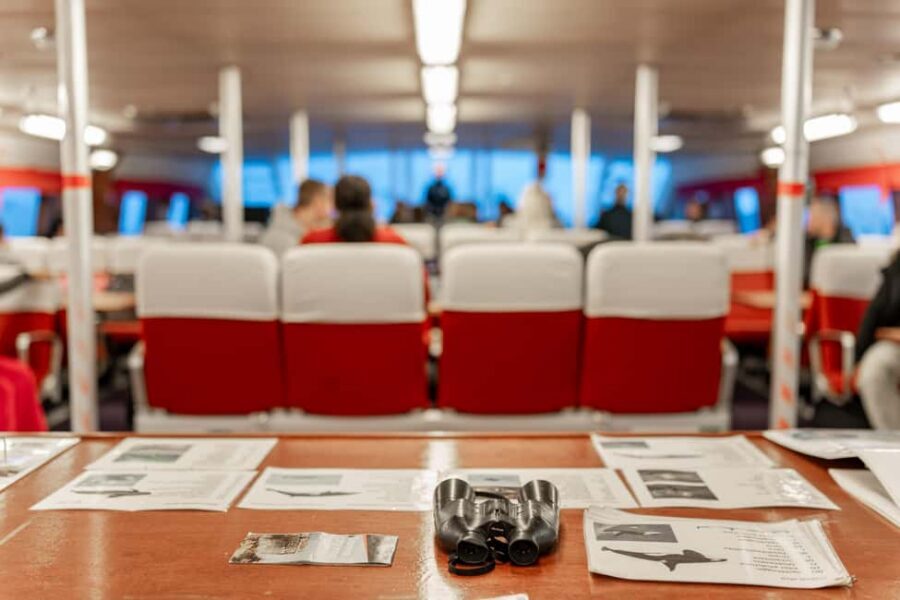
The tour runs under strict guidelines for safe and respectful whale watching, prioritizing the animals’ natural behavior and minimizing disturbance. On the water, that usually shows up as controlled positioning and a focus on observation rather than chase-style behavior.
There are also clear behavior rules: you won’t be allowed to touch marine life, and there’s no messing around with animals or risky close contact. The idea is simple—if the whales are focused on feeding or breathing, your job is to watch in a way that doesn’t add stress.
This is one reason the experience feels different from casual boat trips. You’re there for wildlife and education, not a thrill ride.
The best viewing strategy: use the whole boat, not just one spot
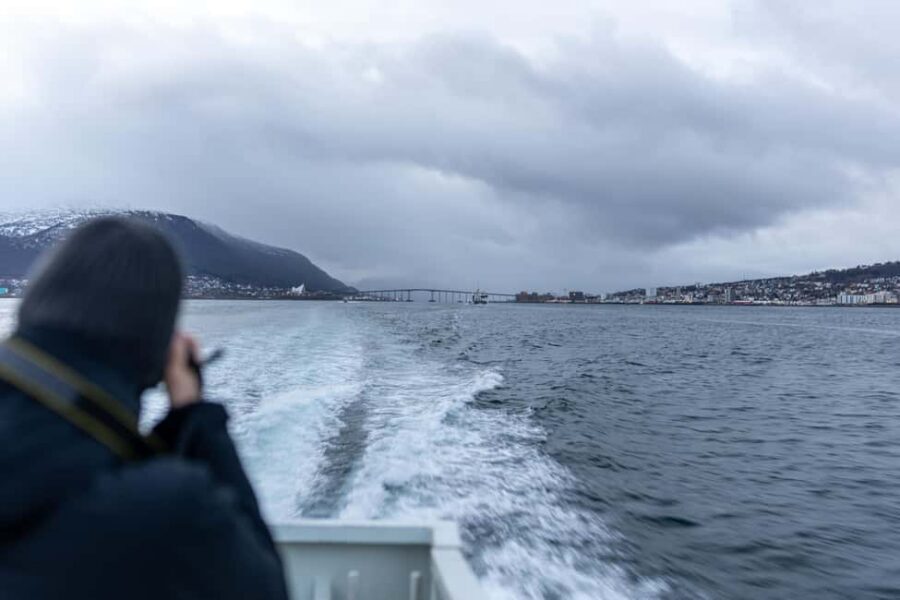
You’ll have plenty of options during the day: panoramic lounge windows when conditions are rough, and outdoor decks when you get a chance at clear sightlines. Because winter light can change quickly and ice can form on surfaces, you’ll get more out of the trip if you’re flexible.
Here’s what I’d do in your shoes:
- When the crew calls attention, be ready to move. Heated comfort is great, but sightings come fast.
- Don’t assume the best view is always from one side. In winter fjords, whales can surface where you least expect.
- If you notice windows are not clear, swap to the outdoor deck when permitted and safe.
One real-world caution: the outdoor deck can be very slippery in cold conditions if there’s ice or snow. Wear winter boots with good grip, not smooth-soled shoes.
Price and value: is $215 worth it?
At $215 per person, this is not a bargain bucket cruise. But you’re paying for an 8-hour winter outing where the cost is really in the setup: a catamaran built for winter use, trained wildlife guidance, and time spent actively searching for whales in fjord conditions.
The value stacks in a few practical ways:
- Heated spaces and outdoor decks keep you comfortable enough to stay engaged for the full search.
- Hot drinks and biscuits help reduce the “I’m cold and miserable” factor.
- A Whale Pass can protect you if sightings don’t happen that day, with free rebooking for a future safari within two years (subject to availability).
That last part is important. Whale watching is inherently uncertain. If you want a “real attempt” rather than a one-and-done gamble, that rebooking option adds meaningful safety.
What’s not included is equally important: no meals and you provide your own winter gear. If you show up underpacked, the cost-to-comfort ratio drops fast.
What went well, and what you should watch out for
The strongest praise centers on getting close whale encounters and enjoying a well-run trip. Many people felt the organization was solid, the views were breathtaking, and seeing orcas and whales made the day feel unforgettable.
But not everything is perfect. A few issues came up that you can plan around:
- Window clarity can be a problem: some riders reported that panes were iced or not clearly visible, which can affect indoor viewing. Translation: don’t rely only on interior windows.
- Viewing angles can feel unequal: there were comments about how the boat oriented during sightings and how some people had less visibility on the sides. Translation: be ready to reposition when the crew points out where to look.
- Outdoor decks may be slick: some mentioned the deck was very smooth. Translation: bring non-slip boots and take your time moving.
- Snacks might not match your expectations: a note suggested the provided biscuits are basic cookies, not a meal substitute. Translation: pack lunch and treat the biscuits as a warm-up.
None of these mean the tour is a bad choice. They just help you go in prepared.
Bring what matters: winter gear, camera, and a packed lunch
You’ll want to bring:
- Warm clothing in layers
- Snow clothing, plus windproof outerwear
- Scarf, hat, and gloves
- Warm shoes or winter boots (non-slip if possible)
- Camera
- Food (packed lunch recommended)
A few practical reminders:
- This is a winter fjord environment. If your gloves are too thin or your boots have poor traction, you’ll feel it during deck time.
- Even if you think you’ll stay inside, you’ll want to step outside during sightings. That’s where the magic usually happens.
Who this tour suits best (and who should skip it)
This cruise is a strong pick if you want:
- Responsible wildlife viewing with real guidance
- A winter adventure that combines education with the chance of orcas and humpbacks
- Enough comfort options to handle a long day (heated lounges + outdoor decks)
It’s not a great match if:
- You’re prone to seasickness. The tour notes it isn’t suitable for people in that category, and you should plan accordingly.
- You need wheelchair access. The tour isn’t suitable for wheelchair users based on the provided information.
If you’re comfortable in cold weather and can handle long stretches on the water, you’ll likely get more out of this than someone looking for a short, warm, easy outing.
The Whale Pass: what it actually does for your risk
Here’s the practical safety net: if no whales or dolphins are spotted, you receive a Whale Pass for free rebooking. It’s valid for any future safari within two years, and it’s subject to availability.
That doesn’t turn it into a guaranteed whale encounter. But it does reduce the sting of booking a day when nature doesn’t cooperate. For many people, that makes the experience feel fairer.
It also encourages you to treat the day as a serious search in Arctic conditions, not a performance schedule.
Should you book Tromsø Responsible Whale Watching on MS Alba?
Book this tour if you want a winter whale watching day with responsible rules, professional wildlife guidance, and real comfort for cold weather. The heated lounges, outdoor decks, hot drinks, and the Whale Pass option make it more than just a boat ride—you’re buying time, expertise, and a structured search in prime habitat.
Skip or rethink it if you can’t handle cold deck time, you’re prone to seasickness, or you need accessibility support that isn’t offered on this vessel. Also be honest with yourself about expectations: window clarity can vary, outdoor decks can be slick, and the provided biscuits are not a substitute for a meal.
If you’re prepared, this is the kind of Arctic day that can leave you talking about whale behavior long after you’ve thawed out.
FAQ
Where do I meet for the cruise?
Meet directly at the dock under the Tromsø Bridge, beside The Dock 69°39’ by Scandic Hotel. Boarding happens directly at the boat, and MS Alba will be moored there.
What is the total duration of the tour?
The whale watching cruise lasts about 8 hours, with possible variation of about ±1 hour depending on where whales are spotted and conditions.
What whales are you searching for?
The tour focuses on finding orcas and humpback whales in Tromsø’s winter fjords. Dolphins are also mentioned as part of the spotting criteria for the Whale Pass.
Are meals included?
No. Meals are not included, and you’re advised to bring a packed lunch.
What’s included onboard besides the cruise?
Included items are a professional, multilingual wildlife guide, hot drinks and biscuits, heated indoor lounges, spacious outdoor decks, onboard toilets, and safety equipment. You also get the Whale Pass option if no whales or dolphins are seen.
What should I wear in winter?
Bring warm layers, windproof outerwear, a hat, gloves, and winter boots. The tour notes that warm clothing and winter gear are not provided, so dress appropriately for Arctic conditions.
Is the tour wheelchair accessible?
No. The tour is listed as not suitable for wheelchair users.
What happens if no whales or dolphins are spotted?
You receive a Whale Pass, which allows free rebooking for a future safari within two years (subject to availability).
What’s the guide language?
The live guide language is English.
What about seasickness?
The tour is not suitable for people prone to seasickness. You should bring your own seasickness medication if you know you get seasick.