REVIEW · ALTA
Snowshoeing Adventure to the Enchanting Frozen Waterfall
Book on GetYourGuide →Operated by Æventyr · Bookable on GetYourGuide
Winter silence, then ice and roar.
This snowshoeing adventure in Innlandet (Alta area) is built around one big payoff: getting close to the frozen Orvvosfossen waterfall, where you can actually see the icy structure up close instead of just spotting it from afar. I also like that it teaches you snowshoe basics while you’re moving, so you’re not just walking with gear—you’re learning a practical Arctic way to travel, and your guide folds in Alta and Gargia Valley nature and history along the way. One thing to consider: there’s a small stretch with a steeper incline, so you’ll want to be comfortably active even if you’re not a trail runner.
On paper it’s 4 hours, but it feels like two parts: a calm climb through snowy trees to the waterfall, then time to slow down and take in the view before heading back as the light changes. If you’re lucky (and from recent experiences, you might be), your guide could be someone like Rose or Birk, and the best moments are the little stops—animal tracks, plants, and local facts—that turn a hike into a lesson you can remember.
In This Review
- Key highlights worth planning for
- Orvvosfossen: the frozen waterfall moment that earns the effort
- Snowshoe basics in real time: how you avoid the clunky first-hour feeling
- Alta and the Gargia Valley stops: the kind of storytelling you can use later
- The day’s flow: from meeting point to waterfall to return
- Price and value: why $187 can actually make sense
- What to pack: your cold-weather checklist that keeps the tour fun
- Who this snowshoeing trip fits best (and who should think twice)
- Should you book the Alta frozen waterfall snowshoe tour?
- FAQ
- How long is the snowshoeing adventure to the frozen waterfall?
- Where do I meet the guide?
- Is the tour in English?
- How far do you walk during the trek?
- What is included in the price?
- What should I bring for the cold?
Key highlights worth planning for
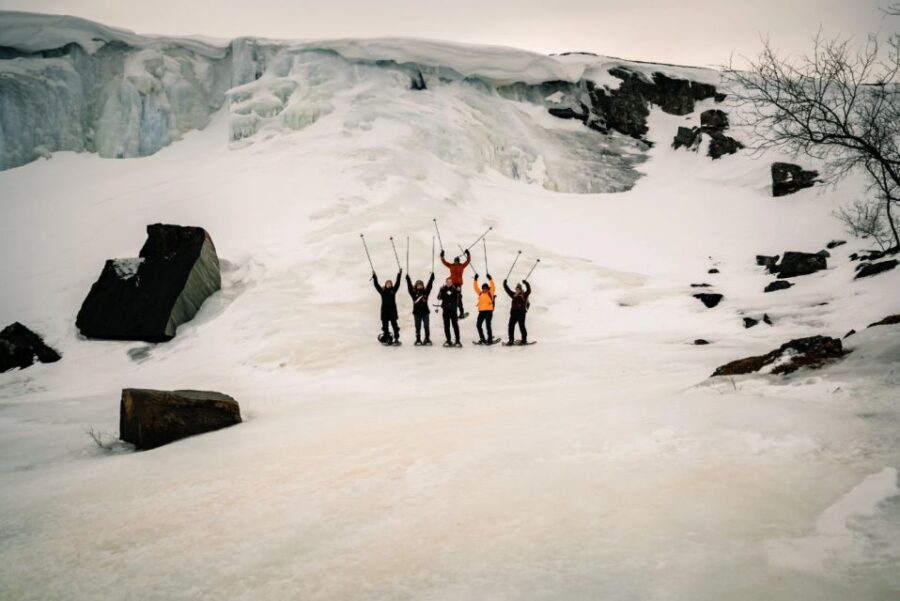
- Orvvosfossen frozen waterfall views: close-up ice cascade at the end of the trek
- Snowshoeing instruction built into the walk: learn what to do as you go
- Alta and Gargia Valley context: nature + history stops along the route
- Wildlife and track spotting: animal tracks, plus moments like an eagles-nest stop
- Coffee, tea, and snacks included: a real break, not a symbolic one
- Guides like Rose and Birk: attentive, safety-minded, and full of local stories
Orvvosfossen: the frozen waterfall moment that earns the effort
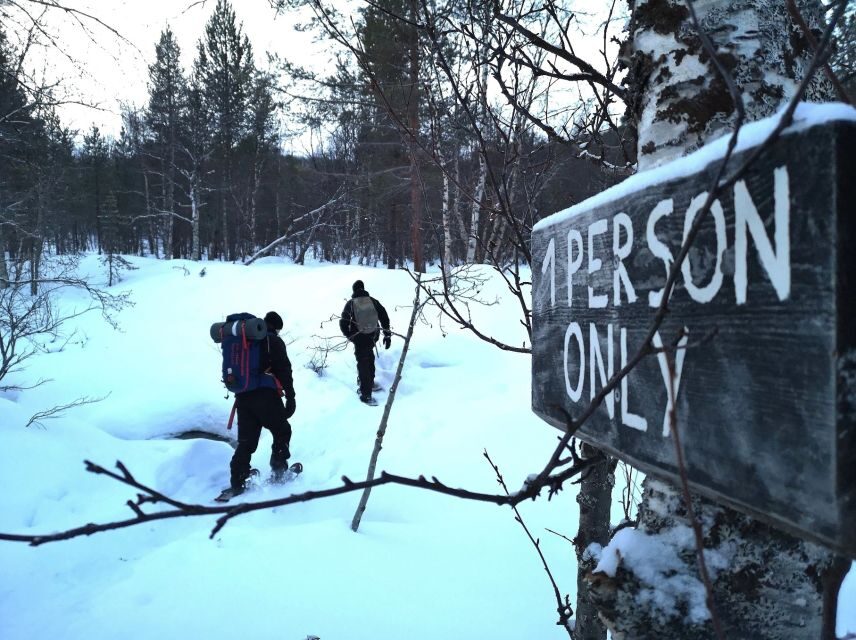
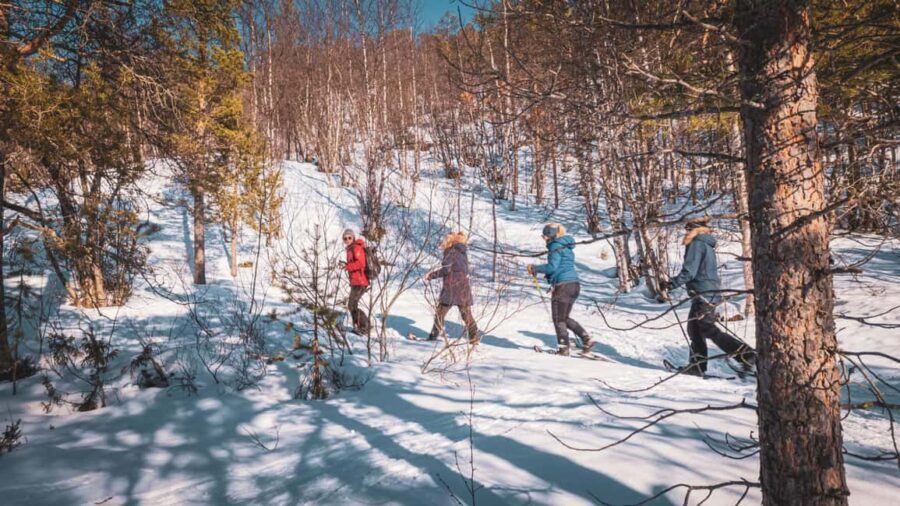
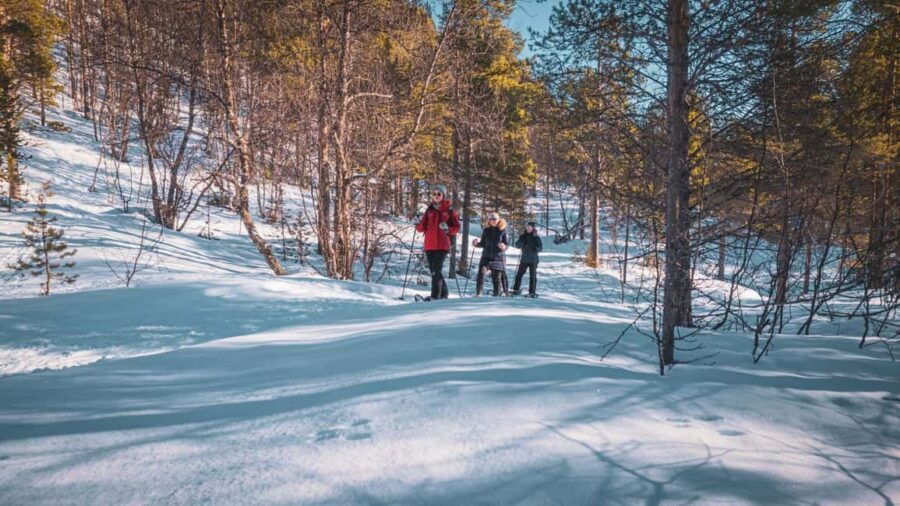
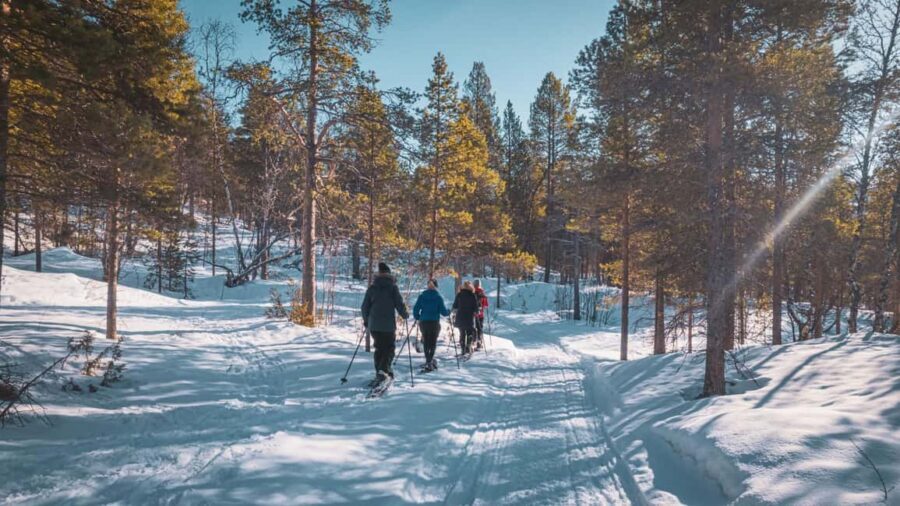
The main event here is Orvvosfossen, frozen into a crystalline cascade. You follow the trail for about 2.25 km each way (the total is 4.5 km round trip), and the route keeps you in that crisp winter rhythm—slow steps, short pauses, and the feeling that the woods are holding their breath.
When you reach the waterfall, the experience switches gears. Instead of a distant sight, it’s close enough that you can study how the water has turned to ice—thick edges, bright highlights, and strange shapes that look different from every angle. That’s why snowshoeing works so well for this spot: you’re able to get where winter roads and sidewalks can’t.
If you care about photos, timing matters. Some groups head out around 11am when light is good, and you’ll often return closer to the darker hours. Either way, you’ll want to bring a flashlight and keep your camera ready for that contrast between pale snow and darker ice.
You can also read our reviews of more tours and experiences in Alta.
Snowshoe basics in real time: how you avoid the clunky first-hour feeling
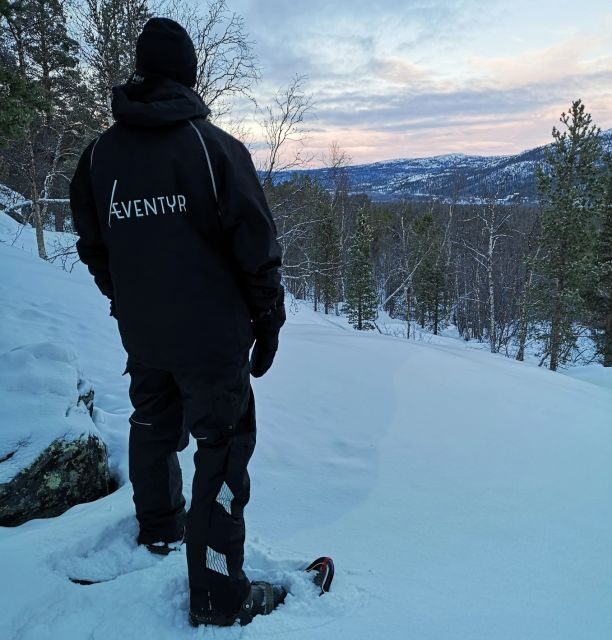
Snowshoes can feel awkward at first, especially if you’re used to regular boots. The good news is that the guide is with you from the start, and the experience is designed to teach the movement as part of the adventure. You’re not dumped onto a trail and told to figure it out.
In practice, this matters because it helps you:
- keep your weight balanced when the ground is uneven
- pace yourself through snow-covered forest stretches
- move confidently during that slightly steeper section some people notice
Several people doing this for the first time still found it very doable. You don’t need to be a technical hiker, but you should be ready for moderate effort over snowy ground. Think of it as a winter workout you can enjoy, not a test.
And because snowshoe equipment is included, you’re spared the shopping hunt. You just show up, get fitted, and start learning. That’s real value in Arctic tours where the wrong gear can turn a fun hike into a cold-body struggle.
Alta and the Gargia Valley stops: the kind of storytelling you can use later
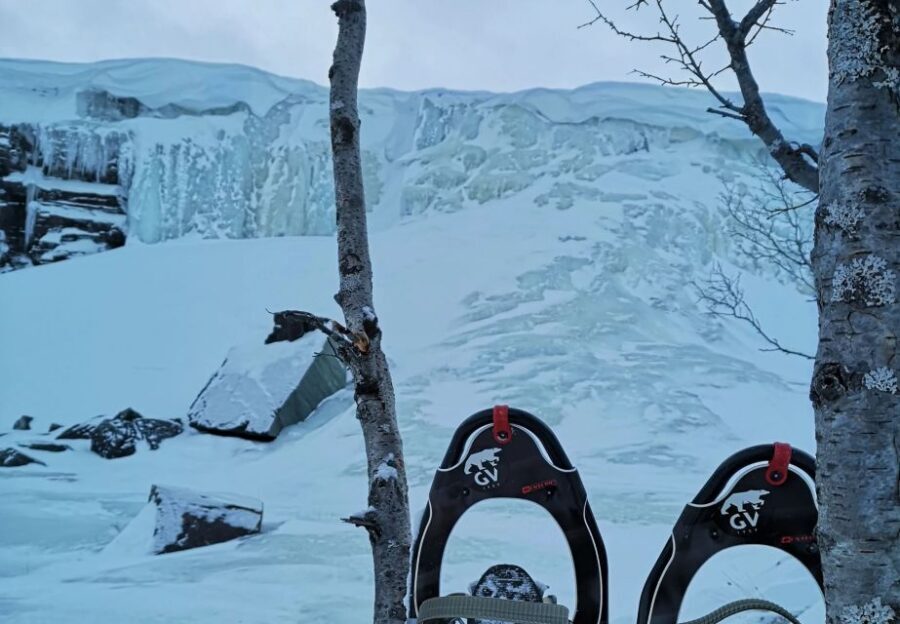
Alta isn’t only about views. This tour uses the walk to connect winter scenery to local life—nature and history without turning it into a lecture you forget the moment you get back in the car.
Your guide may pause along the way for details like:
- animal tracks you can spot in the snow
- small plant notes (what survives, what changes)
- local facts tied to Alta and the Gargia Valley
- a chance to look for things like an eagles-nest area stop
What I like about this approach is that it upgrades your attention. Instead of just watching where you put your feet, you learn to look at signs in the snow. That’s the sort of skill that stays with you even after the hike ends.
Some guides also add small, memorable touches. One standout from recent experiences: gin-tonic juniper sampling during the day. Even if you don’t think you’ll care about local foraging flavors, it’s a fun way to make the winter environment feel more human.
The day’s flow: from meeting point to waterfall to return
The meeting point is at the Adventure Store at Markedsgata 6, 9510 Alta, inside the Canyon Hotell. From there, transport takes you into the start area and you get set up with snowshoe equipment before you hit the trail.
Once you’re moving, the pace is built for enjoyment. You hike through snow-covered trees with those small glimpses of what’s ahead, then you reach the frozen waterfall after the main stretch. Expect time to look, photograph, and absorb the atmosphere—this is the part where you’ll likely stop more often than you planned.
The return trip is just as important as the outward walk. As you go back, you’ll notice how the snow and shadows change, especially if you started at 11am and didn’t return until later. Bring that flashlight for the practical reason that winter light fades fast.
And yes, there’s a warm reset built into the tour: coffee, tea, and snacks are included. That break keeps energy up and helps you enjoy the last part instead of rushing through it.
Price and value: why $187 can actually make sense
At $187 per person for a 4-hour guided snowshoeing trip, it’s not a cheap outing. But the value comes from what’s included and how guided it is.
You’re getting:
- snowshoe equipment
- an English live guide
- coffee, tea, and snacks
- transport
For a winter activity in a remote region, these inclusions matter more than people expect. If you had to rent gear separately, arrange transport yourself, and then pay for instruction, the total typically climbs quickly. Here, the costs are bundled in a way that lets you focus on the experience instead of logistics.
So the real question isn’t just the sticker price. It’s whether you want a guided, gear-included day to a specific natural highlight. If you want that, this price is easier to justify.
What to pack: your cold-weather checklist that keeps the tour fun
This is the part that makes or breaks winter hikes. The tour asks you to bring warm layers and winter essentials, and the clothing list is sensible.
Plan on packing:
- hat
- gloves (and warm mittens if you have them)
- scarf
- warm shoes (proper winter boots if you own them)
- thermal clothing plus additional warm clothing
- flashlight
- headlamp (when needed)
If you want a simple layering mindset: go for wool underwear and warm base layers. Keep a spare warm layer if you tend to get chilly. Your goal isn’t only warmth—it’s keeping your hands and feet functional enough that you can take photos, adjust gear, and enjoy the waterfall without feeling miserable.
Also, winter footwear matters. The tour includes equipment, but your own boots are still what you stand in. Slippery soles or thin uppers can make the steeper stretch feel worse than it needs to.
Who this snowshoeing trip fits best (and who should think twice)
This works well for people who want an Arctic experience without needing advanced hiking skills. Many first-timers find it manageable because the route is guided and the snowshoe basics are taught along the way.
You’ll likely enjoy it most if you:
- like nature walks with frequent stops for interpretation
- want to see a frozen waterfall close up
- enjoy learning how to read signs in snow (tracks, plants)
- can handle moderate exertion
A possible mismatch: if you hate inclines or you’re looking for an easy, flat stroll, that steeper section may feel annoying. It’s not presented as extreme, but it’s not completely flat either.
The payoff is biggest for people who appreciate being outside at a real winter tempo. If you came to Alta for the outdoors, this hits the spot.
Should you book the Alta frozen waterfall snowshoe tour?
If you want a guided winter outing that’s built around one unforgettable endpoint—the frozen Orvvosfossen waterfall—I’d say this is an easy yes. The combination of instruction, included gear, warm drinks and snacks, and thoughtful stops (tracks, plants, local context) makes the day feel more substantial than a simple walk.
Book it if you’re ready to dress properly for the cold and you’re comfortable with a moderate pace over snowy ground. You’ll get more out of it when you actually look around, not only down at your feet.
Skip it only if you’re specifically looking for a fully flat, very gentle stroll. Otherwise, this is a practical way to experience Alta in winter, with a guide who can turn the snow into a story you can actually follow.
FAQ
How long is the snowshoeing adventure to the frozen waterfall?
The tour duration is 4 hours.
Where do I meet the guide?
Meet at the Adventure Store at Markedsgata 6, 9510 Alta, inside Canyon Hotell.
Is the tour in English?
Yes. The live tour guide speaks English.
How far do you walk during the trek?
The total trip length is about 4.5 km round trip, with about 2.25 km each way to the waterfall.
What is included in the price?
The price includes snowshoe equipment, the guide, coffee, tea and snacks, and transport.
What should I bring for the cold?
Bring a hat, gloves, scarf, flashlight, warm shoes, thermal clothing, and warm clothing. Woolen underwear is recommended, and mittens and a headlamp are suggested when needed.