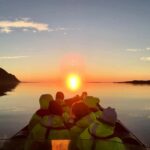
Sea Eagles hover over Henningsvær. I love how this area is one of the best places in the world to see Sea Eagles at close range, with multiple pairs living in their own nearby territories. I also love the format: first you get local stories and animal pointers, then you head out by rib boat for real wildlife searching time.
The main drawback is simple: weather controls what you can do out on the water. If conditions don’t cooperate, the seal-colony search and animal sightings can be scaled back, and you’ll be offered an alternate date or a refund.
In This Review
- Key highlights at a glance
- Why Henningsvær is such strong Sea Eagle territory
- Two hours, max 12 people, and what you’re actually paying for
- Stop 1 in Henningsvær: stories first, spotting later
- Stop 2 at Djupfjorden: the fjord that climbers love
- The seal-colony hunt: grey seals, big bodies, real odds
- Other wildlife you might also catch
- Vågakallen: the mountain view that makes the photos work
- How the rib boats change your odds (and your viewpoint)
- Who this is best for, and who should think twice
- Quick value check: is $116.10 worth it for 2 hours?
- Should you book the Sea Eagle and Seal Safari from Henningsvær?
- FAQ
- Where does the Sea Eagle and Seal Safari start?
- What time does the tour run and how long is it?
- How many people are in the group?
- Do I get a mobile ticket?
- What animals are you looking for?
- Does the tour depend on weather?
- What is the cancellation policy?
- Is this near public transportation and suitable for most people?
Key highlights at a glance
- Nordland’s Sea Eagle hotspot: many pairs with nearby territories, not just one lucky nest
- Rib boat time that puts you near the action instead of far from it
- Grey seals are huge: up to about 300 kg and around 3 meters long
- Fjord scenery with Vågakallen views from the Henningsvær area
- A small group (max 12) so you’re not lost in the crowd
Why Henningsvær is such strong Sea Eagle territory
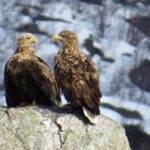
Henningsvær sits in a wider Nordland zone that really is sea eagle country. The big point here is density: this is described as the largest concentration of Sea Eagles in the whole world. That matters because sea eagles aren’t like pigeons. You don’t just spot one bird by chance and call it a day. You’re hunting for living territories—pairs that hang around because they’ve got food, nests, and local geography working for them.
What helps you as a visitor is that you’re not starting from zero. Before you’re out on the water, you’re given context about what lives here and what to look for. Once you understand that multiple pairs are operating nearby, you stop scanning like it’s a lottery. You start watching the real patterns: birds crossing in repeated routes, circling over the same kinds of areas, and reacting when something catches their attention.
And yes, seeing a sea eagle in motion is different than seeing one perched. When they glide and turn, you appreciate why they’re called kings of the skies. It’s one of those wildlife moments that feels instantly real.
A few more Henningsvaer tours and experiences worth a look
Two hours, max 12 people, and what you’re actually paying for
This experience runs about 2 hours and caps at 12 travelers. That group size isn’t just a comfort detail. It changes the feel of a wildlife trip. With a smaller group, the guide can manage attention, keep the group together more easily, and adjust plans without chaos.
Now, price: it’s listed at $116.10 per person. That’s not a bargain, especially for a two-hour outing. But it’s also not just a sightseeing boat ride. You’re paying for the combination of:
- a knowledgeable local guide format with animal-focused storytelling
- time on large rib boats that bring you close to fjord life
- the structured search for sea eagles and, if conditions allow, grey seals
Also, the booking lead time averages around 53 days, which tells me this isn’t the kind of thing you want to leave to chance if dates matter for your trip. If you’re going in high-demand weeks, booking earlier usually helps.
Stop 1 in Henningsvær: stories first, spotting later
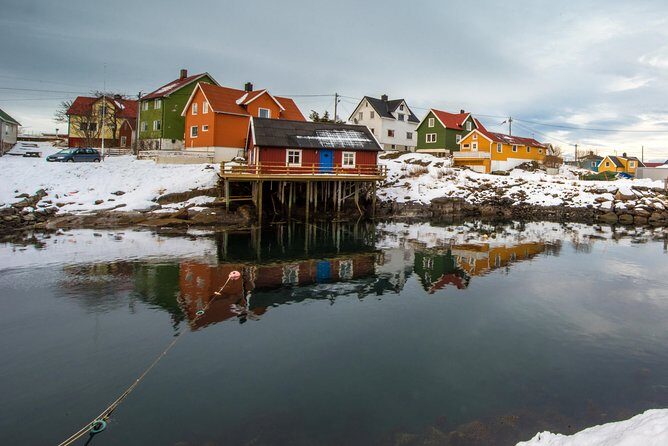
Your meeting point is Dreyers gate 15 in Henningsvær, with a start time of 2:00 pm. From there, the first part of your outing is not “just getting on the boat.” It’s an orientation—exploring Henningsvær and the surrounding scenery, with stories that connect the place to the animals you’ll be searching for.
I like this approach because it changes how you look. If you go straight out expecting wildlife to magically appear, you spend a lot of time hoping. With the storytelling first, you get mental hooks. Even if you’ve never studied seals or sea eagles, you’ll have a better sense of what kind of habitat you’re moving through and why the guide is watching certain areas.
The tour also leans hard into the idea that not many people see this side of Lofoten. They position themselves as the only one offering this kind of tour around Henningsvær. Even if you take that claim with normal skepticism, the underlying point is solid: this isn’t the generic version of Lofoten you can catch anywhere. It’s built around specific local wildlife opportunities near your starting point.
What to watch for at Stop 1
- Where the guide points out bird-likely areas based on the local setup
- How the animal stories connect to what you’ll be seeing later by boat
- Any cues about likely sightings if weather holds
Stop 2 at Djupfjorden: the fjord that climbers love
The second stop is Djupfjorden, described as one of the beautiful fjords around there. It’s also noted as a climbing paradise, with one of the most popular climbing spots in the area.
Even if you never climb, this is a useful stop. Steep fjord walls and dramatic cliff lines are part of why the wildlife routes make sense. Fjords create concentrated places where food moves, water currents shift, and birds and seals can use the geography. When you look at Djupfjorden with those clues in mind, you’re not just seeing a pretty inlet. You’re seeing a system.
A quick caution: because this is a boat-and-search experience, your exact emphasis can shift with conditions. If visibility is poor or the water is choppy, the guide may prioritize wildlife scanning over extra sightseeing time.
The seal-colony hunt: grey seals, big bodies, real odds
The heart of the animal side of this tour is the Sea Eagle search, but it also includes a conditional plan: if the weather permits, you’ll head out to an Orchard colony and try to find Grey Seals.
Here’s why that detail matters. Grey seals aren’t small. The tour information gives a sense of scale: they can be about 300 kg and roughly 3 meters long. That’s the kind of animal size that changes the entire feel when you spot one. You’re not looking at something distant and theoretical. You’re looking at a major part of the fjord ecosystem.
Important: the plan is weather-dependent. That’s not a gimmick. Open-water wildlife searching is practical science and practical timing. If the day can’t support it, the guide will adjust. That adjustment is part of the value of booking with a wildlife-focused operator rather than rolling the dice on your own.
Other wildlife you might also catch
If you’re lucky, the tour notes possible sightings of:
- Minke whales
- Porpoises
- Killer Whales
That doesn’t mean you should plan your whole trip around whales. But it does mean this isn’t a one-animal outing. It’s a search framework built for the species that share the waters and patterns in this region.
And the fact that sea eagles, seals, and whales can overlap in the same broader system is why this tour can feel like it has “more than one chapter.”
Vågakallen: the mountain view that makes the photos work
On the trip, you also admire the wild scenery and Vågakallen, described as one of Lofoten’s highest and most fabled mountains.
This is more than postcard decoration. When you’re out on the water near mountains, your brain understands scale fast. A fjord that looks dramatic from shore can feel towering once you’re moving through it. Vågakallen gives you that vertical anchor, so your mental map of the area sticks.
Photography-wise, mountains plus wildlife spotting is a challenge. You’ll want to focus on one task at a time. If the guide calls out a bird or you see a seal on the water, take in the moment before you start hunting for the perfect shot. You’ll get more keeper moments that way.
How the rib boats change your odds (and your viewpoint)
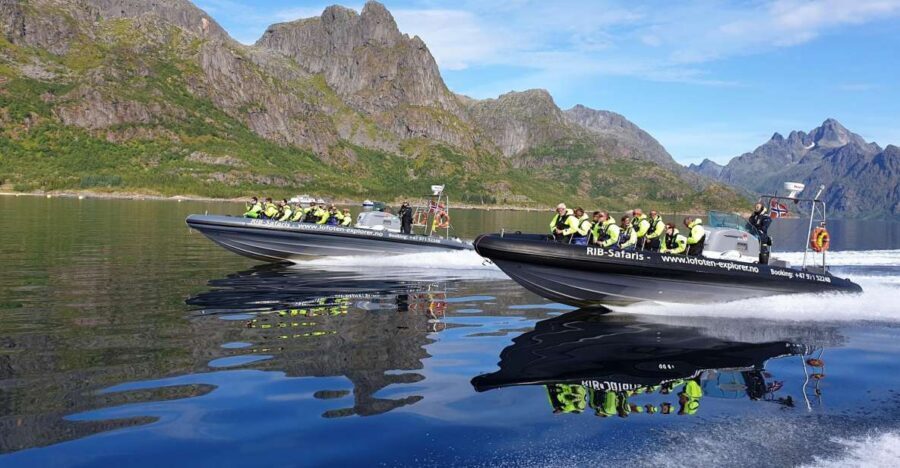
The tour uses large rib boats, with the promise of close contact with nature and wildlife. That phrase can sound like marketing, but in this context it’s meaningful. Rib boats let the guide cover areas efficiently and position the group for wildlife viewing rather than just drifting at a fixed spot.
There’s also a psychological effect. When you’re moving, scanning is easier. You notice rhythms—where the birds rise, where they pause, where seals might surface. Your attention isn’t locked to one horizon line.
Just remember the tradeoff: rib boat wildlife trips are fast-paced compared with a calm ferry ride. You won’t have long, slow breaks. The guide is watching, planning, and reacting as the day changes.
Who this is best for, and who should think twice
This tour says most travelers can participate, and it stays small with a max of 12. So it’s a good fit if you want a tight, focused wildlife window without committing to a full day.
It’s especially suited to you if:
- You want sea eagles and understand they’re easier when you’re in the right territory
- You like a plan that includes a conditional seal/whale search rather than only one animal
- You want short and action-based sightseeing instead of hours of wandering
Think twice if you’re the type who needs guaranteed sightings. Even in the right region, wildlife depends on weather and timing. The trip is built to search, not to promise.
Quick value check: is $116.10 worth it for 2 hours?
Here’s how I’d judge the value. You’re paying for four things:
- Small group time (max 12)
- Boat access in the right waters using rib boats
- Expert local interpretation via the first stop stories and animal pointers
- A realistic wildlife upgrade path: sea eagles first, then seals if weather permits, plus possible whales/porpoises/killer whales
If you compare this to doing wildlife sightseeing on your own, the main difference is efficiency and knowledge. Watching for sea eagles and seals without guidance can be frustrating, because the right patterns aren’t obvious at first glance.
So yes, it’s priced like a guided wildlife outing. But for a short trip that can deliver multiple species opportunities, it can be solid value—especially if your schedule allows you to be flexible when conditions change.
Should you book the Sea Eagle and Seal Safari from Henningsvær?
I’d book it if your top goal is Sea Eagles in a high-density area and you want a guide-led hunt that also tries for grey seals and possibly whales. The small group size and the storytelling-first approach are practical advantages, not fluff.
I’d pause if you hate weather-dependent activities. Since the seal-colony search needs good conditions, the experience can vary day to day. If you can handle that uncertainty and you want an efficient, wildlife-focused couple of hours, this tour fits the bill.
If you want a memorable Lofoten wildlife hit without spending a full day on logistics, this one is worth placing high on your list.
FAQ
Where does the Sea Eagle and Seal Safari start?
It starts at Dreyers gate 15, 8312 Henningsvaer, Norway, and ends back at the same meeting point.
What time does the tour run and how long is it?
The start time is 2:00 pm, and the duration is approximately 2 hours.
How many people are in the group?
The tour/activity has a maximum of 12 travelers.
Do I get a mobile ticket?
Yes, the tour includes a mobile ticket.
What animals are you looking for?
You’ll focus on Sea Eagles, and if the weather permits you’ll try to find Grey Seals. There’s also a chance to see minke whales, porpoises, or killer whales.
Does the tour depend on weather?
Yes. It requires good weather. If it’s canceled due to poor weather, you’ll be offered a different date or a full refund.
What is the cancellation policy?
Free cancellation is available. You can cancel up to 24 hours in advance for a full refund.
Is this near public transportation and suitable for most people?
It’s described as near public transportation, and most travelers can participate.