REVIEW · BERGEN
Scenic Bergen: Port to Port History, Alleys, & Bryggen Walk
Book on Viator →Operated by I Love Bergen · Bookable on Viator
A walk from port to UNESCO can be a lifesaver in Bergen. This one strings together historic neighborhoods and the Bryggen wharf so you leave with a clear picture of how the city worked and still works. You start in the kind of lanes people back home only see in photos, then move toward the port’s trading power.
What I like most is the way the route turns into real city orientation fast. You get Nøstet’s narrow, colorful streets and the feeling of stepping into older Bergen rather than just reading a plaque.
The second big win is where it finishes. Ending right by Bryggen means you can roll straight into museums, the funicular, or just keep wandering without planning your next move. Guides like Jordan (easy-to-hear English and lots of practical tips) and Magda (strong history plus restaurant pointers) set the tone for questions and good pacing.
One drawback: this is about 2 hours, so it’s a sampler. You’ll see the highlights and the “why,” but you won’t get the deep, slow stroll you might want if you’re staying in Bergen for several days.
In This Review
- Key things you’ll notice on this walk
- Getting Your Bearings by the Port (and why that matters)
- Nøstet: Sailor quarters, clapboard color, and tight lanes
- Nordnes: Monastery power, crime stories, and everyday Bergen
- Fish Market: A thousand years of seafood in ten minutes
- Vågsbunnen: Medieval traders and the squeeze through Bergen’s narrowest street
- Bryggen Hanseatic Wharf: Why this UNESCO pier still pulls people in
- Making the most of a 2-hour route (without rushing yourself)
- Who should book this walk (and who might want more time)
- Should you book Scenic Bergen: Port to Port History, Alleys, & Bryggen Walk?
- FAQ
- How long is the Bergen port-to-Bryggen walking tour?
- What does it cost?
- Is the tour offered in English?
- Where does the tour start and where does it end?
- How big are the groups?
- Is the tour very strenuous?
- Do I need to pay admission fees at the stops?
- What if my plans change and I need to cancel?
Key things you’ll notice on this walk
- Max 16 people keeps the discussion moving and makes questions feel normal
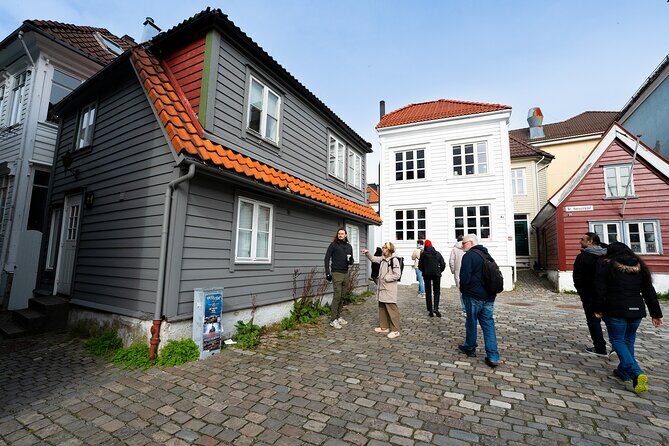
- Nøstet narrow alleys show how old sailor housing shaped the city
- Nordnes connects streets to stories about daily life, power, and punishment
- A short fish market stop helps you spot seafood for lunch
- Vågsbunnen’s medieval-to-modern contrast includes Bergen’s tightest street squeeze
- Bryggen ends the tour right where you’ll likely want to spend more time
Getting Your Bearings by the Port (and why that matters)
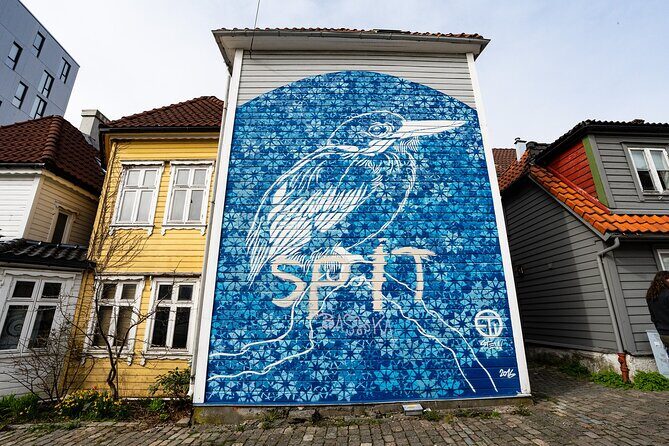
Bergen can feel like it has two cities: the one you arrive at, and the one that actually has texture—tight streets, steep turns, and pockets of daily life. This tour is designed to bridge that gap quickly. It starts at Bird Wall at Borgesmauet and ends at the front of Bryggen, so you’re not spending your limited time hunting for your own route.
The pacing is also practical. You’re walking for about 2 hours, with multiple short stops (no marathon huffing). That matters if you’re on a cruise, or if you want a first-day walk that helps you decide what to do next. Ending at Bryggen is a smart move too: you can keep exploring immediately instead of backtracking.
Another plus is the group size. With a maximum of 16, it’s small enough to hear your guide and ask questions, but big enough to keep energy up. In some cases the group is even smaller, which makes the whole thing feel like a guided stroll with room for side conversations.
And yes, it’s listed at $0 per person here—so think of this as excellent value, not a “cheap filler.” You’re getting a guide-led route through several of the most recognizable Bergen areas, including UNESCO Bryggen, without separate admission costs for the stops along the way.
You can also read our reviews of more walking tours in Bergen
Nøstet: Sailor quarters, clapboard color, and tight lanes
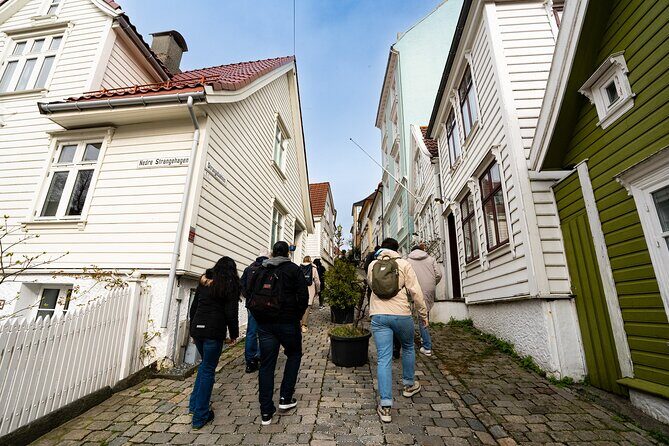
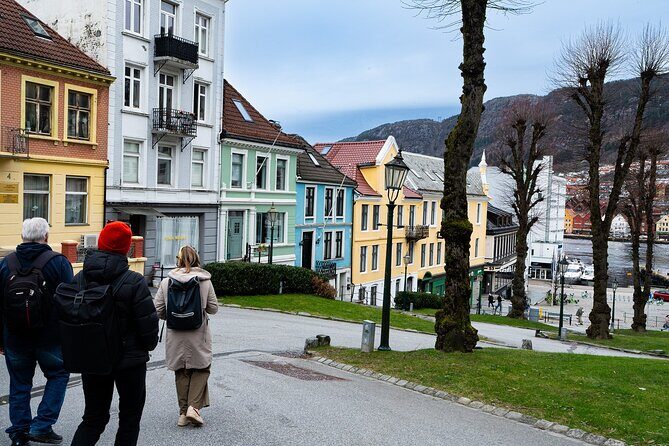
Nøstet is the start that gets your attention immediately. This neighborhood was historically a separate zone for sailors, and that legacy shows up in the layout—narrow streets lined with colorful wooden clapboard houses. It’s one of those places where you can look up and see architecture that feels closer to the water’s working life than to grand city planning.
What I like here is how the tour uses the neighborhood structure to teach history. Instead of treating “sailors” as a generic topic, you’re walking through the physical evidence: the closeness of the lanes, the sense of clustered living, and the way the area has held onto its older character even as the modern city has grown around it.
It also sets you up for the next stops. After Nøstet, Nordnes doesn’t just sound like a different district—it starts feeling like the story continues. You understand that Bergen didn’t grow as one flat grid; it grew in zones tied to power, work, and trade.
Time-wise, the stop is brief—about 20 minutes—so don’t expect it to replace an independent neighborhood walk. But as an opening, it’s strong: you leave the first stretch with the right mental picture of what Bergen’s older streets feel like, not just what they look like.
Nordnes: Monastery power, crime stories, and everyday Bergen
Nordnes is where the tour turns from “pretty alleys” into “how the city ran.” Historically, Nordnes was tied to a wealthy monastery, and its development in the 16th century put it in direct competition with the Hanseatic League at Bryggen. That tension between local power and trading power is one of the themes that keeps showing up in Bergen.
You’ll also hear about darker chapters. This area was connected with crime and punishment, including execution sites placed here. It’s not the kind of history that lives only in a museum—it’s woven into the city geography. That makes the neighborhood feel more real because you’re learning why certain places mattered.
Today, Nordnes is also a lived-in part of Bergen, known for parks, narrow lanes, cafés, and even fjord swimming. I like how the guide doesn’t treat Bergen as frozen-in-time. You’re asked questions and invited to think about modern life: how education works, what housing costs might look like, and what daily routines feel like here.
The Northnes stop is longer than the first (about 40 minutes), which helps. It’s the place where you can actually feel your bearings improve—like the guide is handing you a map only you can read, built out of stories and street turns.
If you’re the type who likes to ask questions, Nordnes is the easiest stop to do it. It’s broad enough for the guide to cover a lot, but focused enough that you don’t feel lost between facts.
Fish Market: A thousand years of seafood in ten minutes
Then you hit the fish market. This stop is short—around 10 minutes—but it’s timed well because you’re moving from history into a practical city experience. The fish market has been around for roughly 1,000 years, so you’re not just looking at a modern food hall. You’re standing in a working tradition that’s helped define Bergen’s identity.
What makes this useful is how your guide can point out what’s worth trying. Even if you don’t plan to buy anything right away, you get a sense of the variety of seafood found on Norway’s west coast. That matters for lunch later, because you’re more likely to order with confidence rather than scanning menus hoping one item sounds safe.
If you’re hungry, treat the fish market as your cue. You can come back later for lunch, armed with the guide’s recommendations. And if you’re not hungry, it still works as a reset—sea air, market energy, and a quick look at what locals care about.
One caution: since the stop is brief, don’t expect to study every stall in detail. This is a “get your bearings” stop for seafood culture, not a full market deep scan.
Vågsbunnen: Medieval traders and the squeeze through Bergen’s narrowest street
Next comes Vågsbunnen, the neighborhood that connects the Hanseatic era to the port’s later international traffic. Here you’re told about Dutch, English, Scottish, and French traders living and competing in the medieval center. It’s a reminder that Bergen’s port didn’t matter only to Norwegians—it mattered to the wider trading world.
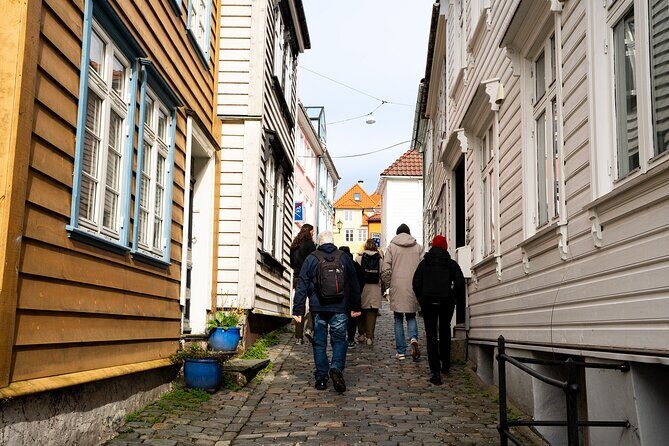
Vågsbunnen today is known for trendy bars and cafés, so the feel is different from Nøstet. You still get preserved medieval streets, but the vibe is more modern. The best part of this stop is how physical it is: you’ll walk down one of the best-preserved medieval streets and then get a chance to squeeze through Bergen’s narrowest street.
That squeeze sounds small, but it does something important. It makes the medieval city scale feel real. When a street is that tight, you understand why people built the way they did, why the city’s foot traffic mattered, and why survival and trade depended on movement efficiency.
Time-wise, you’re here for about 20 minutes. It’s enough to feel the contrast—medieval street fabric, modern cafés—and then move on to Bryggen before the tour loses momentum.
You can also read our reviews of more historical tours in Bergen

Bryggen Hanseatic Wharf: Why this UNESCO pier still pulls people in
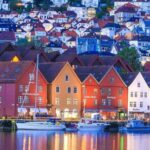
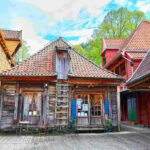
Bryggen is the headline, and your ending makes sense. This trading area in Bergen has been there for about 1,000 years and was historically operated by German traders linked with the Hanseatic League. Today it’s on the UNESCO World Heritage List, highlighted as a best-preserved medieval pier in Northern Europe.
You’re not just seeing buildings from the outside. You’re standing at the edge of a trading system that shaped the city’s economy, its architecture, and its identity. The Bryggen lines tell a story of commerce and community without needing a textbook voice-over.
What I like about ending here is that it naturally gives you options after the tour. Your guide finishes in the perfect place for what you might want next: museum time, funicular access, or shopping in the area. It’s a “done-in-one” plan if you want to keep exploring without recalculating routes.
Also, the tone your guide brings matters at Bryggen. In small group walks, you often get better pacing and more direct answers. Names you might hear include Magda and Jordan—both known for clear English and helpful tips that make Bryggen easier to navigate.
If you have limited time in Bergen, Bryggen is one of the stops you don’t want to skip. It’s the part that turns your day from walking into understanding.
Making the most of a 2-hour route (without rushing yourself)
A short tour is only useful if it doesn’t make you feel like you’re being herded. The good news here: the structure is built around short segments and natural stopping points. Each neighborhood gets enough time to register what makes it different, then you move on.
Here’s how to get better value from the time you spend:
- Ask one question at each stop. Nordnes is ideal for city-life questions; Bryggen is ideal for trade-and-time questions.
- Use the fish market ideas for lunch. Even ten minutes can steer you toward seafood choices you’d never pick on a menu blind.
- Plan to continue after Bryggen. The tour ends right where most people want to linger, so give yourself extra time instead of rushing back out.
A practical note: the tour asks for moderate physical fitness. That’s not “no stroller, no problem” territory, but it does suggest normal city walking with some uneven ground and lots of turning corners. Wear shoes you trust.
Language is English, and a mobile ticket is used. That’s helpful when you’re hopping between port areas and don’t want extra paper. Service animals are allowed as well, which is good to know.
Who should book this walk (and who might want more time)
This tour fits best if you:
- are in Bergen for a short visit and want a fast understanding of the city center
- like guided context more than just photo stops
- want a small-group experience that makes questions easy
- are starting from the port area and want to finish at Bryggen
It’s also ideal for cruise-day planning. The route is set up so you’re close to where you likely start, and you end right in a high-value area.
If you’re in Bergen for several days and already know the basics, you might find you want more time on your favorite streets afterward. That’s normal. This isn’t a full-day Bergen master plan—it’s a sharp, efficient orientation that gets you to the places you’ll likely return to.
Should you book Scenic Bergen: Port to Port History, Alleys, & Bryggen Walk?
Yes—if you want a guided, structured first look at Bergen’s port-side core. The value is hard to ignore: a small group, English-guided storytelling, multiple neighborhood contrasts, and an ending at UNESCO Bryggen where you can keep going.
Skip it only if you already have a detailed self-guided route mapped out and you don’t need history context. Also, if your travel style is slow and wandering for hours with no “stop-and-explain” rhythm, you may prefer a longer, less structured walk.
If you’re unsure, book it anyway and treat it as your first draft. Bergen rewards second drafts, and this tour sets you up to write the rest of the day in a smarter direction.
FAQ
How long is the Bergen port-to-Bryggen walking tour?
It runs for about 2 hours.
What does it cost?
The price shown is $0.00 per person.
Is the tour offered in English?
Yes, it’s offered in English.
Where does the tour start and where does it end?
It starts at Bird Wall, Borgesmauet 4, Bergen, and ends in front of Bryggen (Bergen 5003).
How big are the groups?
The tour has a maximum of 16 travelers.
Is the tour very strenuous?
It’s listed as moderate physical fitness, so you should be comfortable with a walking tour.
Do I need to pay admission fees at the stops?
The stops shown list admission ticket free, so there are no separate admission fees included there.
What if my plans change and I need to cancel?
You can cancel for a full refund if you cancel at least 24 hours in advance of the local start time.