REVIEW · TROMSO
Tromsø: Northern Lights Hunt with Photographer
Book on GetYourGuide →Operated by Your Tromsø Guide · Bookable on GetYourGuide
The aurora hunt is a game of patience.
This Tromsø experience keeps things small-group and personal, and it’s guided by Mirko, who focuses on where the sky shows its best side. I love that you get professional photos as part of the night, not just a hope-and-pray snapshot, and you also get a real crash course on aurora behavior, local culture, and how to work your camera.
One thing to plan for: there’s no guarantee.
Even with clear-sky chasing, clouds or low solar activity can steal the show, and some nights mean lots of waiting before (or even without) the lights.
In This Review
- Key things that make this night work
- Tromsø after dark: why the hunt starts beyond the city lights
- Mirko’s role: science, local culture, and the why behind the lights
- Finding the right spot: how clear skies change the mood
- Campfire comfort in the Arctic: soup, bread, and hot drinks
- Northern Lights photography support that actually helps
- Timing: what 7 hours feels like in the real world
- What you’ll like most: the small-group advantage
- Price and value: what $241 gets you for a photographer-style aurora hunt
- Packing checklist: what to bring (and what to avoid)
- Who this night suits best (and who should skip it)
- Should you book this Northern Lights hunt with photographer?
- FAQ
- How long is the Northern Lights tour in Tromsø?
- How many people are in the group?
- Is a thermal suit included?
- Do I get help with Northern Lights photography?
- Are the Northern Lights guaranteed?
- What winter clothing should I bring?
Key things that make this night work
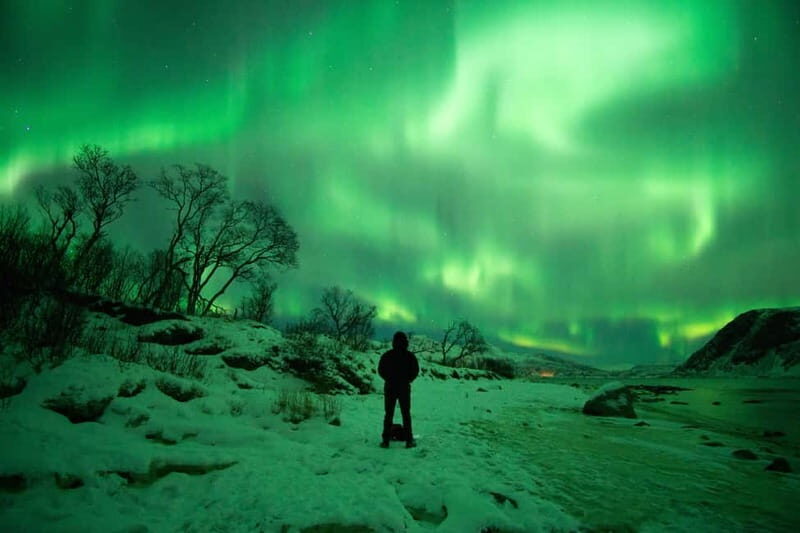
- Small group energy (8 people max) so you’re not fighting for space and you get more attention for photos.
- Clear-sky chasing strategy, with the flexibility to drive farther (even toward Finland) when Tromsø skies aren’t cooperating.
- Real Arctic warmth, including provided thermal suits plus campfire comfort with homemade soup and hot drinks.
- Aurora photo support that’s practical, with professional tripods and a camera setup workshop if you bring equipment.
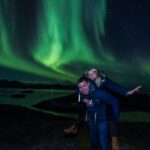
- Professional portraits included, taken by the guide so you still get great images even if you’re busy watching the sky.
- The “wait” is built in, because auroras can show up quickly or after a long pause.
Tromsø after dark: why the hunt starts beyond the city lights
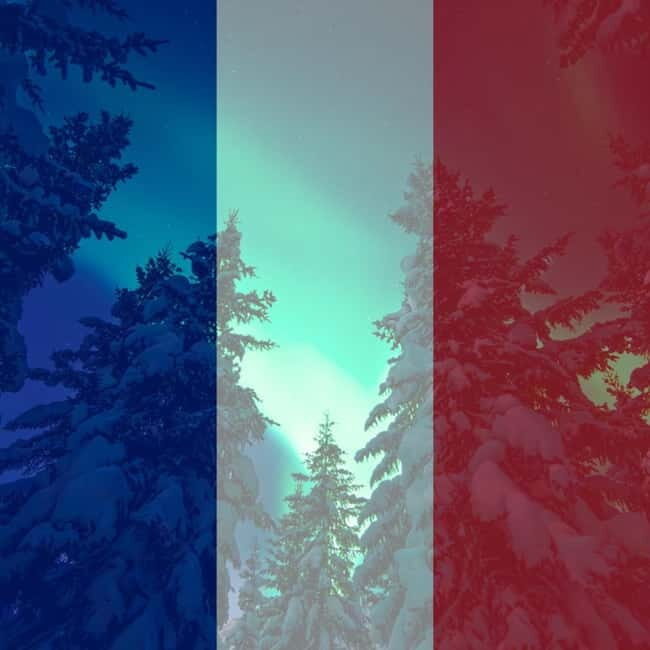
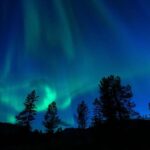
Tromsø is famous for the Northern Lights, but that also means light pollution can blur your view. The core idea here is simple: you don’t just stand around in town hoping for luck. Instead, you head out into the Arctic wilderness where darkness is better and the sky looks cleaner.
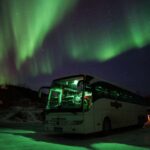
The exact direction depends on the evening’s conditions. If Tromsø is clouded, you’ll prioritize clearer skies, and you may drive far enough to cross into Finland if that’s what the weather supports. This is a smart approach because clouds are the main enemy. When the sky is covered, no amount of excitement can fix it.
Also, you should expect real “aurora hunt” time. Some nights may feel short—maybe a quick drive and then watching begins. Other nights can turn into a longer search, because auroras don’t schedule themselves for convenience.
You can also read our reviews of more photography tours in Tromso
Mirko’s role: science, local culture, and the why behind the lights
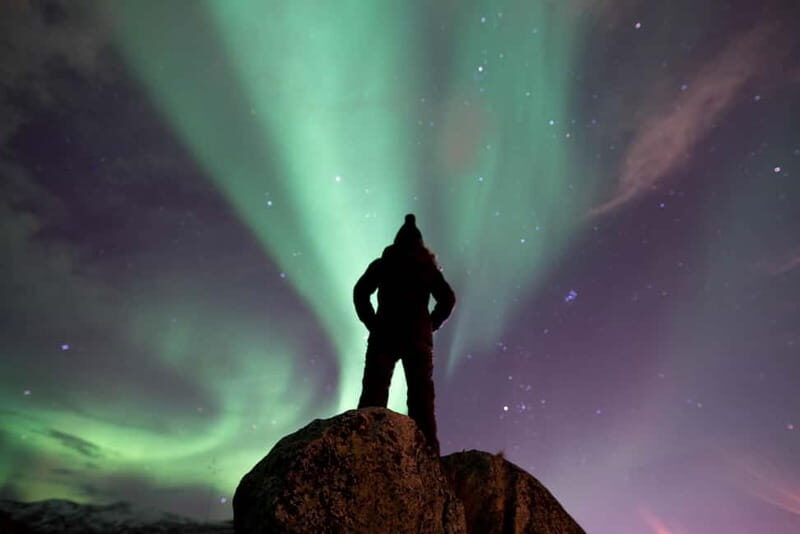
What makes Mirko’s guiding style effective is that it’s not just facts thrown at you while you freeze. He explains the Northern Lights as a phenomenon, then ties it to the region’s history and culture so it feels grounded, not random.
That matters because it changes how you watch. Instead of seeing green streaks and calling it a day, you’ll start noticing patterns: how the aurora can shift, how activity can build, and why timing and sky clarity matter. You’ll also get context for what you’re looking at—so the experience feels like more than a photo stop.
Language is French, and the guide also includes a photo workshop. If you’re comfortable in French, you’ll likely enjoy the explanations more than you would with a purely English-only setup.
From the way the night is structured, you also get a gentle rhythm: talk, watch, warm up, set up your camera, watch again. When people are paying attention to the sky rather than drifting into “cold boredom,” the whole group benefits.
Finding the right spot: how clear skies change the mood
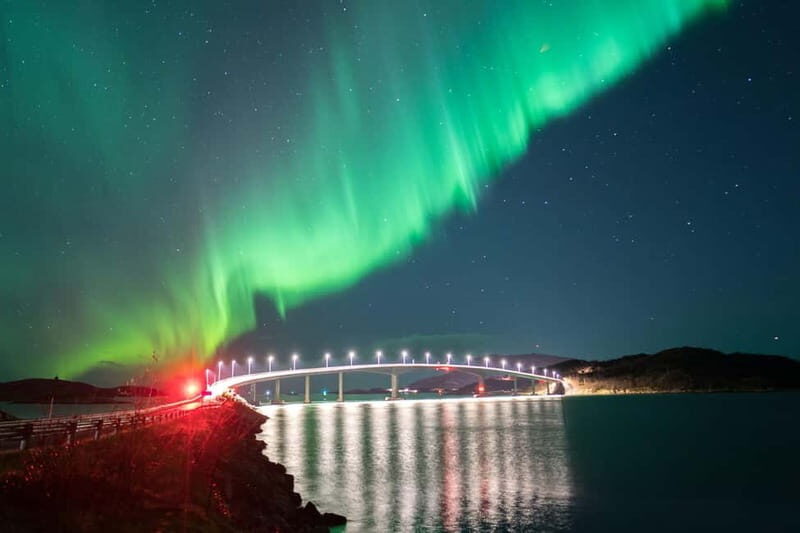
Once you’re out of the city, you’re searching for a quiet, low-light location. The goal is to avoid artificial light sources and to give the aurora room to show itself.
Then comes the toughest part: waiting. The aurora can appear after a few minutes, but it can also take much longer. Your best comfort strategy is to accept that waiting is part of the show, not a delay of it. Bring patience and a sense of humor—because you might spend time bundled up while the sky decides what it wants to do.
The nice part is that the tour design supports the waiting with warmth and food. You’re not left standing there with cold hands and nothing to do. This is one of the practical reasons the experience earns such high praise.
Campfire comfort in the Arctic: soup, bread, and hot drinks
The cold is real. In winter, temperatures can range from about +5°C to -30°C, so the experience treats warmth as a core feature, not an afterthought. You’ll be provided a thermal suit, and the night also includes a campfire setup.
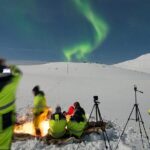
Once you’re settled at the spot, you can expect homemade soup, bread, and hot drinks such as hot chocolate, tea, and coffee. This is more than a snack. When you’re watching the sky for a long stretch, warm food helps you stay alert, not foggy and exhausted.
There’s also a social side to this. Around the campfire, you’re sharing the night with a small group of people, so conversation doesn’t feel awkward, and you can regroup after camera setup or brief aurora sightings.
One extra practical note: smoking is prohibited during the excursion, even during breaks outdoors, and also in the vehicle. That’s not just a rule for politeness; in a small group with shared gear and close quarters, smoke can cling to jackets and become a real distraction.
Northern Lights photography support that actually helps
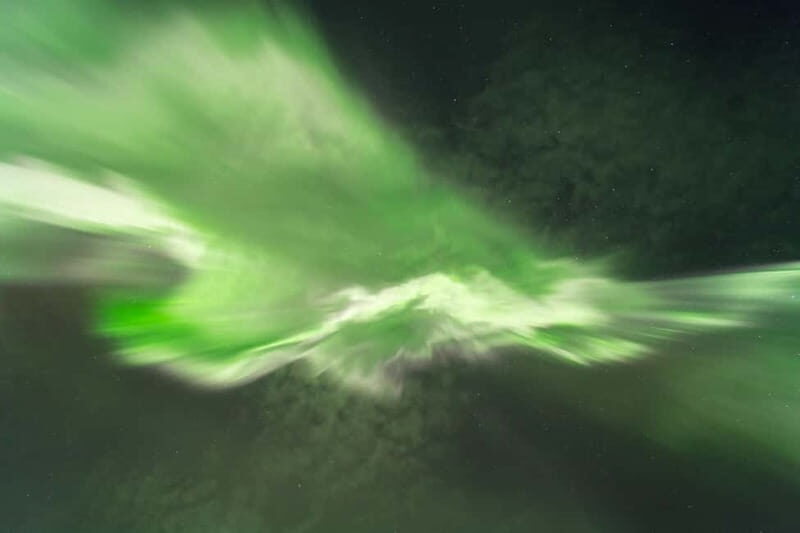
If you care about photos, this is one of the strongest parts of the night. You get professional tripods for stable shooting, plus a photo workshop focused on how to capture the aurora.
You’ll also get guidance on camera setup if you bring your own camera. That can make a huge difference because aurora photography often fails for boring reasons: wrong settings, unstable framing, or forgetting that you’re shooting something that changes fast. Tripods help you keep the frame steady while the sky moves.
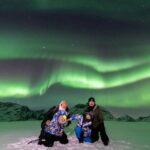
Then there’s the built-in safety net: the guide takes professional photos of you. That matters because even with good camera skills, not everyone wants to spend the entire night buried in settings. With portraits handled, you still leave with images even if the best aurora moment happens while you’re swapping batteries or waiting for your eyes to adjust.
The professional photo aspect is also a value point. It turns the night into an experience where your memory isn’t only a lottery ticket.
Timing: what 7 hours feels like in the real world
The duration is 7 hours, but the experience won’t rush you. The total time depends on how long it takes to find the right conditions. Some nights may mean a shorter drive and faster setup, while other nights mean you’re really searching.
Inside those 7 hours, the flow usually follows a pattern: you go out to where the sky has the best chance, you set up in a darker area, you warm up, and you keep your eyes on the aurora window. The aurora’s unpredictability is the reason the “wait” isn’t a side note—it’s planned for.
So how should you approach it? Don’t schedule your day right before or right after with anything strict. Keep your energy for the cold, the waiting, and the possibility that the lights show up when you least expect it.
What you’ll like most: the small-group advantage
A big reason this stands out is the group size: limited to 8 participants. That changes the whole feel. You get less crowd noise, fewer people blocking each other’s views, and more room to set up for photos without turning it into a gear maze.
In a small group, the guide can also tailor attention. If someone has questions about their camera, the answer doesn’t get swallowed by the clock. If someone is new to the Northern Lights, the guidance can stay friendly and clear. And if you’re simply there to watch, the night doesn’t become technical training disguised as aurora viewing.
You’ll also find that small-group dinners and campfire moments feel more human. It’s easier to share the night when you’re not surrounded by strangers in a mass setting.
Price and value: what $241 gets you for a photographer-style aurora hunt
At about $241 per person for a 7-hour night, this isn’t a cheap “stand and hope” option. But the value comes from what’s included.
Here’s what you’re effectively paying for:
- Provided thermal suit for Arctic cold
- Professional tripods for stable aurora shots
- A photo workshop plus on-the-spot camera help (if you bring a camera)
- Professional photos taken by the guide
- Dinner-like warmth: homemade soup, bread, and hot drinks
- Campfire experience in the Arctic wilderness
When you add those pieces up, you’re not just buying access to a sky event. You’re buying equipment support, warmth infrastructure, and a guided photo outcome that lowers stress. That’s the kind of value you feel in the moment: fewer frustrations, better results, and a more guided experience from start to finish.
There’s also a bonus for people who want flexibility: free cancellation up to 24 hours in advance is available, and there’s a reserve now & pay later option. That helps when the weather can flip quickly in winter.
Packing checklist: what to bring (and what to avoid)
The tour provides thermal suits, but you still need basic winter clothing—especially for inner layers. Think hat, scarf, gloves, and proper snow clothing. You’ll also want snow boots if you have them, since you’ll likely be standing on uneven ground in cold conditions.
Other items you should bring:
- Passport or ID card
- Water
- Hat
- Gloves
- Scarf
- Thermal clothing (as an extra layer under the suit)
Rules matter too. Pets aren’t allowed, and strollers are restricted (including non-folding strollers). Smoking is prohibited during the excursion, alcohol and drugs are not allowed, and you also can’t bring fireworks. Food and drinks aren’t allowed in the vehicle.
If you’re prone to feeling cold, this is where people usually win or lose the experience. Don’t underpack just because the suit is provided.
Who this night suits best (and who should skip it)
This is a Northern Lights hunt with an included photographer angle, so it works best for adults and independent travelers who can handle outdoor winter time and waiting.
It’s not suitable for:
- Children under 14
- People with mobility impairments or wheelchair users
- People over 70
If you’re traveling as a couple, a group of friends, or a solo traveler who wants quiet attention, the small size makes it a good fit. If you’re a beginner to Northern Lights photography, the workshop and tripods are a strong help. If you’re an experienced photographer, you’ll still appreciate the guidance and the provided stability.
Should you book this Northern Lights hunt with photographer?
Book it if you want the best combination of dark-sky hunting, real warmth, and photo support—without turning your night into a stressful DIY project. The professional portraits and tripod setup are especially appealing if you’re traveling to see the aurora and you also care about leaving with strong images.
Skip it if you’re highly sensitive to cold, you need guaranteed aurora, or you fit into the tour’s age/mobility limits. The sky is unpredictable, and even with smart searching, sometimes clouds win.
If you’re flexible, patient, and ready for an Arctic evening that mixes science, storytelling, and campfire comfort, this is the kind of Northern Lights night that sticks with you.
FAQ
How long is the Northern Lights tour in Tromsø?
The experience lasts 7 hours.
How many people are in the group?
The group is limited to 8 participants.
Is a thermal suit included?
Yes. You’ll receive a thermal suit to help you deal with Arctic cold.
Do I get help with Northern Lights photography?
Yes. There’s a photo workshop, and the guide can show you how to set up your camera to capture the aurora. Professional tripods are included, and professional photos of you are taken during the experience.
Are the Northern Lights guaranteed?
No. The Northern Lights are unpredictable, and nights without aurora can happen.
What winter clothing should I bring?
Bring basic winter clothing such as a hat, gloves, scarf, snow clothing, and thermal clothing. The tour also requests that you bring water.