REVIEW · NARVIK
Narvik: Narvik War Museum
Book on GetYourGuide →Operated by Visit Narvik · Bookable on GetYourGuide
Norway’s WWII story here runs 62 days long. Narvik War Museum turns the Battle of Narvik in April 1940 into a clear, human-focused experience, including both the naval fighting and the mountain war that followed. It also pushes beyond history dates, drawing lines from 1945’s end of the occupation to the world you live in now.
I love the museum’s high-quality artifacts and models, because they make the conflict feel concrete without turning it into spectacle. I also like the interactive digital surfaces and the way the exhibits use texts and pictures to keep the story easy to follow.
One thing to consider: the subject matter is serious, and the museum’s tone is reflective. If you’re shopping for light sightseeing only, this may feel heavy.
In This Review
- Key things to know before you go
- Why the Battle of Narvik museum experience feels different
- Getting your bearings: how the museum tells the April 1940 story
- Artifacts and models: where the experience becomes real
- Interactive digital surfaces and the link to peace today
- How long it takes: a realistic plan for 1.5–2 hours
- Price and what you’re really paying for
- Timing your visit in Narvik: hours, pace, and comfort
- Who should book Narvik War Museum
- Should you book Narvik War Museum?
- FAQ
- What’s the Narvik War Museum about?
- How long should I plan for my visit?
- Where is it located?
- How much does a ticket cost?
- What are the opening hours?
- Is it wheelchair accessible?
- What languages are available?
- Is the ticket valid for more than one day?
- Is there free cancellation?
Key things to know before you go
- Battle of Narvik focus: Built around the April 1940 fighting and the 62-day sequence.
- You can translate fast: A QR code at the entrance lets you translate the content.
- Plan for 1.5–2 hours: That’s the realistic time to take it in without rushing.
- Family-friendly in approach: The museum welcomes all ages and learning-oriented visitors.
- Languages are practical: English is available, and you can use translation support too.
- Wheelchair support exists: Wheelchair access is available, and staff can help with access or loan.
Why the Battle of Narvik museum experience feels different
The Battle of Narvik isn’t one of the WWII chapters most people memorize, but it matters. This museum is built to explain what happened in the region when the naval battles and the mountain war unfolded together for 62 dramatic days in 1940. That combination—ships and harsh terrain—helps you understand why this wasn’t just a single event. It was a long fight that reshaped an entire place.
What I like is how the museum treats the story as more than military trivia. You’re asked to think about war, peace, and the value of human life—ideas that can feel abstract until they’re paired with real artifacts and a timeline you can actually track. The goal isn’t shock; it’s understanding.
If you’re the kind of traveler who enjoys history museums when they make you slow down, this one has the right pacing. If you prefer action-only displays, you may find the more reflective parts take time. Either way, you’ll leave with a clearer sense of what the region went through.
You can also read our reviews of more tours and experiences in Narvik.


Getting your bearings: how the museum tells the April 1940 story
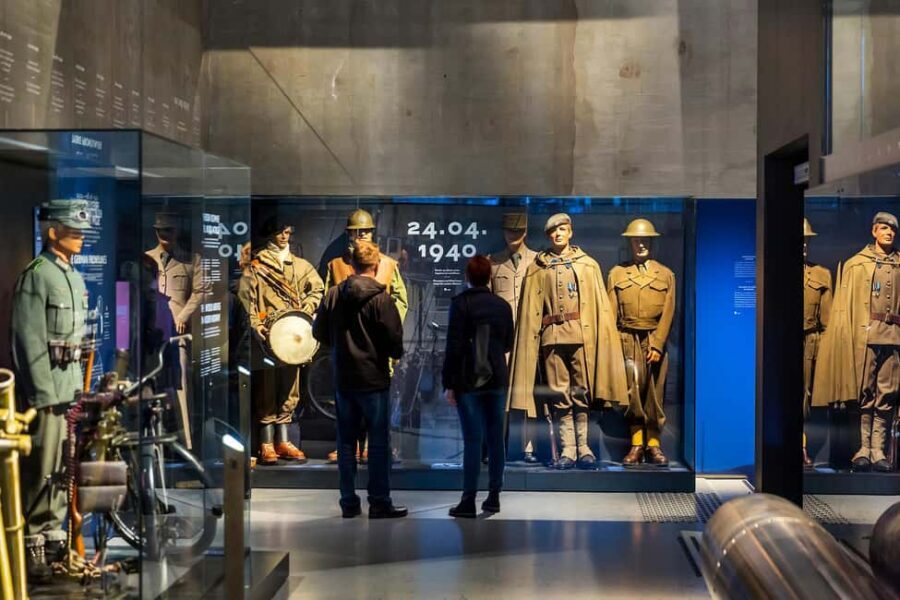
Narvik War Museum is organized around a simple idea: the battle changed everything, and the exhibits help you see how. As you move through, you’ll be guided through the story of Nazi-Germany’s attack and occupation and how those early days led into the longer struggle.
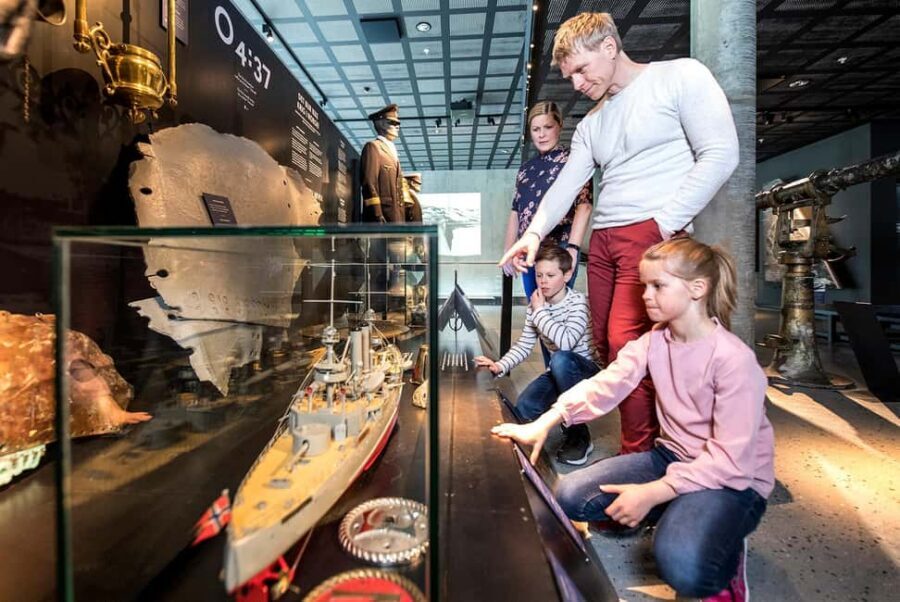
The museum uses several formats at once—artefacts, texts, pictures, and interactive digital surfaces—so you don’t have to read everything to get the meaning. If your brain likes maps and sequences, you’ll benefit from the structure. If you prefer learning with your eyes, the visuals do a lot of the work too.
One practical tip: don’t try to sprint. At this kind of museum, the details matter because they connect to the bigger questions. Give yourself time to read what you can, then use the interactive elements when you want to check your understanding.
The museum also makes a clear connection to the present. It’s not content locked in 1940. It draws lines from the days after 1945 into today’s world, which changes how you’ll interpret what you’re seeing. You’ll likely notice the theme shifts from events to consequences, and from tactics to ethics.
Artifacts and models: where the experience becomes real
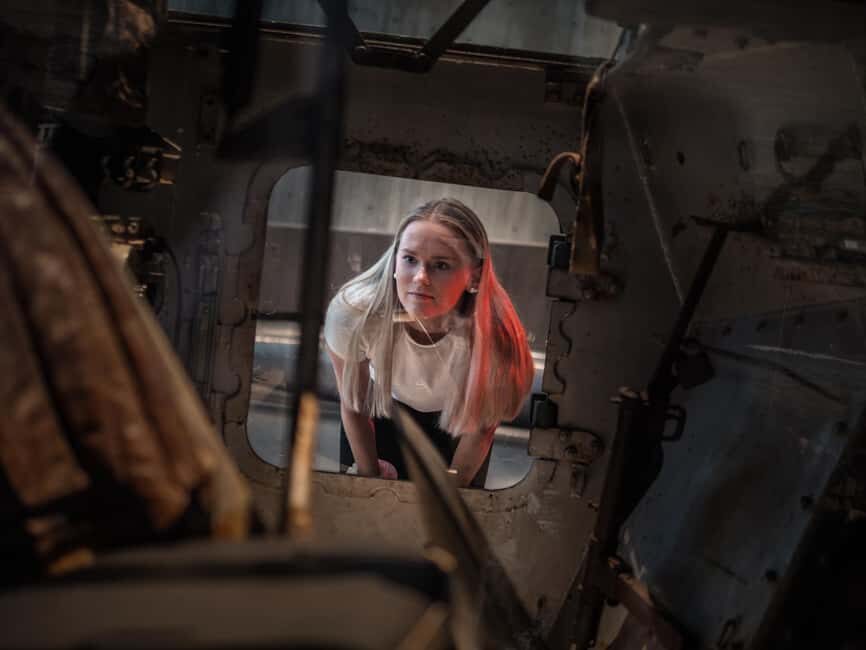
A big reason this museum works is the way physical objects are used. The displays include artefacts and collection pieces, and the museum also features models—an approach that’s especially helpful for battles that are hard to picture from a textbook. Models can’t replace real footage, but they can help you understand scale and positioning, especially when ships and land fighting overlap.
I also appreciate how the information isn’t hidden behind jargon. You get texts and pictures, and that combination supports both quick scanning and slower reading. If you like to anchor your visit with a few well-chosen facts, this is the right setup.
Language support is built into the experience at the entrance. There’s a QR code you can use to translate the content, which makes a big difference if your Norwegian is limited. In practice, it means you’re not forced to guess what the museum is saying. You can move at your own speed without losing the thread.
For me, this is where the value shows: the museum isn’t just showing you a topic. It’s giving you tools to understand it.
Interactive digital surfaces and the link to peace today
The museum’s interactive side isn’t just there for entertainment. The interactive digital surfaces help connect WWII to the world you’re living in now. That’s important, because it turns the visit into more than a date-and-place lesson.
As you go, you’ll see how the exhibits explore ideas like “us” and “the others.” That framing is uncomfortable, but it’s also useful. It’s a reminder that war often grows from dehumanization and categories people use to justify what they’re about to do. When a museum makes you face those mechanics, it’s doing something more practical than telling a story you forget later.
The museum’s reflection themes—war, peace, and human life—are woven through the displays, not tacked on at the end. So you’re more likely to leave thinking, not just remembering. If you’re traveling with teenagers, this is the kind of museum that can spark good questions because it doesn’t treat WWII as ancient history.
One drawback to plan for: because it’s reflective, it may not feel like a “hands-on fun stop.” The interactivity is meant to clarify meaning, not just give you something to press.
How long it takes: a realistic plan for 1.5–2 hours
The museum recommends about 1.5–2 hours, and that’s a good target. You’ll likely want that time if you plan to read key sections, use the interactive elements, and not rush through the reflective parts.
If you only have about an hour, you can still do it, but you’ll need to accept a fast pace. Focus on the main narrative thread and the interactive parts that seem most helpful for your understanding. Skip anything that feels like repetition and save your energy for the segments that connect WWII to today.
If you have closer to two hours, you’ll have the breathing room to translate more carefully with the QR code and to slow down where the museum asks for thought. That’s the difference between skimming a topic and actually absorbing what the exhibits are trying to say.
Also check the hours before you go. The museum runs every day 10am–4pm, and from June 9 to August 24, 2025 it extends to 10am–6pm. If you’re visiting during summer, the extra evening time can help you avoid the pressure of last entry.


Price and what you’re really paying for
At $15 per person, this museum is priced for solid value. You’re paying for a focused experience: a clear 62-day narrative tied to real objects, plus interactive elements and reflective themes.
In other words, you’re not paying for a large building with lots of unrelated galleries. You’re paying for a museum that concentrates on one place, one battle, and the human meaning behind it. That concentration tends to make the time feel efficient, especially if you only have a day in the area.
If you care about context—how WWII affected this region and why the museum connects it to today—that price feels fair. If you want a more entertainment-driven stop, it might feel expensive for the level of casual fun. But for history-and-meaning travel, this is a straightforward deal.
Timing your visit in Narvik: hours, pace, and comfort
This is a museum experience you’ll feel in your body. Even if the exhibits are well organized, the topic is emotionally heavy. I’d plan it for when you have enough energy afterward—maybe not as the very last activity of the day if you’re the type who carries mood back with you.
The museum is open daily during the listed hours, with a summer extension. If you’re there in the busier season, the longer window from June 9 to August 24 (10am–6pm) is handy. You get more flexibility to combine it with other Narvik sightseeing.
Comfort matters too. The museum is wheelchair accessible, and staff can help with access or the loan of a wheelchair if you need it. That matters because it reduces the chance of you arriving and scrambling.
In short: it’s easy to fit in, but choose your moment wisely so the reflection lands the way it’s meant to.
Who should book Narvik War Museum
You’ll probably love this if:
- you want a WWII museum that explains events clearly, not just displays them
- you like interactive learning tools (digital surfaces, QR translation)
- you enjoy reflective travel that makes you think about peace and human choices
It also works well for mixed groups. The museum welcomes guests of all ages, and the mix of artefacts, texts, pictures, and interactive elements helps different learning styles. People who don’t want to read every line still have the visuals; people who want detail can use translation support.
If your idea of a “great museum day” is mostly passive watching and you hate emotional themes, you may find this intense. But if you like meaning over noise, it’s a smart stop.
Should you book Narvik War Museum?
Book it if you’re in Narvik and you want one day that connects a specific WWII battle to bigger questions about peace and human life. The 62-day focus, the artifact-and-model quality, the interactive digital surfaces, and the QR translation support make it easy to learn without getting lost.
Skip it only if you’re chasing light, purely scenic sightseeing. This museum is built to make you think—and that’s exactly why it’s worth your time.
FAQ
What’s the Narvik War Museum about?
Narvik War Museum is based on the Battle of Narvik in April 1940, showing how the naval battles and the mountain war unfolded over 62 days, and how those events connect to thoughts about war, peace, and human life.
How long should I plan for my visit?
The recommended time is about 1.5 to 2 hours.
Where is it located?
It’s in Nordland County, Norway.
How much does a ticket cost?
The price is $15 per person.
What are the opening hours?
For 2025–2026, it’s every day 10am–4pm. From June 9 to August 24, 2025, it’s 10am–6pm.
Is it wheelchair accessible?
Yes. The museum is wheelchair accessible, and staff can help with access or the loan of a wheelchair.
What languages are available?
English is supported, and you can translate the information using a QR code at the entrance.
Is the ticket valid for more than one day?
No. The ticket is valid in the museum’s opening hours for that day, and it’s described as valid 1 day.
Is there free cancellation?
Yes. You can cancel up to 24 hours in advance for a full refund.