REVIEW · LOFOTEN
Lofoten Islands: Guided Snowshoeing Tour – Uphill version
Book on Viator →Bookable on Viator
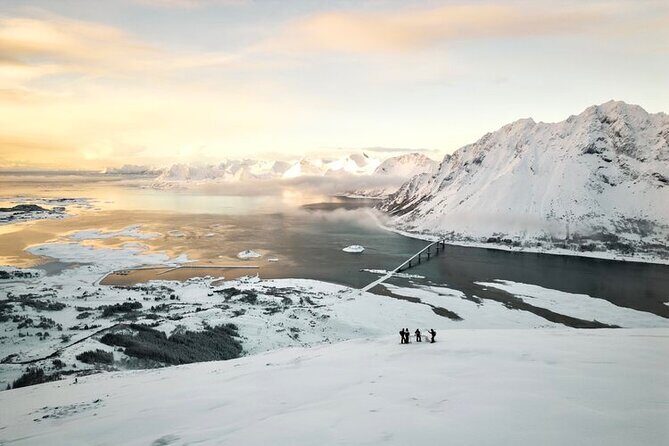
Snowshoeing in Lofoten makes winter feel close-up. This uphill tour mixes a real workout with big views over frozen water and snow-covered islands, guided all the way by a leader who keeps you moving safely. You’ll start in Gimsøystraumen and head into powdery terrain where you may reach a high point of 560 masl if conditions allow.
I especially loved the pacing and the gear setup. Micro spikes and snowshoes are provided, and my favorite part was how the guide and group get ready so you can actually enjoy the climb. In one experience I learned a lot from guide Timea, and even got distracted—in the best way—by Luna, a friendly dog who makes the whole morning feel more human and less robotic.
The main consideration is that this is the uphill version. If you don’t have a moderate fitness level, you may find the effort too much for 4 hours on snow, even with guidance and breaks.
In This Review
- Key Highlights You Should Know Before You Go
- Uphill Snowshoeing in Lofoten: What the 4 Hours Really Feels Like
- Where You Start at 10:00: Gimsøystraumen and the Small-Group Setup
- Gear Check: Snowshoes, Poles, and Micro Spikes That Matter
- The Climb and the Views: Powder Snow, Frozen Water, and a 560 m Goal
- Learning Along the Way: Nature and Local Culture From Your Guide
- What to Bring (Since Snacks and Water Aren’t Included)
- How Fitness and Timing Change Your Experience
- Price and Value: Is $140.24 Worth It?
- Should You Book the Uphill Lofoten Snowshoe Tour?
- FAQ
- How long is the guided uphill snowshoeing tour?
- Where do I meet the guide?
- What time does the tour start?
- Is the tour suitable for beginners at snowshoeing?
- Do I get snowshoe and safety gear included?
- What fitness level is required?
- What happens if weather isn’t good?
Key Highlights You Should Know Before You Go
- Uphill effort, not a stroll: Expect a workout and steeper sections.
- Possibility of reaching 560 masl: The top goal depends on conditions.
- Gear included for traction and control: Snowshoes, poles, and micro spikes are provided.
- Small group size: Maximum of 7 travelers keeps things personal.
- Beginner-friendly guidance: You’ll get gear explanations and technique coaching on the spot.
- Nature and local context along the route: Your guide shares what you’re seeing in winter.
Uphill Snowshoeing in Lofoten: What the 4 Hours Really Feels Like
This tour is designed for people who want winter scenery and a physical payoff. It’s called the uphill version for a reason: you’re not just wandering across flat snow. You’ll spend time working your way upward through powdery snow, then turning that energy into forward motion all the way back.
The time block is about 4 hours total. That matters because snowshoeing isn’t like walking in sneakers. Your legs work differently. Your balance is tested. When the terrain rises, your breathing will do a quick reality check. The good news is that the route is still guided, with a maximum return time of 4 hours, and the guide’s plan adapts based on conditions.
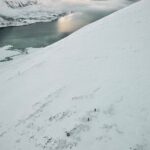
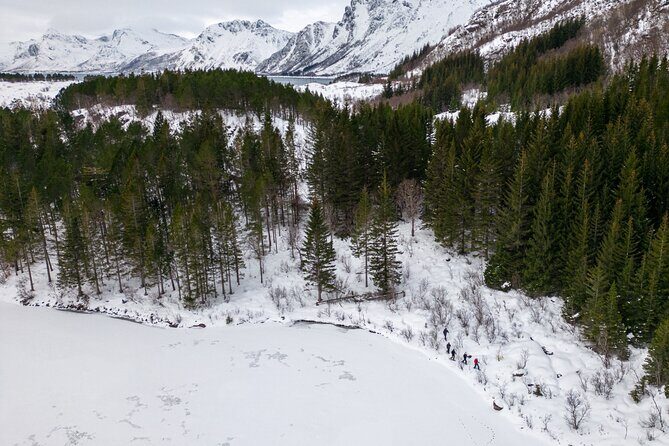
Also, the tour’s promise isn’t just mountain views. You’re likely to see frozen lakes and snow-covered fjords and islands as you move through the winter scene. That gives you variety: you’re not staring at the same slope for the whole morning.
If you’re the kind of person who enjoys effort, you’ll probably love this. If you want scenery with minimal strain, you may be happier choosing an easier option.
You can also read our reviews of more tours and experiences in Lofoten.

Where You Start at 10:00: Gimsøystraumen and the Small-Group Setup
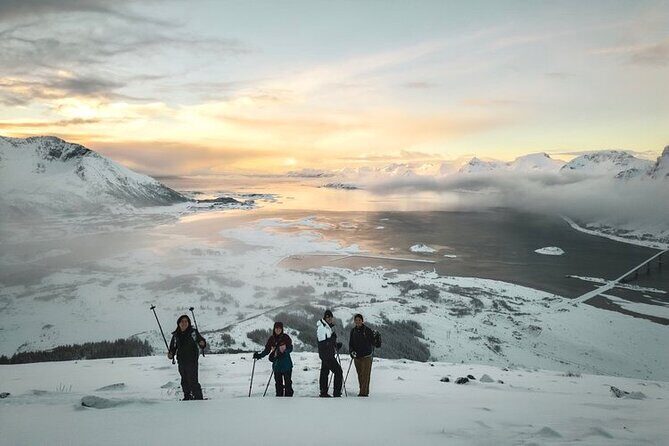
You meet at GimsøystraumenE10, 8313 Kleppstad, Norway. The start time is 10:00 am, and the activity ends back at the same meeting point. Doing the route as an out-and-back loop is practical in winter. It keeps logistics simple, and you’re never left guessing where your way back is once the light shifts.
The group size is capped at 7 travelers, which I think is a big deal in snowshoeing. In a bigger crowd, you often end up following tracks without much control. Here, a small group means the guide can correct footing, spacing, and snowshoe technique without turning the trip into a frantic line march.
You’ll also get a mobile ticket, and you should receive confirmation within 48 hours, depending on availability. Service animals are allowed, which is useful if you travel with an animal companion and need that support in winter conditions.
Gear Check: Snowshoes, Poles, and Micro Spikes That Matter
Included gear is a big part of the value here. You get snowshoes and poles, plus micro spikes. That combo is what makes uphill snow travel feel controlled instead of random. Micro spikes help with traction, especially when snow or ice changes underfoot. Poles add stability on slopes and reduce how much you have to rely on pure leg strength.
You also shouldn’t worry if you’ve never snowshoed before. The guide explains the gear and shows you what to do. In other words, you’re not walking off on your own with unfamiliar equipment. You’re learning while you’re already in the environment, which helps your brain connect technique to real terrain.
One more thing I like: because the gear is included, you’re not stuck figuring out rental timing or getting the wrong size. You show up, you fit in, and you go.
The Climb and the Views: Powder Snow, Frozen Water, and a 560 m Goal
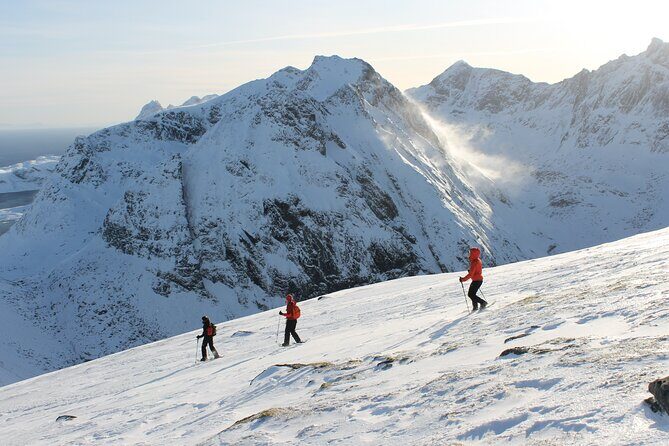
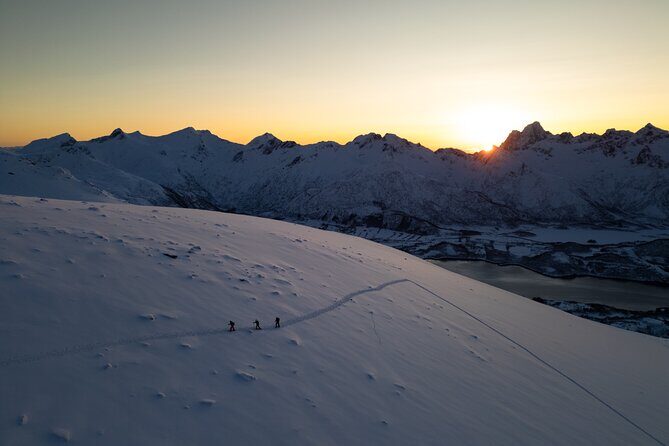
The heart of the tour is the uphill walking through snowy terrain. You’ll move across powdery snow where each step creates traction and rhythm. That rhythm is what turns effort into “flow” once your body adjusts.
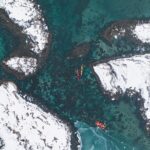
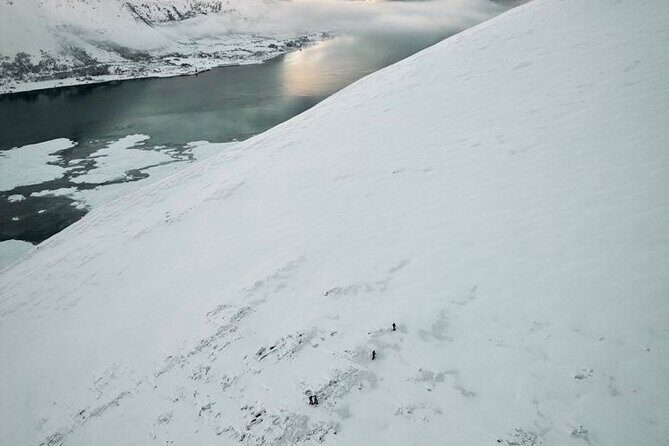
The tour description points to multiple winter sights: frozen lakes, snow-covered fjords, and islands. Even if you never reach the highest point, those visuals tend to show up as you gain elevation and the horizon opens.
Here’s the key promise: you might reach a peak at 560 masl if conditions allow. Weather, snow quality, and safety factors all affect how far uphill you can go. If conditions don’t cooperate, the guide will still take you as high as possible, with a cap on how long you return—keeping the experience within the 4-hour window.
What this means for you: don’t treat 560 masl as a guarantee. Treat it as a strong possibility. Your real win is getting the uphill experience plus winter views that come from being outside and moving, not just standing in one spot.
If you’re deciding between easier and uphill versions, this is the trade-off. Uphill means more effort and more challenge. It’s also the best way to feel like the morning is doing something for your body, not just your camera roll.
Learning Along the Way: Nature and Local Culture From Your Guide
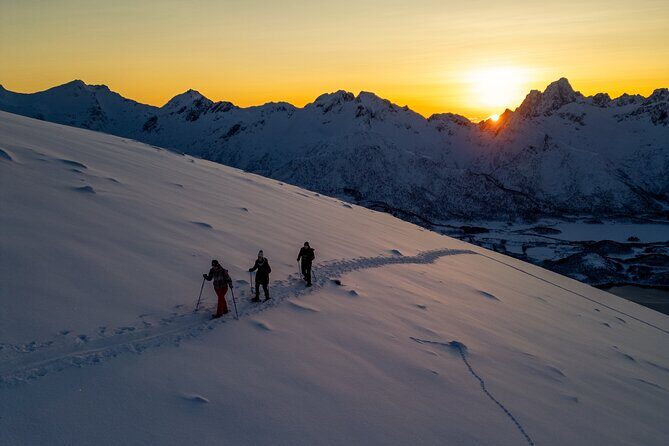
A guided tour is more than safety. It also changes how you see what’s around you. Your guide isn’t just watching for slips. They share information about the nature and local culture of the Lofoten Islands as you walk.
That matters in winter. When everything is white and quiet, it’s easy to feel like you’re seeing only one thing: snow. A good guide helps you read winter—why certain areas look the way they do, what to notice on the water, and how the landscape ties into how people live here in cold months.
In my favorite part of this kind of tour, the guide makes you curious instead of just impressed. And when your guide is also friendly, the whole session feels lighter. The experience I liked most included guide Timea, whose explanations made the walking feel like part of the sightseeing instead of a separate chore.
If you enjoy tours where you actively learn while you move, this is a strong match.
What to Bring (Since Snacks and Water Aren’t Included)
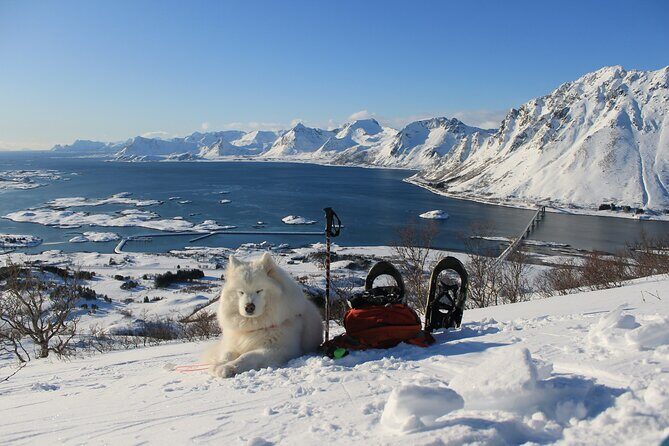
The tour includes equipment and the guide, but snacks and bottled water aren’t included. That’s practical, because it lets you choose what you prefer for fueling.
Since this is a 4-hour uphill activity, plan for food and fluids. Even if you feel fine at the start, cold weather can sneak up on you. Bring what works for you: something you can eat without slowing the group too much, and water you’re comfortable drinking in winter.
Also, because this tour requires moderate physical fitness, give yourself an honest baseline before you go. You don’t need to be an athlete, but you should be ready for sustained uphill effort with snowshoe steps.
How Fitness and Timing Change Your Experience
This is a 4-hour morning, starting at 10:00 am. That timing is useful because you’re not hiking at the edge of night or rushing out before daylight. Still, winter days can affect visibility and conditions, so you’ll want to be ready for weather changes.
The tour is described as requiring good weather. If weather conditions aren’t right, the tour may be canceled and you’ll be offered another date or a full refund. That’s not a small detail. In snow sports, the difference between safe and unsafe can be dramatic.
Fitness-wise, the uphill version is best for people who can handle continuous effort for the duration. If you’re recovering from injury, feel unsure with hills, or know your endurance is low, consider the easier version (the tour provider explicitly notes an easier option for contact).
Price and Value: Is $140.24 Worth It?
At $140.24 per person for about 4 hours, the price looks high until you break down what you’re actually paying for. You’re not just paying for a guide’s time. You’re also getting:
- Snowshoes and poles
- Micro spikes
- The guide’s instruction and route leadership
Those included items matter because renting snowshoe gear plus traction help can add up. Here, you don’t have to plan separate rentals or hunt down the right traction setup. You also have the benefit of a guide who adjusts the plan based on conditions and works with you in real time.
The main cost you’ll add yourself is simple: snacks and bottled water. If you pack that, you’ll be covered.
If you’re someone who wants to spend money on an experience that removes friction—gear figured out, technique explained, route led—then this price can feel fair. If you’re traveling tight-budget and already have snowshoe equipment, you might compare against other winter hikes. But for most people, the included gear and small-group guidance make it good value.
Should You Book the Uphill Lofoten Snowshoe Tour?
Book this if you want a real winter workout and you’ll enjoy the payoff of earning the views. It’s a good fit for beginners who want instruction, and it’s especially worth it if you’re considering the uphill version rather than the easier one.
I’d skip it or choose an easier option if:
- Uphill effort for a full 4 hours sounds like too much.
- You’re hoping for a relaxed, slow walk with minimal exertion.
- You know you get uncomfortable with equipment changes and balance tasks.
One last practical thought: this experience is weather-dependent. If conditions are good, you’ll get the best version of the morning—maybe even that higher point at 560 masl. If conditions aren’t safe, the tour adjusts or cancels, and you should expect the day to be flexible.
If you like snow sports, like winter views over water and islands, and you’re okay with effort, this uphill snowshoe tour is a strong way to spend a Lofoten morning.
FAQ
How long is the guided uphill snowshoeing tour?
It’s approximately 4 hours.
Where do I meet the guide?
You’ll meet at GimsøystraumenE10, 8313 Kleppstad, Norway. The tour ends back at the same meeting point.
What time does the tour start?
The start time is 10:00 am.
Is the tour suitable for beginners at snowshoeing?
Yes. The guide explains the gear and shows you how to use it, so you don’t need prior snowshoe experience.
Do I get snowshoe and safety gear included?
Yes. The tour includes snowshoes and poles, plus micro spikes.
What fitness level is required?
You should have a moderate physical fitness level, since this is the uphill version with workout-style walking.
What happens if weather isn’t good?
This experience requires good weather. If it’s canceled due to poor weather, you’ll be offered a different date or a full refund.