REVIEW · BERGEN
Walking Tour of Central Bergen
Book on Viator →Operated by NORDIC FREEDOM TOURS · Bookable on Viator
Bergen is a city best understood on foot, not from a bus window. This Central Bergen walking tour strings together sea history, medieval streets, landmark churches, and the harbor’s food scene in about two hours. I love the small-group pace and how the route mixes famous sites with stories you’d miss on your own. I also like that the tour starts with Bergen’s seafaring identity, then builds to viewpoints and the Fish Market. One thing to consider: you’ll be walking in city weather, so plan for your feet and rain.
You’ll meet at Sjøfartsmonumentet at 10:00 am and end at Fishmarket in Bergen Torget. The guide is led by Nordic Freedom Tours, with a group management expert alongside, and the tour runs in English with a mobile ticket. Based on the guide feedback (especially about Fernando’s clear English and keeping the group moving at a good pace), this is a solid pick if you want direction without feeling rushed.
The price is low for what you get: a guided, multi-stop orientation through central Bergen. The catch is also simple: since it’s a focused walk, you won’t have hours to linger in museums or churches. You’ll visit, learn, and move on.
In This Review
- Key things that make this Central Bergen walk worth your time
- A 2-hour central Bergen route that helps you get bearings fast
- Sjøfartsmonumentet: bronze sculptures and why Bergen was always a port city
- Kong Oscars Gate: wooden houses, old churches, and a stroll that feels like a postcard
- Bergenhus Fortress: medieval walls, nearly 800 years of harbor watch, and real viewpoints
- Bryggens Museum, St. Mary’s Cathedral, and the two ways Bergen preserves the past
- Bryggens Museum: stories from the 1100s, preserved under your feet
- St. Mary’s Cathedral: medieval calm, 12th-century walls, and stained glass
- Johanneskirken: the red-brick neo-Gothic hilltop church with big-city views
- Fish Market in Bergen Torget: finish your tour where the seafood culture shows up
- Price and value: why $12.01 can still feel like a bargain in Bergen
- Who should book this Central Bergen walking tour
- Should you book? My take on whether it’s worth your day
- FAQ
- What is the duration of the Walking Tour of Central Bergen?
- How much does the tour cost?
- Where does the tour start and end?
- What time does the tour begin?
- Is the tour offered in English?
- Is a mobile ticket provided?
- How large is the group?
- What are the main stops on the route?
- Are there any admission fees mentioned for stops?
- What happens if weather is bad?
- Do I need to cancel far in advance to get a refund?
Key things that make this Central Bergen walk worth your time
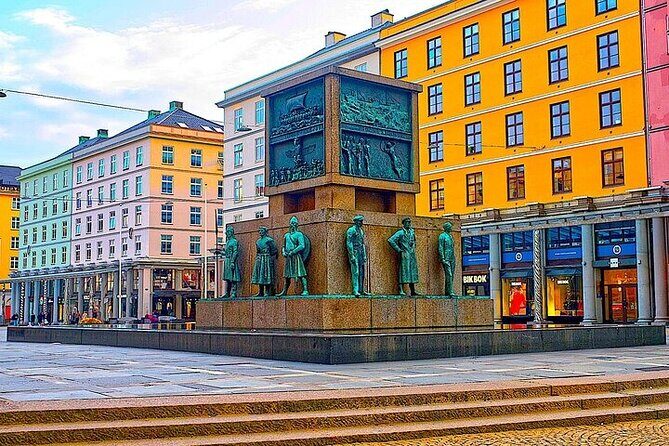
- Sjøfartsmonumentet start point: You begin with Bergen’s bronze sea story, not a random street corner
- Kong Oscars Gate stroll: A quick walk through wooden houses and old-church charm
- Bergenhus Fortress timing: Enough time for the fortress feel and harbor views without turning it into a long sit-down
- Bryggens Museum + two churches: You cover medieval Bergen in a tight, logical sequence
- Fish Market finish: Food culture lands your last stop where the harbor energy actually lives
A 2-hour central Bergen route that helps you get bearings fast
If you’re visiting Bergen for a short window, this tour hits a sweet spot. It’s long enough to cover multiple major areas in the center, but short enough that it doesn’t drain your whole day. I like tours like this because they act like a map you can walk through: you get names, connections, and a sense of direction, and then you can explore on your own afterward with confidence.
The route is also built around variety. You start with maritime identity, pass through a historic street, move into fortress territory, then shift into museum and cathedral time travel, and finish with the Fish Market. That flow matters. It’s not just a checklist of places; it’s a story arc of Bergen from the harbor outward.
For most people, it’s very doable. The tour is listed as suitable for most travelers, with service animals allowed and the meeting point near public transport. The group size is capped at 26, which usually means you’ll have a guide within earshot for questions without feeling squeezed.
The only drawback is the obvious one: tight timing. If you’re the type who wants to sit for 45 minutes inside a church or take slow photos at every corner, plan to do extra solo time after the tour.
You can also read our reviews of more walking tours in Bergen
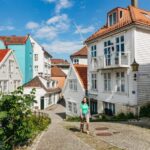
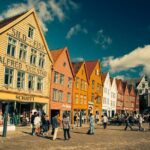
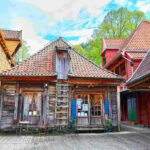
Sjøfartsmonumentet: bronze sculptures and why Bergen was always a port city

Your tour kicks off at Sjøfartsmonumentet (Sailor’s Monument), a central landmark devoted to Norway’s seafaring past. This is not just a statue stop where you read a plaque and move on. The monument is described as being made of bronze sculptures and carvings that tell a long maritime story, reaching from ancient Viking explorers to present-day mariners.
This is a smart first stop for two reasons.
First, it sets context. Bergen’s identity is tied to the sea, and once you grasp that, the rest of the walk makes more sense. Kong Oscars Gate, the fortress, and the Fish Market all connect back to what Bergen has always relied on: ships, trade, and the people who lived by the harbor.
Second, it helps you orient. Standing here, you can quickly understand where the waterfront energy is coming from and why the historic center grew the way it did. You’ll get your bearings fast, which makes the rest of the tour feel less like hopping between unrelated sights.
Practical tip: if you’re visiting in cooler months, this is a good early stop to take a breather and adjust layers before you start the bigger walking stretch.
Kong Oscars Gate: wooden houses, old churches, and a stroll that feels like a postcard
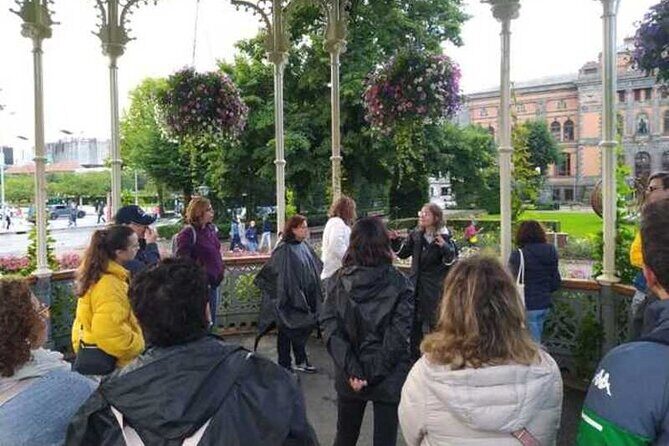
From the monument, the tour moves to Kong Oscars Gate, described as a historic street that pulls you back into a bygone era. The street is lined with charming wooden houses and includes old churches, giving it an atmosphere that blends traditional character with everyday city life.
This stop is only about ten minutes, so it’s not about long explanations. It’s more like a palate cleanser between heavier history points. You get to slow down for a short stroll and start noticing what Bergen’s center looks like at street level: the scale of buildings, the mix of old and still-used spaces, and the sense that the city is layered rather than frozen in time.
One small caution: because it’s a walk-through street stop, don’t expect a deep dive into any single building. If you see a doorway or a church façade that grabs you, make a mental note. After the tour, you can target those specific places for longer time.
Bergenhus Fortress: medieval walls, nearly 800 years of harbor watch, and real viewpoints
Next comes Bergenhus Fortress, which the tour frames as a stronghold over Bergen’s harbor for nearly 800 years. That’s a big claim, and the tour gives you enough time to feel the weight of it—about fifteen minutes focused on the fortress’s medieval character, along with the impressive halls and towers.
The value of this stop is twofold.
You’re not only looking at old stone. You’re also learning how the fortress functioned—royal and military past, and a position built to watch over the harbor. That matters because Bergen’s history is not just cultural; it’s strategic. Ships bring goods, people, and power. Fortifications respond to that.
Second, the description points to surrounding area views. Even if you don’t stop for a long photo session, you’ll likely catch enough of the harbor angle to connect what you started at (the sailor monument) with what you’ll do later (the Fish Market).
Practical tip: wear shoes with grip. Fortresses and historic centers tend to mean uneven surfaces and short distances that feel longer than they should.
Bryggens Museum, St. Mary’s Cathedral, and the two ways Bergen preserves the past
After the fortress, the tour shifts into what I’d call Bergen’s “past in layers” mode.




Bryggens Museum: stories from the 1100s, preserved under your feet
Bryggens Museum is described as built directly over ancient ruins, with treasures from the 1100s. The tour highlights the kind of inscriptions you might find there—things like romantic notes and even magic spells—turning archaeology into human stories.
This is a stop for people who like the weird and personal side of history. You don’t just learn dates; you see evidence of daily life, emotions, and beliefs. Even if you’re not a museum person, it’s hard not to feel something when the artifacts are described as literally taking you back centuries beneath your feet.
A practical caution: this is time-limited. If Bryggens Museum is a “must see” for you, consider budgeting more time before or after the tour so you can linger on specific artifacts that catch your eye.
St. Mary’s Cathedral: medieval calm, 12th-century walls, and stained glass
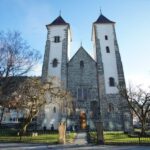
Then you head to St. Mary’s Cathedral, described with medieval charm dating back to the 12th century. The tour calls out stunning stained glass artwork and ancient stone walls—and the way it creates a tranquil break from the bustle of the city.
This is a useful contrast after Bryggens Museum. Bryggen is about the past in fragments you can read; the cathedral is about the past in space. You get a chance to slow down and let the atmosphere do some work.
Practical tip: when you enter older churches, keep your voice low and your hands warm (stone floors can be cooler than you expect). And yes, your phone camera will capture the stained glass beautifully—just take a moment to look first before you start shooting.
Johanneskirken: the red-brick neo-Gothic hilltop church with big-city views
Bergen’s highest church—Johanneskirken or St. John’s Church—is the tour’s next stop. It’s described as having an eye-catching red-brick exterior and a neo-Gothic design from the late 1800s. You’ll also learn that it sits on a hill, with views over the city and an interior designed to be worth the climb.
This is one of those stops that pays off because it changes your perspective. Earlier points are close to sea and harbor. Here you’re higher up, looking back over the layout. That viewpoint helps your brain “sort” Bergen: how the streets and neighborhoods relate, where the water runs influence, and why certain areas feel more central than others.
Since the timing is limited, don’t plan on perfect calm. Expect a short visit with enough time to appreciate the outside architecture and then step inside for the design.
If you’re doing this walk in damp weather, take the hill seriously. It’s not a mountain hike, but it can feel steeper than you expect once you’re already walking.
Fish Market in Bergen Torget: finish your tour where the seafood culture shows up
The tour ends at Fishmarket in Bergen Torget 5, and this is a great way to close. Instead of ending in another historic building, you move into the harbor area food culture.
The Fish Market is described as a busy place offering Norway’s seafood culture, with fresh salmon, crab, and local specialties. The key word here is interaction: you’re meant to mingle with cheerful vendors and absorb the lively atmosphere by the harbor.
This stop also helps you connect the tour’s earlier points. When you started at the sailor monument, you learned Bergen’s sea identity. When you reached the fortress, you saw the harbor’s strategic importance. Here you see the present-day result: the industry, the trade, and the food culture.
Practical tip: go in hungry, even if it’s just a small snack. And don’t feel you need to buy a full meal on the spot. If you sample one thing, you’ll still get the meaning of the stop.
Price and value: why $12.01 can still feel like a bargain in Bergen
At $12.01 per person for about two hours, this tour is priced like an easy add-on, not a major splurge. For that money, you get a guide plus group management support, an English-speaking experience, and a route that strings together multiple major central landmarks without you needing to plan the day block by block.
What makes the value feel real is the structure. You don’t just show up at places; you get explanations tied to why each site matters in Bergen’s story. That’s the difference between walking past a fortress and actually understanding why it exists where it does.
Also, the guide feedback is consistent: the guide Fernando is praised for clear English and communication, and for keeping things moving at a good pace. That matters in a place like Bergen, where weather can change quickly. A well-paced route helps you see the highlights before your day gets swallowed by delays.
If you’re traveling on a budget, this is the kind of tour that can save you money later. You’ll know what areas you want to return to and which stops you can safely skip for a second round.
Who should book this Central Bergen walking tour
This is a good fit if you want:
- A first-time Bergen orientation that still feels meaningful
- A structured walk that covers both historic landmarks and the harbor food finish
- A guide who keeps the group moving without leaving you behind
- An English-language tour where communication is clear and pacing is steady
It may be less ideal if you:
- Want long, slow museum time and lots of quiet reflection
- Dislike walking for any length of time in changing weather
- Already know Bergen’s history deeply and plan to do independent exploration only
That said, even history buffs can use this tour as a framework. It gives you names, locations, and a sensible path so you can later focus on what truly sparks you.
Should you book? My take on whether it’s worth your day
If you’re deciding whether to add this to your Bergen plan, I’d say yes—especially if you want a clear, guided path through central highlights in about two hours. The low price, the small-group feel, the guide support, and the route that ends at the Fish Market make it a practical choice.
I’d book it if you want an efficient first look at Bergen’s identity: sea history first, medieval streets and fortress next, then churches and museum moments, and finally the harbor’s food culture where it all comes together.
I’d skip or swap it for something else if your priority is deep museum time or you strongly prefer self-guided wandering without a set route.
FAQ
What is the duration of the Walking Tour of Central Bergen?
The tour lasts about 2 hours.
How much does the tour cost?
It costs $12.01 per person.
Where does the tour start and end?
It starts at Sjøfartsmonumentet, 5014 Bergen, Norway and ends at Fishmarket in BergenTorget 5, 5014 Bergen, Norway.
What time does the tour begin?
The start time is 10:00 am.
Is the tour offered in English?
Yes, it’s offered in English.
Is a mobile ticket provided?
Yes, the tour uses a mobile ticket.
How large is the group?
The maximum group size is 26 travelers.
What are the main stops on the route?
You’ll visit Sjøfartsmonumentet, Kong Oscars Gate, Bergenhus Fortress, Bryggens Museum, St. Mary’s Cathedral, Johanneskirken, and the Fish Market.
Are there any admission fees mentioned for stops?
The monument, Kong Oscars Gate, Bergenhus Fortress, and the Fish Market are listed as free admission ticket stops.
What happens if weather is bad?
The tour requires good weather. If it’s canceled due to poor weather, you’ll be offered a different date or a full refund.
Do I need to cancel far in advance to get a refund?
You can cancel up to 24 hours in advance for a full refund. Changes made less than 24 hours before the start time aren’t accepted, and refunds won’t be issued for cancellations within 24 hours.