REVIEW · TROMSO
From Tromsø: Dog Sledding Adventure in Tamokdalen
Book on GetYourGuide →Operated by Norwegian Travel · Bookable on GetYourGuide
Husky power in an Arctic hush. You get to steer your own sled team (with a partner swap), and the snowy valley views make the whole thing feel bigger than a half-day outing. Two things I really liked were the chance to drive your own dog sled and the cozy lavvu warm-up with food and stories. One consideration: the day is long because the coach ride to Tamokdalen takes about 95 minutes each way.
This runs in a smart rhythm. After a bus ride from central Tromsø, you split into two groups: one rides while the other hangs out at camp with hot drinks and husky info, then you switch.
It’s rated medium for a reason: you’ll walk on snowy ground and help with sled pushing, even though the route is mostly flat and open. If you’re comfortable in cold weather and steady on your feet, it’s built to feel doable.
In This Review
- Key highlights worth marking on your map
- From Tromsø Havn Prostneset to Tamokhuset: expect a long coach day (in a good way)
- Getting outfitted the right way: the gear set that prevents the trip from feeling miserable
- Two-group rotation at camp: why you never feel stuck waiting
- Dog yard time and husky stories: the part that makes you care about the ride
- Drive your own sled: what control feels like (and what to watch for)
- When you swap roles: the warm lavvu phase that keeps the cold from winning
- Food, timing, and toilets: small logistics that actually matter in the Arctic
- How hard is it, honestly? Medium effort with real-world cold
- Price and value: $324 makes sense when you price the full experience
- Best match: who should book this Tamokdalen dog sled adventure
- Should you book it? My honest take
- FAQ
- Where do I meet for the tour in Tromsø?
- How long is the dog sledding experience?
- How do you get from Tromsø to Tamokhuset?
- Is the tour guided in English?
- What gear is provided for the cold?
- Do I drive the sled, or just ride?
- How does the day work if we’re split into groups?
- What do I need to bring?
- Are there age or health limits?
- Is there food and a place to warm up?
Key highlights worth marking on your map
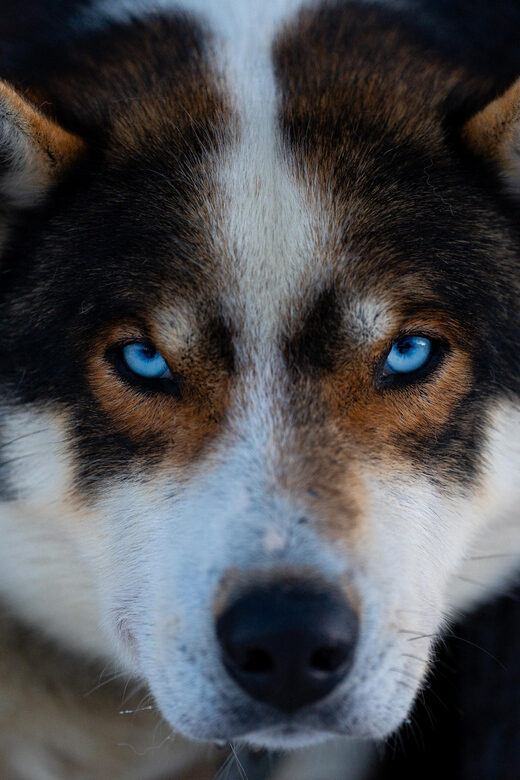
- Two turns each: you and your partner switch between musher and passenger
- Warmth you can count on: thermal suit, winter boots, mittens, and hat are provided
- More husky time than you expect: dog yard visits plus time to meet dogs and puppies
- Active, not extreme: mostly flat/open terrain, but you’ll assist with sled movement
- Camp comfort timing: one group warms at the fire tent while the other rides, then you trade places
- Long scenery transfer: the remote setting comes at the cost of time on the bus
From Tromsø Havn Prostneset to Tamokhuset: expect a long coach day (in a good way)
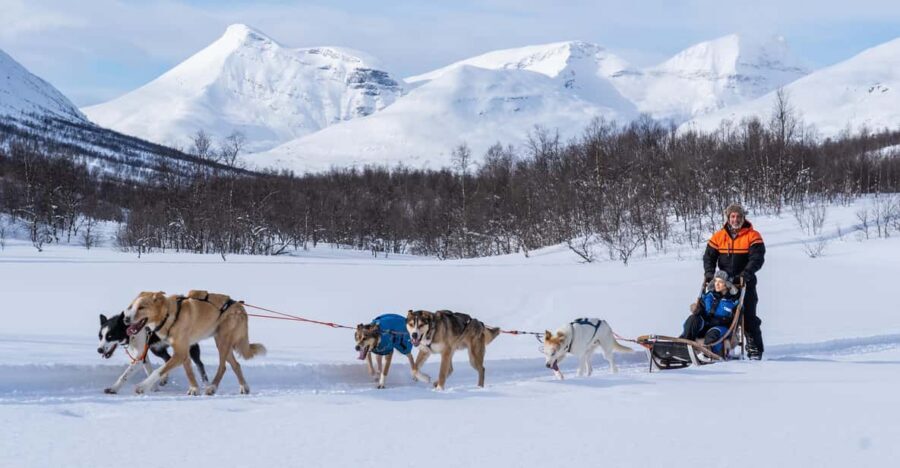
Your day starts with a hotel-free meeting point feel: you meet inside the main entrance hall at Tromsø Havn Prostneset. From there, it’s straight onto a coach for about 95 minutes, heading out through Arctic mountains and fjords.
That bus time matters more than it sounds. You’re going to spend a good chunk of your day in the cold, and arriving already acclimated to the rhythm of the tour helps you enjoy the actual sledding instead of just bracing for it. Plus, the scenery on the way is part of why this works as an Arctic day trip rather than a quick farm visit.
You should also plan for the bus to be a real part of your schedule. Even if the transfer feels calm, you’re looking at roughly 4 hours total of your 7-hour day spent traveling and rotating between camp and trails.
You can also read our reviews of more tours and experiences in Tromso.
Getting outfitted the right way: the gear set that prevents the trip from feeling miserable
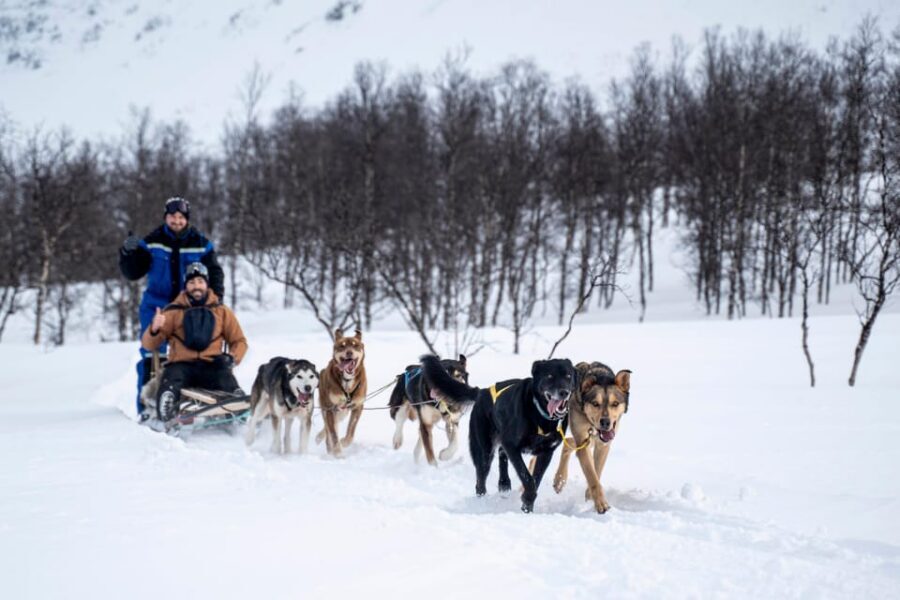
The activity provides the core winter kit: a thermal suit, winter boots, mittens, and a hat. This is a big deal in Tromsø-area cold, because the cold can creep in through the usual weak points—hands, feet, and your upper layers.
There’s also an important reality check: even with provided gear, you still need to dress smart. Bring a scarf and weather-appropriate clothing so you can layer without getting restricted. I also recommend treating thermal clothing as non-negotiable under the suit, especially if temperatures are brutal during your visit.
And don’t forget the human factor. You’re going to be standing around for part of the rotation, then actively moving and pushing sleds. If your layers manage sweat as well as cold, you’ll feel a lot better by the time you’re sitting on the sled.
Two-group rotation at camp: why you never feel stuck waiting
One of the smartest parts of this experience is how it controls your “waiting time.” You arrive at the remote area near Tamokhuset, and then you get split into two groups.
Group A gets dressed first and goes out sledding after instructions. Meanwhile, Group B goes to the dog yard, enjoys a hot meal and drink, and listens to husky facts. When Group A returns, you swap roles—so you’re not sitting at camp for hours with nothing to do.
This layout also makes the day feel more even. If you start on the sled, you get the cold shock early—but then you’re warm at the camp phase. If you start at camp, you get more time with the dogs before your ride. Either way, the schedule is built so you don’t lose the day to idle waiting.
Dog yard time and husky stories: the part that makes you care about the ride
While one group is riding, the other is hanging out at the dog yard and getting a guided look at the huskies. Expect facts about the dogs and husky culture, plus time to meet the animals up close.
I like this portion because it turns the sledding from a thrill-only activity into something with context. The guides focus on how huskies work as a team, how they’re managed at the farm, and what personalities to watch for. You’ll also hear enough to understand why musher technique isn’t just a fun skill—it’s part of keeping things smooth and safe.
Some days also include meeting puppies. That’s not just cute. For first-timers, it gives you a clearer picture of the whole operation, not just the ride moment.
Drive your own sled: what control feels like (and what to watch for)
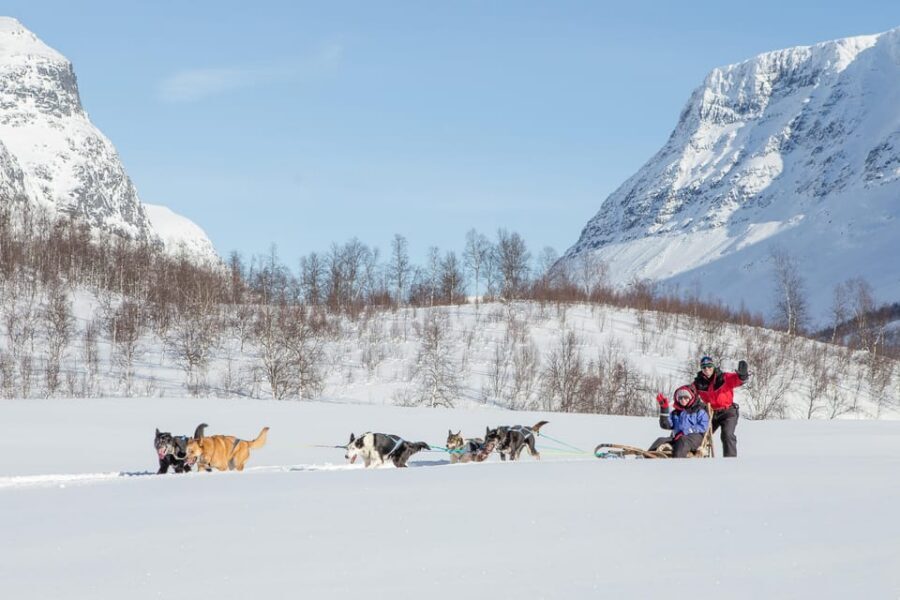
Here’s the headline: you drive your own dog sled. Each sled is shared by two people, and you take turns. So you don’t just sit and hold on—you learn the basics of steering, braking, and handling your team.
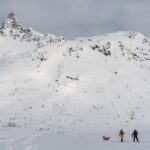
The tour is designed for first-timers. The route is described as medium difficulty, with terrain that’s quite flat and open, which keeps the ride comfortable and manageable. Still, “easy” doesn’t mean “effortless.” You’ll walk on snowy ground, and you may help push the sled, especially when the terrain asks for it.
What you should expect in the ride:
- Clear instructions before you start
- A guided approach to steering and stopping
- A team experience where your job is to work with the sled’s momentum and the dogs’ energy
A useful mental note: you might feel nervous at the start—some people do because they realize how fast huskies can move. After the first few minutes, most riders settle in quickly once they understand how the sled behaves.
Also, I’d file tipping under “small chance, not a plan.” You should stay balanced, keep your posture stable, and follow guide cues. Once you get the feel, it becomes more fun than scary.


When you swap roles: the warm lavvu phase that keeps the cold from winning
Halfway through your rotations, you get that camp reset. This is where the tour really stands out for practical comfort.
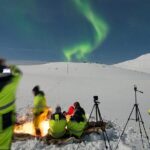
The camp uses a traditional lávvu setup: you warm up with hot drinks and usually enjoy soup—often a local fish soup. Firelight does its job. It’s not just cozy; it gives you a chance to recover your body after time outside and make the next sled turn feel better.
Guides share information throughout, too. If you’re the type who likes to know what you’re seeing—dog training, sledding culture, and the environment—you’ll get enough talk to feel like the experience is grounded, not random.
If you’re lucky, you’ll also see the dogs being handled with calm attention around camp. In cold weather, that matters because it signals how prepared the team is when conditions get intense.
Food, timing, and toilets: small logistics that actually matter in the Arctic
It’s easy to underestimate how much comfort planning affects your enjoyment. Here, toilets are available at the camp, and the hot meal and drink are part of the rotation.
The soup phase is also more than fuel. It’s a built-in pause that makes the day feel organized rather than rushed. When you’re cold and active in a winter setting, that “warm and eat” moment is what turns a long outing into a satisfying one.
There’s also a pattern I’d follow if you want the most enjoyment: treat the hot meal as your reset button, not as something you’ll skip because you’re impatient. It helps you get your energy back for the second half—when you’ll likely be doing more walking, gearing up again, and then getting back on the sled.
How hard is it, honestly? Medium effort with real-world cold
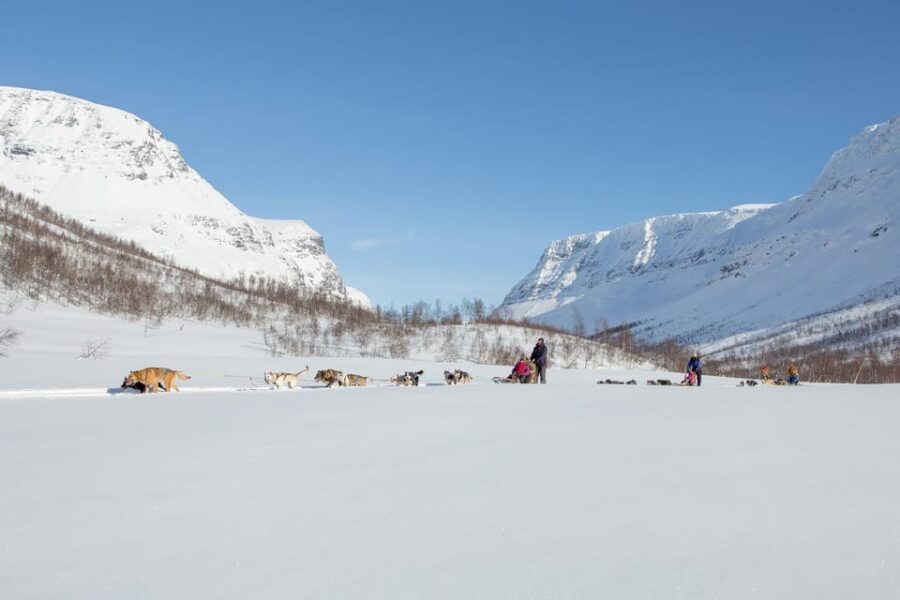
Difficulty is listed as medium, and the practical reason is straightforward: you need basic fitness for snowy terrain and for helping with sled pushing. The terrain is described as flat and open, and the ride is said to be comfortable and easy for most people.
But I don’t treat “flat” as “zero effort.” Plan to use your legs. If the route has gentle rises or packed snow where momentum changes, you’ll assist so the sled can keep moving smoothly.
This is also why it’s not for everyone. It’s not suitable for children under 7, pregnant women, people with mobility impairments, wheelchair users, or anyone over 264 lbs (120 kg). If you’re at the edge of your comfort range in cold walking and short bursts of pushing, you should be honest with yourself before booking.
Price and value: $324 makes sense when you price the full experience
At $324 per person for about 7 hours, the first reaction is: that’s not cheap. But once you account for the full package, the price starts to look more reasonable.
What you’re paying for includes:
- Transport by bus round-trip from Tromsø
- Provided winter gear (thermal suit, boots, mittens, hat)
- English-speaking guide support
- Camp facilities including toilets
- A drive-your-own sled experience, with a rotation so you both get time controlling
And the value isn’t just the logistics. The emotional value is in the husky partnership. You spend real time around the dogs at the camp, you learn from the guide, and you get hands-on driving time rather than a quick pass-by.
So I’d call this a “pay once, enjoy for years” outing—especially if your list includes genuine husky sledding instead of a short photo stop.
Best match: who should book this Tamokdalen dog sled adventure
This tour fits best if you want:
- A real first-timer-friendly musher experience
- A full Arctic day trip with time at camp, not just a fast ride
- A balance of excitement and warmth (sled, then lavvu, then sled again)
It’s a strong choice for couples and small groups because the sled is shared and you swap turns. It’s also ideal if you like learning—guides cover huskies, dog sledding culture, and related facts while you’re at camp.
If you’re traveling with kids, it needs to be age-appropriate (7+). If you’re dealing with mobility limits or have animal allergies, it’s not a match based on the stated restrictions.
Should you book it? My honest take
Yes—if you can handle cold, walking on snowy ground, and a day with a lot of bus time. The driving component is the difference-maker. Steering a husky team is the kind of skill moment you don’t forget, and the rotation system keeps the day from feeling chaotic.
If you hate long transfers or you’re looking for a purely sit-back-and-enjoy activity, you might feel the “medium effort” part more than you expect. But for most people visiting Tromsø for Arctic experiences, this one hits the sweet spot: hands-on sledding, real camp time, and enough warmth that you’ll still feel human by the end.
FAQ
Where do I meet for the tour in Tromsø?
Meet inside the main entrance hall of Tromsø Havn Prostneset.
How long is the dog sledding experience?
The total duration is 7 hours.
How do you get from Tromsø to Tamokhuset?
You travel by bus. The journey is about 95 minutes each way.
Is the tour guided in English?
Yes. You’ll have an English-speaking guide.
What gear is provided for the cold?
A thermal suit, winter boots, mittens, and a hat are provided.
Do I drive the sled, or just ride?
You drive your own dog sled, and you and your partner take turns between musher and passenger.
How does the day work if we’re split into groups?
One group goes first with the sledding while the other group visits the dog yard and warms up with hot food and drinks. Then you switch roles.
What do I need to bring?
Bring a scarf and weather-appropriate clothing, including thermal clothing.
Are there age or health limits?
Yes. It’s not suitable for children under 7, pregnant women, people with mobility impairments or wheelchair users, and people over 264 lbs (120 kg). It’s also not suitable for people with animal allergies. Pets are not allowed.
Is there food and a place to warm up?
Yes. There are hot drinks and a hot meal at the camp, and there are toilets available at the camp.