REVIEW · BERGEN
2-Day Round Trip from Bergen: THE GRAND SOGNEFJORD – fjords, waterfalls, glacier
Book on Viator →Operated by JANDIS AS · Bookable on Viator
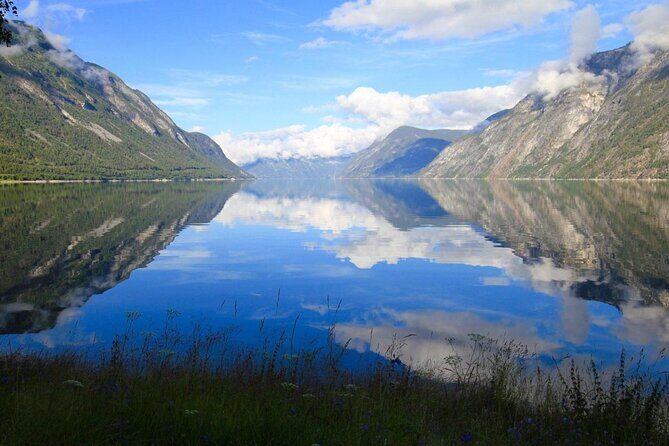
Two days, one jaw-dropping fjord loop. This private drive packs UNESCO Nærøyfjord views and a real Nigardsbreen glacier walk into a tight, efficient route. You start in Bergen, then keep hopping viewpoints, villages, and old churches like you’re watching the coastline unfold in fast-forward.
I like the way the trip feels guided without being rigid. Your driver-guide (many bookings are with Vlad) shares live commentary in English, and you get real help pre-planning optional add-ons. I also love the mix of stops: waterfalls and hairpin roads one moment, wooden stave churches the next, then fjord cruising and glacier ice.
One consideration: a lot of the best “big ticket” experiences are not included—think fjord cruises and the Flåmsbana train—so you’ll want to budget time and tickets for those choices. Also, the days are long with frequent photo stops, so this is more about moving between highlights than hanging out.
In This Review
- Key things to know before you go
- Bergen first: a gateway day packed with culture and quick nature hits
- Dale to Voss to Tvindefossen: why the early route works
- Stalheim hairpins and the Nærøyfjord descent: the water gets serious
- Gudvangen and the UNESCO Nærøyfjord: choose your cruise style
- Flåm and Stegastein: the views you remember later
- Borgund Stave Church and Lærdal: wooden heritage without the museum marathon
- Crossing the Sognefjord: the ferry moment you’ll remember
- Nigardsbreen glacier day: from Solvorn to blue ice
- Breheim Center and the Fjærland pivot: flexible choices at the right time
- Fjærlandsfjord cruise to Hella and the scenic return loop
- Vangsnes to Vik: stave churches, waterfalls, and coffee-stop realism
- Price and value: what $1,524.76 buys you in real terms
- Who this private Grand Sognefjord trip suits best
- Should you book this tour?
- FAQ
- Is pickup included, and where does the guide meet me?
- Is this tour private or shared with strangers?
- What’s included in the price?
- Are meals and accommodation included?
- Are the fjord cruises and Flåmsbana train tickets included?
- Do I need to pay for museum and church entrances?
- How is the glacier visit to Nigardsbreen handled?
- Is a glacier hike an option?
Key things to know before you go
- Private pickup in Bergen (hotel, cruise terminal, or airport): easy start, less stress.
- Live English commentary in an air-conditioned vehicle: you get context as scenery rolls by.
- UNESCO Nærøyfjord options: cruise timing is open schedule, so you’ll book ahead if you want it.
- Nigardsbreen glacier walk from Nigardsbrevatnet: you can walk the whole way or save time with the boat.
- Two-day “views and history” rhythm: waterfall pull-offs, stave churches, and fjords without a lot of dead time.
- Glacier safety rules are part of the plan: don’t get too close to falling ice chunks.
Bergen first: a gateway day packed with culture and quick nature hits
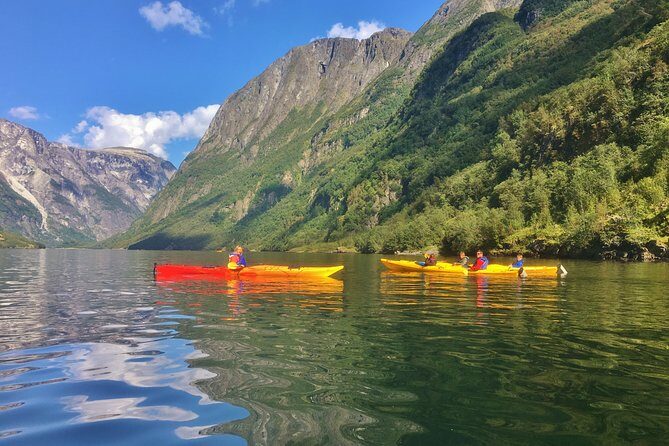
Your trip begins in Bergen, the classic starting point for Norway’s fjords. Even before you leave the city, you’ll get passing glimpses of landmarks on the way in and out, which helps you get your bearings fast. Then the route turns immediately practical: it’s not a day of “just drive,” it’s a day of short stops that build momentum.
A big highlight early is the Dale of Norway Factory Outlet & Museum in Dale. This is where the famous wool sweaters come from, and it’s an easy way to add a bit of craft-and-culture without spending your whole day in a museum. If you want warm souvenirs, this is the place to do it—especially if you like real materials rather than tourist-only knickknacks.
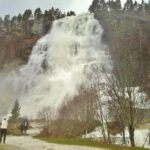
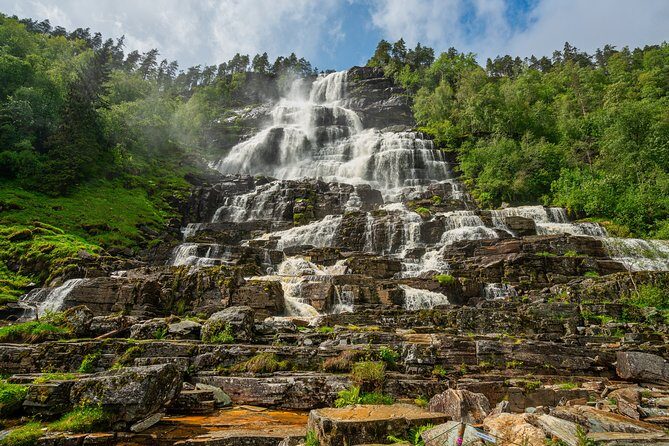
You also get waterfall breaks before the fjord gets serious. Tvindefossen is tall and dramatic, and the stop is timed so you can get close enough to feel the scale. The guide’s commentary matters here: the waterfall flow changes through seasons, with autumn rains and spring melt often making it especially impressive, while winter can bring freezing conditions.
If you’re hoping for a calm first day, temper that. Day 1 is designed to get you to the fjord zone quickly, so you’re moving often and walking just a little at each stop.
You can also read our reviews of more tours and experiences in Bergen.
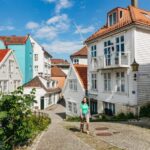
Dale to Voss to Tvindefossen: why the early route works
This portion of the drive is smart because it “trains your eyes.” You go from city context (Bergen) to craft culture (Dale) to alpine valleys (the Voss area). Voss itself is mainly a pass-through, but it’s there as a ready-made coffee-and-stretch option if you want a pause either on the way out or back.
Then comes the waterfall duo logic. Stops like Tvindefossen aren’t random—they’re meant to break up the drive and set up what you’ll see later in the Nærøyfjord area: water cutting through steep terrain.
Practical tip: bring a layer you can pull on and off quickly. These roads can shift from sun to spray to mountain chill, and the tour runs in all weather, so you’ll want clothes that handle wind.
Stalheim hairpins and the Nærøyfjord descent: the water gets serious
As you approach Stalheim, you’re entering one of those Norway road-story sections. The Stalheim Hotel area has a strong “time and place” feel, and you also get the Stalheim Folk Museum, which focuses on old farm buildings dating back to around the 1500s. Even without a long museum stint, it gives you a sense of how people lived in this rugged region.
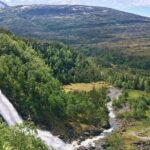
After that, the route turns into a viewpoint show. You’ll travel down Stalheimskleiva, one of the steepest roads in the North, with hairpin turns that open up views of waterfalls on both sides. Two short stops make the water feel “mapped” in your mind: Sivlefossen and Stalheimsfossen. Both are huge—Sivlefossen is listed at 142 meters, and Stalheimsfossen at 126 meters—so even a brief stop is enough to get the wow factor.
Here’s why I like this design for most visitors: it keeps your feet from doing heavy work while still delivering big sightlines. You’re not trekking for hours before you reach the real fjord payoff.
Gudvangen and the UNESCO Nærøyfjord: choose your cruise style
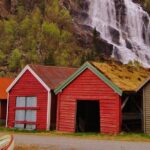
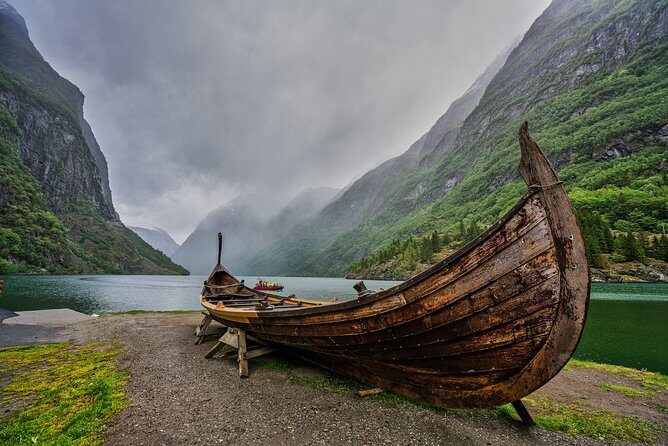
You reach Gudvangen at the edge of the Nærøyfjord region, in a small village that sits under the tallest waterfall in Norway, Kjelfossen. The stop is short, but it’s the kind of place where the scenery does the talking.
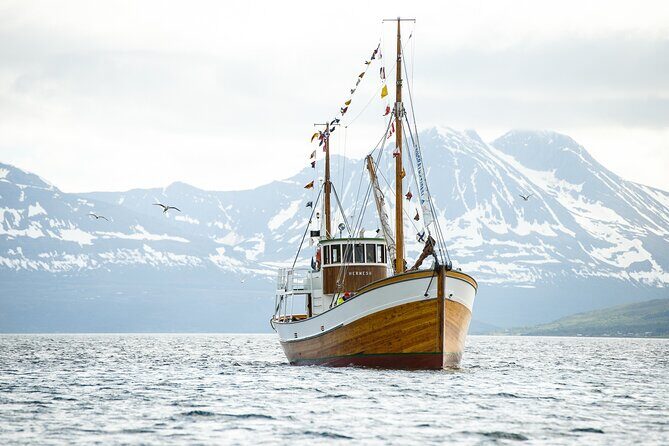
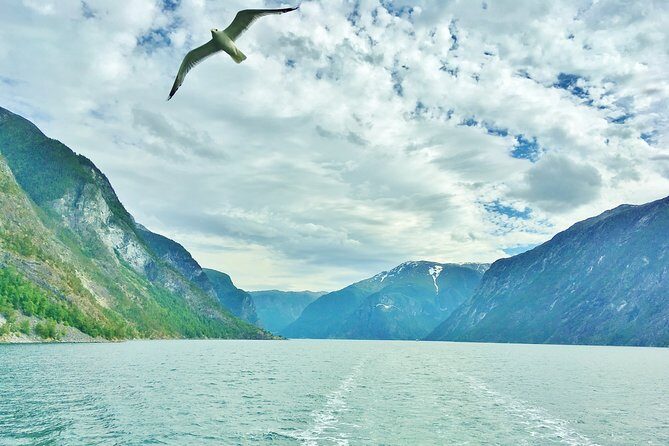
The tour makes a clear recommendation: take a 2-hour fjord cruise from Gudvangen to Flåm. Since the fjord cruise isn’t included, you’ll need to book it separately, and it’s smart to plan it early so the day doesn’t feel rushed.
If you want an even deeper Viking-themed stop, there’s an optional visit to Njardarheimr (the Viking Village). You can do it as a guided group experience, and you can even arrange a private Viking guide for an extra fee. That’s a good fit if you like hands-on culture—archery, axe throwing, and meeting modern-day craft makers who live the part.
Best timing move: if you’re set on the Nærøyfjord cruise, don’t overstack extras in Gudvangen. Keep lunch flexible, because the cruise is the clock driver.
Flåm and Stegastein: the views you remember later
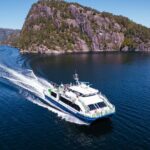
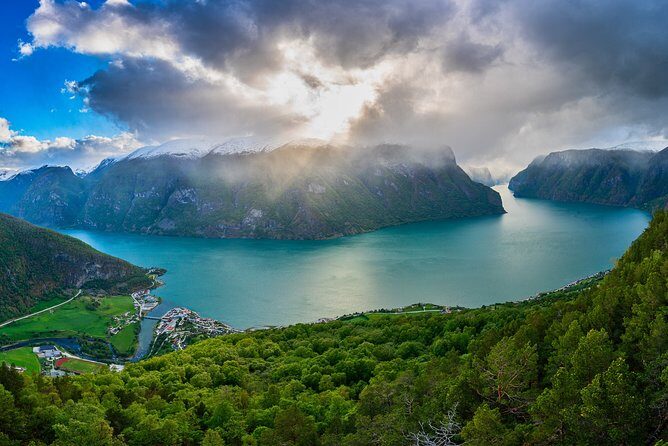
After leaving Gudvangen by ferry, RIB, or car, you land in Flåm, a village at the end of the Aurlandsfjord. This is one of those places where even a quick walk makes you feel the scale of the cliffs.
The tour strongly recommends Flåmsbana (the train) from Flåm up to Myrdal. The mechanics are impressive: you start at sea level and climb to about 867 meters, moving through a canyon and toward almost vertical walls. Your guide doesn’t accompany you on the train ride, but they wait for you in Flåm afterward so you can keep the flow.
If you’re not into the train, the tour also mentions alternatives like taking the train one way up and biking down, or using a zip-line option. Those are optional and lengthen or change the plan, but they show the point: Flåm isn’t only about waiting for the viewpoint bus.
Next up is Stegastein viewpoint, reached via a hairpin road. At about 640 meters above sea level, this is a wide-angle payoff—perfect for photos that make friends back home ask where you went.
Then you drive the Aurlandsvegen, the Old Aurland Road. One key detail: it’s open only in summer, so in shoulder seasons you may see a different driving pattern or fewer time windows.
Borgund Stave Church and Lærdal: wooden heritage without the museum marathon
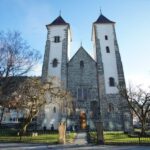
The route turns toward the Lærdal valley and gives you a choice: the Borgund Stave Church detour. This is optional, but it’s the kind of stop that’s worth building your time around if you love medieval wooden architecture. The church dates to around 1200, and it’s famous for what it represents: Norway’s survival of wooden building traditions.
Then you reach Gamle Lærdalsøyri, also optional but included as a free stop. This old village center is focused on preserved wooden houses from roughly the 1700s and 1800s. It’s a change of pace: less dramatic water, more human scale.
There’s also an optional stop at the Norwegian Wild Salmon Center in Lærdal (Nasjonalt Villakssenter). It’s open May through September, and the focus is the Lærdal river’s salmon fishing tradition, with salmon shown up close. If you’re visiting outside summer, don’t build your whole plan around it.
Crossing the Sognefjord: the ferry moment you’ll remember
One of the most satisfying included logistics points is the car ferry crossing. After leaving Lærdal, you come to Fodnes ferjekai and cross the Sognefjord on a ferry. Car ferries in Norway are more than transport—they’re part of the fjord experience. Even a short segment lets you see the water and cliffs with a different rhythm than road pull-offs.
On the north side, you travel to Sogndalsfjora, where you’ll usually stay overnight in Sogndal. Accommodation is not included, but the tour provider helps you book or recommend hotels in the area. This matters because the next day starts with glacier travel, and being close helps you avoid wasting time.
If you want sleep to make a difference, choose a place that’s easy to reach the next morning.
Nigardsbreen glacier day: from Solvorn to blue ice
Day 2 starts in the direction of Nigardsbreen glacier, with an optional stop at Urnes Stavkyrkje on the way. Urnes is a wooden stave church from around 1140 and is described as the oldest in Norway. If you like history that feels “real,” wooden churches like this connect the dots between people and landscape in a way photos can’t.
Next, you might stop in Solvorn and take a small car ferry across the Lustrafjord to Ornes. Again, it’s short, but it shifts you into fjord mode and breaks the drive into something more scenic.
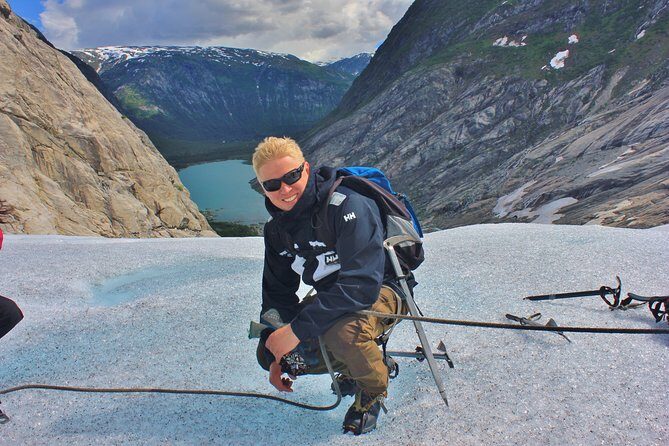
Then the road leads to Nigardsbrevatnet lake. From there, you walk toward the glacier. You get two ways to do it: walk the whole distance or take a boat that cuts out about 30 minutes of walking each way. Tickets for that boat are sold on the boat, and the schedule is built around how you arrive.
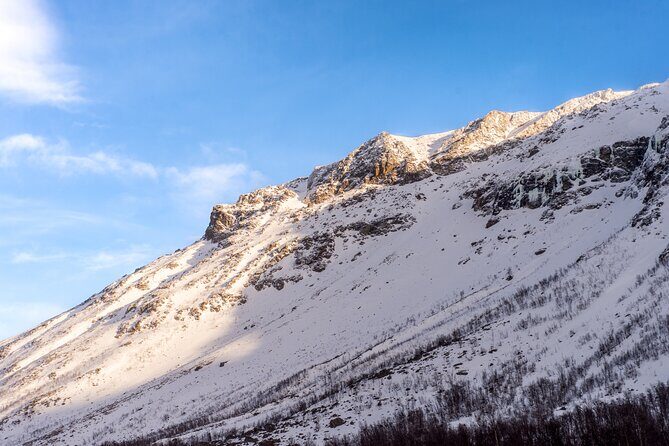
When you start the ascent, plan for about 30 minutes one way. Good hiking shoes matter here, because you’re moving on glacier-side terrain. Nigardsbreen is always in movement, like a frozen river, and the ice can shed chunks. The tour specifically warns not to come too close—this is one of those moments where safety rules protect the experience.
At the glacier, you’ll have time at the bottom to take photos and see the ice. If you want to go further, a glacier hike can be arranged—either a scheduled group option or a private one. That’s a strong choice if your group wants more than a view-and-walk moment.
Breheim Center and the Fjærland pivot: flexible choices at the right time
After Nigardsbreen, you head back toward the Sognefjord. There’s an optional stop at the Breheim Center, a glacier visitor center where you can see exhibitions and grab lunch. This is useful if you want more context after seeing the ice, or if weather shifts and you need an indoor anchor.
Depending on timing, you might continue toward Bergen or pivot to Fjærland. Fjærland is the second-day “culture plus ice” option, especially if you’re already thinking about glacier museums and calmer fjord cruising.
If you go to Fjærland, the Norwegian Glacier Museum is optional but recommended. You’ll find exhibits about glaciology and geology, plus a panoramic movie and a rooftop viewpoint of Supphellebreen glacier. Even if you’re not a science person, it helps you understand what you just walked on—how glaciers behave and why they look the way they do.
There’s also an optional stop at Bøyabreen glacier farther down the road. And in the Fjærland area, you can visit The Norwegian Book Town in Mundal—an outlet-style village set in old farmhouses and sheds. Some outlets function as art galleries, and there’s even a coffee spot in a book café setting. The book town is open May through mid-September, so this one depends on your travel month.
Fjærlandsfjord cruise to Hella and the scenic return loop
A big “bonus” in the Fjærland plan is a passenger ferry cruise through the Fjærlandsfjord. From June to mid-September, the small ferry leaves at 3:30pm every day, for a cruise lasting about 1 hour 40 minutes. You arrive in Hella, and your driver-guide meets you there.
Then the route continues with a car ferry across the fjord to the south side, reaching Vangsnes. This matters because it keeps you from spending extra time in transit and gives you a smoother arc back toward Bergen.
If the schedule doesn’t allow Fjærland that day, you still return along the Sognefjord to Hella and then use the same car ferry pattern. In other words, you’re not stuck with a “bad alternative”—the day still follows the water.
Vangsnes to Vik: stave churches, waterfalls, and coffee-stop realism
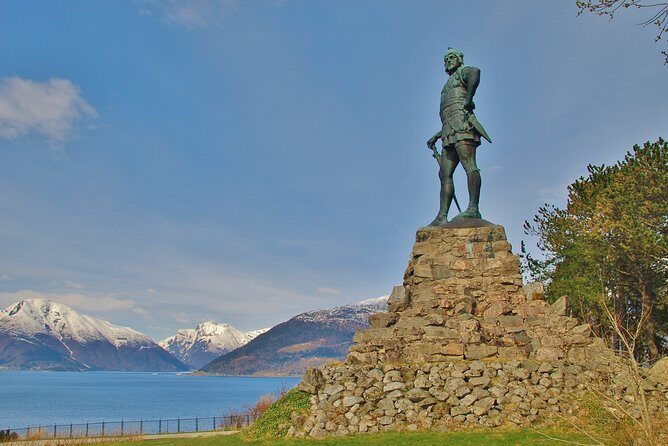
Once you reach Vangsnes, you get a short, interesting stop at the Statue of Fridtjov the Bold, a 10.5-meter tall figure linked to 8th-century Norway. It’s not the main reason people do the trip, but it’s the kind of brief stop that adds story.
Then you pass through Vikøyri and often continue to Vik, a small village where you can take a coffee break. The tour includes a stop at Hopperstad Stave Church in Vik, another optional-but-worthy wooden church dating to around 1130. It’s described as one of the oldest stave churches still in existence, along with Urnes.
After that, Storesvingen Fjellstove is where you can grab coffee-to-go with a view over the bay of Vik and the Sognefjord. This is practical: you’re late in the day, and you need something easy while still getting one last big lookout.
Then there’s Sendefossen waterfall on the way down from Vikafjellet. You’ll also pass back through Voss if time allows—especially if you skipped earlier—before returning to Bergen to end the trip.
Price and value: what $1,524.76 buys you in real terms
At $1,524.76 per person, this is not a budget bus tour. You’re paying for a private, door-to-door setup with an air-conditioned vehicle, live English commentary, bottled water, and car ferry fees included.
So what does that mean for value? You’re buying time and convenience in a region where distances add up fast. In two days, you’re hitting Bergen, Dale, multiple waterfall stops, two stave churches, fjord cruising time windows, Flåm and Stegastein, and a glacier walk at Nigardsbreen. That’s hard to recreate smoothly on your own without careful planning.
Also important: the big exclusions aren’t hidden. Fjord cruises, the Flåmsbana train, museum entrances, meals, and accommodations are not included. If you like choosing your own pacing—cruise or no cruise, Viking village or not—that flexibility can still feel like value, but you should plan for additional ticket costs.
If you want to maximize what you get for the money, pre-decide on:
- the Nærøyfjord cruise time you want,
- whether you’ll do Flåmsbana,
- and if you’ll add any optional museum/church detours that match your interests.
Who this private Grand Sognefjord trip suits best
This tour fits best if you want a guided route but don’t want to feel trapped. It’s ideal for couples, small groups, and anyone who prefers private transport over long waits and complicated transfers.
It’s also a strong fit if you care about mixing “nature wow” with “human story.” The route threads together waterfalls, fjords, glacier ice, and wooden stave churches—so the trip isn’t all one note.
If you hate full schedules or long driving days, you might find the pace a lot. But if you like building a highlight reel without having to organize every detail yourself, it’s a solid match.
Should you book this tour?
Book it if you want the Grand Sognefjord experience to happen with minimal planning and maximum variety in just two days. The included private pickup from Bergen, plus the steady waterfall-to-fjord-to-glacier rhythm, is the reason this works.
Consider another approach if you already plan to drive everything yourself and you’d rather spend more time in fewer places. And if you’re visiting when optional seasonal stops are closed (like the Sunday closure at the Dale of Norway outlet from September to May, or places like Book Town that run May to mid-September), make sure you’re comfortable shifting your priorities.
If you do book, message your provider early and tell them what you care about most—fjords, trains, Viking culture, stave churches, or glacier time. With a guide like Vlad, the trip can feel less like a checklist and more like your own Grand Sognefjord route.
FAQ
Is pickup included, and where does the guide meet me?
Yes. Pickup is offered at your hotel in central Bergen, at the cruise ship terminal gate, or in the arrival hall at Bergen airport.
Is this tour private or shared with strangers?
It’s a private tour/activity, meaning only your group participates.
What’s included in the price?
Included are private transportation in an air-conditioned vehicle, live English commentary from the driver/guide, bottled water, car ferry fees, and hotel/port pickup.
Are meals and accommodation included?
No. Meals and accommodation are not included in the tour price.
Are the fjord cruises and Flåmsbana train tickets included?
No. Train and passenger ferry/fjord cruise tickets are not included, and tickets should be booked in advance.
Do I need to pay for museum and church entrances?
Entrance fees to museums and other optional attractions are not included.
How is the glacier visit to Nigardsbreen handled?
You’ll drive to Nigardsbrevatnet lake, then walk toward Nigardsbreen. You can walk the whole way or take a boat that saves about 30 minutes each way. The walk up the glacier takes about 30 minutes one way.
Is a glacier hike an option?
Yes. The tour mentions that a glacier hike can be arranged, either as a scheduled group option or as a private option, which would extend your time at the glacier.