REVIEW · ALESUND
Small Group Tour in Ålesund: Art Nouveau, Sea Views & Insider Tips
Book on GetYourGuide →Operated by Lukas Klein Media · Bookable on GetYourGuide
Ålesund wears Art Nouveau like a badge. This relaxed small-group walk connects the waterfront, everyday life, and the rebuild story right where you can see it. I especially like the way the guide frames Art Nouveau buildings in their real historical moment, and how you’re not rushed—questions and back-and-forth fit naturally. One thing to consider: there are short climbs, stairs, and uneven bits underfoot, so you’ll want decent walking stamina.
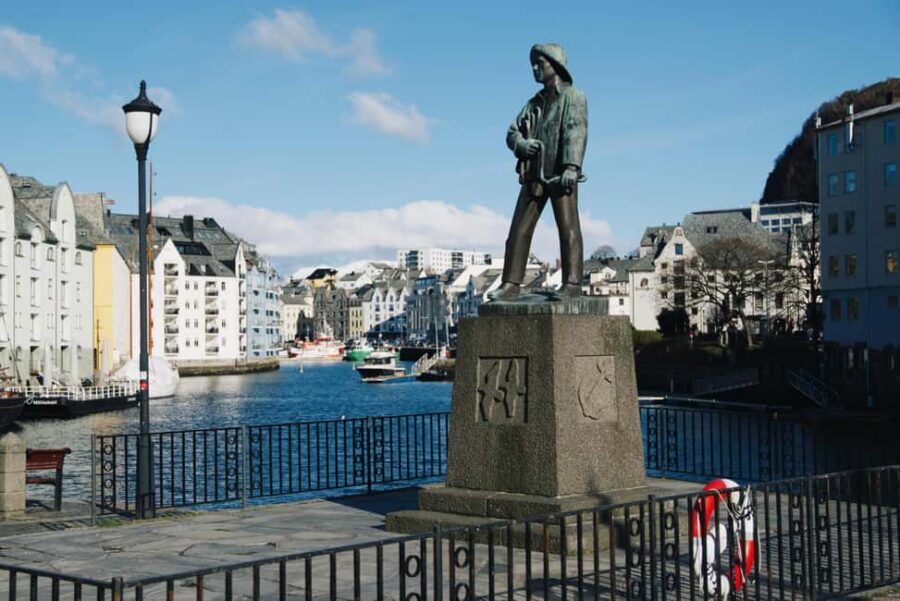
The tour starts at Fiskergutten, the fisher-boy statue by the bridge, and it’s close to the cruise port—ideal if your ship time is tight. You’ll finish at Grimmerhaugen, a practical viewpoint that keeps things manageable compared with the much longer trek to Aksla. It’s a smart format for first-timers who want orientation fast, without turning the afternoon into a checklist.
A good part of the value is what you take away afterward: a free digital brochure plus restaurant, café, and small-shop ideas that help you explore on your own. The guide speaks English or German, and the pace is calm enough that the city’s “slow coastal life” actually lands. Just dress for Norweigan weather and wear comfortable shoes, because the route still includes a bit of work.
In This Review
- Quick Take: What Makes This Ålesund Walk Worth Your Time
- Entering Ålesund’s Art Nouveau Rebuild Story (1904 to Now)
- Fiskergutten: The Sea Connection You’ll Feel Immediately
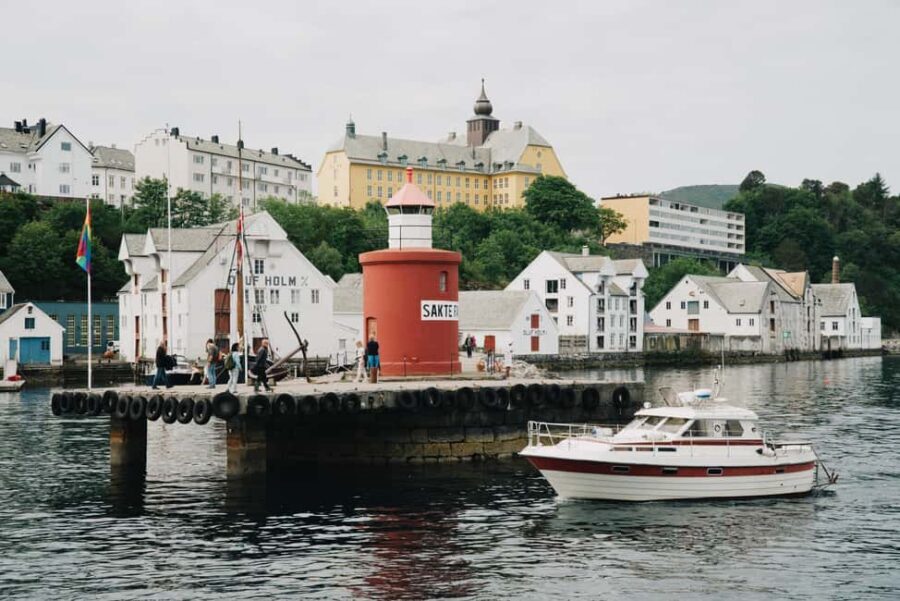
- Apotekertorget and the Port-Energy Stop You Might Miss Alone
- Kongens gate: Ornate Facades, Turrets, and Symbol Work at Street Level
- Museums-parken Photo Stop: A Break That Doesn’t Kill Momentum
- Grimmerhaugen Viewpoint: Views Without the 418-Step Detour
- Pacing, Group Size, and When This Works Best for You
- Cruise-Ship Timing: How to Fit This Into a Short Layover
- The Guide’s Style: Q&A Friendly, Art + Economy, and a Photographer’s Eye
- Practical Comfort: What to Wear and How to Keep It Easy
- What You Get Beyond the Walk: Digital Brochure and Local Suggestions
- Price and Value: Is $61 Worth It for Two Hours?
- Who Should Book This Tour (and Who Should Skip It)
- Should You Book This Ålesund Small-Group Art Nouveau Walk?
Quick Take: What Makes This Ålesund Walk Worth Your Time
- Fiskergutten to Grimmerhaugen in a tight loop that’s built for cruise-shore timing.
- Art Nouveau after the 1904 fire, explained in the streets you’re actually standing in.
- Harbor and sea-economy context, from dried fish traditions to modern infrastructure.
- Small-group Q&A, with room for personal questions rather than a one-way lecture.
- Easy viewpoint choice at Grimmerhaugen (not the steep 418-step climb to Aksla).
- A free digital brochure plus practical places to eat and wander next.
Entering Ålesund’s Art Nouveau Rebuild Story (1904 to Now)
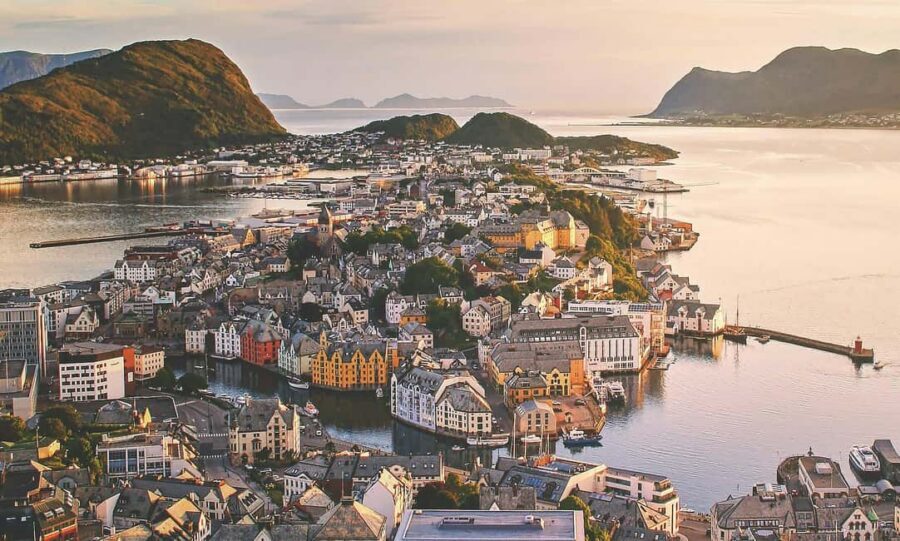
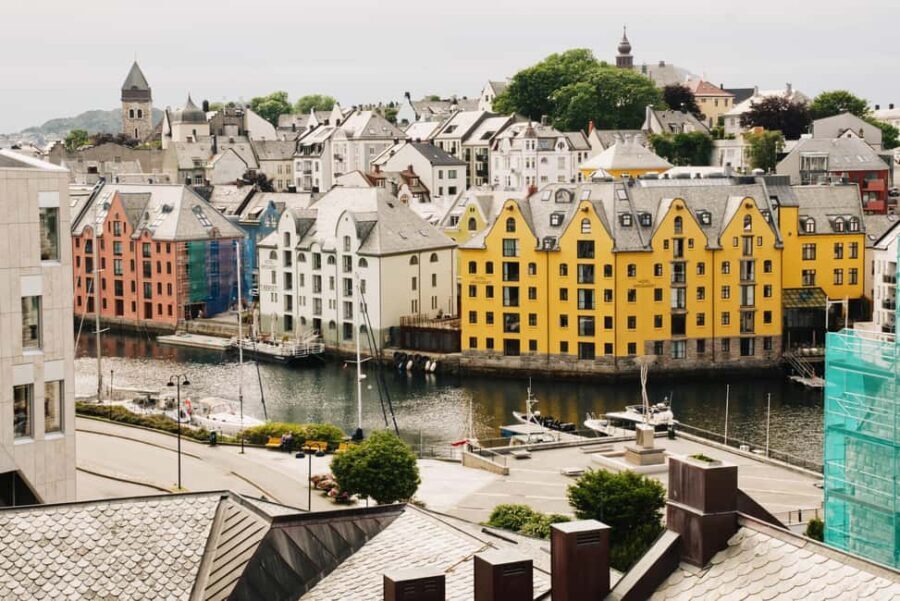
Ålesund’s Art Nouveau reputation isn’t random postcard flavor. After the major city fire in 1904, the rebuilt streets went all-in on design, and you can still read that decision in the building details. The tour’s whole approach is basically: don’t just look at facades—understand why they got built the way they did.
The guide places special focus on Kongens gate, where you get a high density of ornate facades, turrets, and symbolic ornamentation. On foot, that means you’re seeing architecture as a street-level experience, not a museum display. You also get the sense that people weren’t just rebuilding structures; they were rebuilding identity and pride after a disaster.
One of the best parts is the explanation style. Instead of throwing terms at you, the guide connects the architecture to the city’s economy and daily reality—what mattered to locals, what the harbor meant, and how Norway looks forward even while honoring tradition. If you like art and history but don’t want to sit through a long museum lecture, this format works.
You can also read our reviews of more tours and experiences in Alesund.

Fiskergutten: The Sea Connection You’ll Feel Immediately
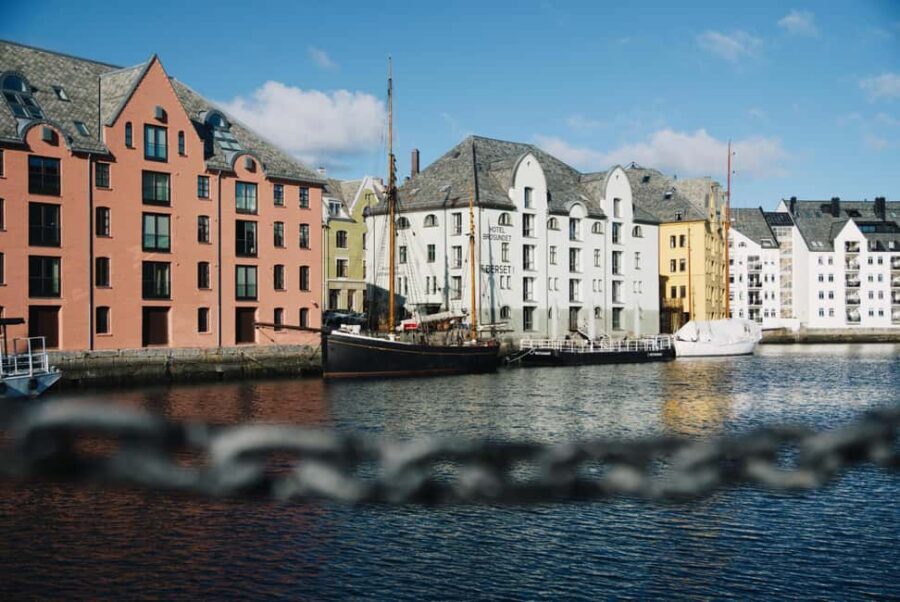
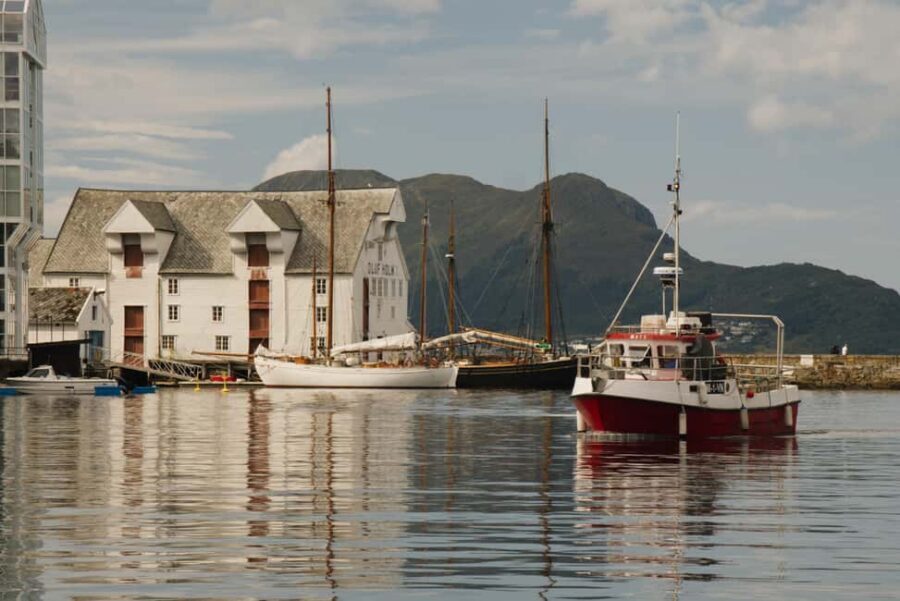
The meeting point is the big fisher-boy statue, Fiskergutten, next to the bridge right by the Art Nouveau center. It’s a fitting start because Ålesund’s story keeps circling back to the sea—fishing, trade, and work rhythms. You don’t need a map to understand the theme; the harbor is part of the scenery.
From there, the walk tracks along the waterfront so you can hear how the city functioned through the salted and dried fish trade. That may sound old-school, but it’s the thread that helps the modern city make sense. You see the harbor side of Ålesund first, then the architecture—like reading the story in the order your eyes naturally prefer.
The guide also brings up how Norway now ties the coast together with major infrastructure: tunnels under the sea, floating bridges, and bold planning. One claim you’ll hear is about the world’s first tunnel designed for passenger ships—whether you think about it as engineering or ambition, it reinforces the “moving forward” mood of the region. This isn’t just history; it’s how a coastal life survives distance and weather.
Apotekertorget and the Port-Energy Stop You Might Miss Alone
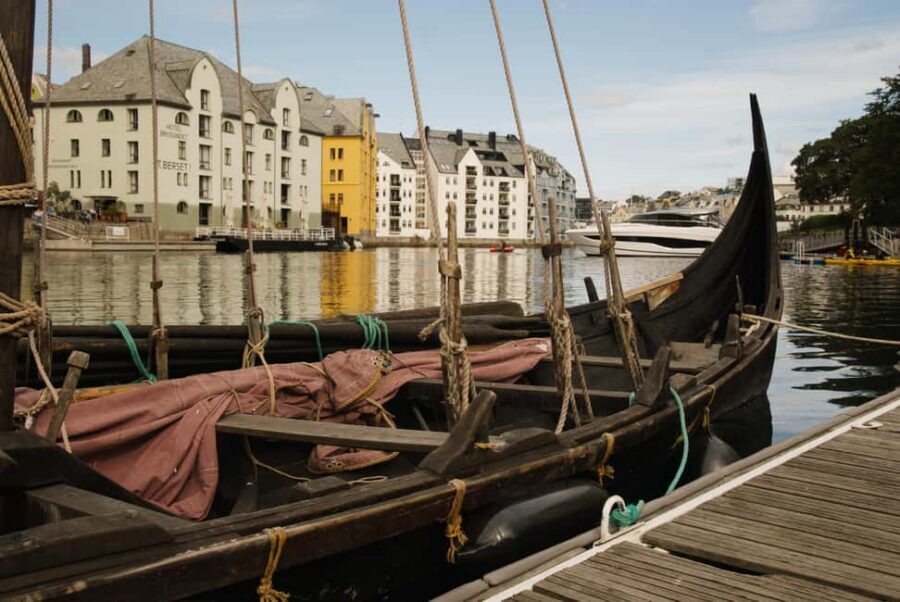
As you move through central areas like Apotekertorget, the tour keeps you close to key city points without turning it into a marathon. It’s short stops and targeted context: what the building used to mean, what the area does today, and why it fits Ålesund’s harbor-centered identity.
One stop you’ll likely appreciate is around Ålesundregionens Havnevesen (the harbor-related area). Instead of treating it as “just another building,” the guide uses these points to explain how the harbor supported the city’s growth and how modern systems keep that role going. Even if you’re not an engineering person, you’ll walk away with a clearer picture of why the city’s layout and priorities look the way they do.
This is also where small-group pacing really shows. You’ll have time for the kind of questions that come up naturally while standing there—why a street bends, why a view sits where it does, or what daily life feels like beyond the tourist highlights. In a bigger group, you’d probably just shrug and move on. Here, the guide keeps the conversation moving with you.
Kongens gate: Ornate Facades, Turrets, and Symbol Work at Street Level
If Art Nouveau is your main reason for coming, Kongens gate is the core payoff. This is where the city’s “open-air museum” feeling becomes real—not because you’re told to admire it, but because the guide teaches you what to notice.
Expect to spend meaningful time with the details: ornate facades, turrets, and symbolic ornamentation. The point isn’t to memorize styles; it’s to see how decoration communicates. In practice, that means you’ll look at the same block and spot patterns you’d normally miss because you weren’t sure what to look for.
One of the tour’s strengths is how the guide compares what you see in Ålesund with similar architecture from the same era. In other words: you’re not just getting local pride; you’re getting context for how early 20th-century design traveled and connected. That makes the stop feel bigger than just one town’s look.
There’s also an energy in the way the guide tells the rebuild story. You connect the devastation of 1904 with the decisions people made afterward. Then you see the result in the shapes and symbols above street level. It’s art plus consequence.
Museums-parken Photo Stop: A Break That Doesn’t Kill Momentum
You’ll have a photo stop near Museums-parken, which works as a little reset without stretching the schedule. If you’re traveling with limited time—especially from a cruise ship—this kind of pause matters. You get time to take photos, check where you are in the city, and ask a final question before you head uphill.
This is also a good moment to think about how you’ll keep exploring later. The tour doesn’t just end at the viewpoint; it sets you up to roam with direction. After a few good shots, you’ll understand how different neighborhoods relate to the harbor and the architecture zones you just walked through.
And because it’s a small group, the stop feels flexible. If your camera card is full or you want a different angle, you’re not stuck with a rigid herd motion. That’s a subtle quality-of-life detail that you’ll notice right away.



Grimmerhaugen Viewpoint: Views Without the 418-Step Detour

The route ends at Grimmerhaugen, a viewpoint that’s easy to reach compared with the Aksla climb. The big win here is that it gives you a wide harbor view without making your whole afternoon a stair training session.
On the water-and-city side, Ålesund’s topography can be a little confusing until you get a higher perspective. From Grimmerhaugen, the city’s relationship to the harbor and surrounding islands becomes obvious. You’ll also see why the sea has always been the city’s organizing force.
Just as important, this viewpoint is timed so you’re not too tired to enjoy it. One of the tour’s themes is relaxed pace—enough to take in the view, but short enough to stay focused. If you’ve been walking for years in Europe, you’ll appreciate that it still feels like a “real trip,” not a forced march.
Pacing, Group Size, and When This Works Best for You
This is a 2-hour walking tour designed for comfort and attention. The group size is deliberately kept small, which is exactly what you want for a town where you’ll spend a lot of time looking up at details. When the group is small, the guide can actually answer questions on the spot instead of saving everything for the end.
The pace is relaxed, but the route includes short climbs, stairs, and uneven surfaces. In practical terms, that means you should plan on moving steadily rather than strolling like it’s a flat promenade. If your mobility is limited, or if you’re planning for wheelchair use, the tour isn’t set up for that based on the constraints stated.
For fitness, it’s aimed at people who can handle longer walking distances in city terrain. In the real world, that describes most active travelers—and it also explains why the reviews consistently mention the walk is enjoyable exercise rather than a strain.
Cruise-Ship Timing: How to Fit This Into a Short Layover
This tour is built around cruise reality. The meeting point and the finish point are only about a 5- to 10-minute walk from the cruise port area, which makes it easier to get there without stress. The tour times are aligned with typical ship layover windows.
There’s also a useful timing note for how late you’ll be back at your ship area: from the end point, you should be able to reach your ship by 12:15 PM or 3:45 PM at the latest. If you’re the type who hates running to catch a bus, this structure is a big deal.
If you have the option, check the day’s ship schedule before you book. That’s the one planning step that can matter more than the tour itself.
The Guide’s Style: Q&A Friendly, Art + Economy, and a Photographer’s Eye
The tour is led by Lukas Klein Media, with the specific guide appearing in German or English depending on the session. What stands out from the guide approach is the balance: architecture, sea history, and modern life are all treated as connected topics, not separate trivia buckets.
Lukas is described as enthusiastic and patient, and that shows in how the tour handles questions. This isn’t a situation where you’re forced to keep your curiosity bottled up. If you’re the kind of person who asks why something was built, how the economy shaped the town, or what life in Norway feels like day to day, you’ll probably enjoy this.
Another interesting angle from past experiences: the guide doesn’t limit the story to old traditions. You’ll hear about the oil and gas economy and how revenue management shapes the country, plus thoughts on infrastructure. It’s a lot to cover in two hours, but the tour keeps it connected to where you’re standing.
There’s also a photography component. Lukas enjoys taking photos during the walk and, in at least some cases, has offered to take photos of you at different stops with a professional camera and send them afterward at no extra cost. That’s a nice extra if you’re traveling as a couple and want images that look like more than casual phone shots.
Practical Comfort: What to Wear and How to Keep It Easy
You’ll want comfortable shoes and weather-appropriate clothing. Norway weather can change fast, and a two-hour walk means you’re exposed for a decent chunk of time.
Bring a basic sense of preparedness for a city with hills. Even though this is only two hours, the route does include short climbs and stairs. If you’ve got a sensitive knee or you’re relying on poles, consider whether you’d enjoy a viewpoint more gently reached.
Also note what’s not allowed. Video and audio recording aren’t permitted, and alcohol and drugs aren’t allowed. Party groups aren’t a fit for this format either, so keep the vibe calm and respectful.
What You Get Beyond the Walk: Digital Brochure and Local Suggestions
The tour includes a free digital brochure for your stay in Ålesund. This is where the guide’s local thinking helps you extend the value of those two hours into the rest of your time in town.
You’ll also get recommendations for restaurants, cafés, and small shops that locals know about. That matters because Ålesund has plenty to see, but picking what’s worth your time is the hard part—especially when you only have a day or two.
If you like a few “just for fun” food moments, there are examples from past tours of stopping at a small kiosk where you can grab coffee or ice cream to go. In at least one experience, soft brown cheese ice cream and even hot chocolate with ice cream were mentioned as part of the fun. You won’t be forced into anything—just know there may be tasty detours.
Price and Value: Is $61 Worth It for Two Hours?
At $61 per person for a two-hour guided walk, the price isn’t about covering transportation. It’s paying for orientation, context, and someone to point out details you would likely miss.
Here’s where the value really comes from:
- You’re getting the Art Nouveau story in its historical cause-and-effect, not just a style tour.
- You’re learning how the sea economy shaped the city, then seeing how modern infrastructure continues that thread.
- You’re getting a small-group experience with Q&A time, which helps the tour feel personal.
- You’re walking from cruise-friendly points and ending at a viewpoint that’s easier than the more famous climb.
If you’re comfortable exploring on your own, you could probably piece together a self-guided version. But if you want to understand why the buildings look the way they do and how the coast shaped everything, this guided format buys you time and clarity.
Who Should Book This Tour (and Who Should Skip It)
I think this tour is ideal if you want:
- Art Nouveau without getting stuck in a museum pace
- Sea-history context plus modern Norway explanations
- A calm small-group walk with room for questions
- A cruise-shore-friendly plan that still feels meaningful
I’d skip it if you:
- Need wheelchair-accessible routes (the walk includes stairs and uneven surfaces)
- Have low walking tolerance or expect flat surfaces only
- Are traveling with children under 10, since the tour isn’t suited for that age group
If you’re a curious adult with decent walking legs, you’ll likely find the mix of architecture, harbor story, and practical viewpoints hits a sweet spot.
Should You Book This Ålesund Small-Group Art Nouveau Walk?
Yes, if you want a smart first look at Ålesund that combines Art Nouveau details with the sea-and-infrastructure story that explains why the city feels the way it does. The small group size and Q&A time are the difference between “seeing buildings” and actually understanding them.
Book it especially if you’re on a cruise or you’re short on time. The location near Fiskergutten and the easy landing at Grimmerhaugen make it a strong fit for a tight shore day. Just be honest with yourself about the steps and uneven ground, dress for weather, and show up ready to look up.