REVIEW · ALESUND
Molde – Atlantic Road Private Sightseeing tour
Book on Viator →Operated by Uniktur · Bookable on Viator
Few roads give you this much wow per hour. This private Molde tour strings together the Atlantic Road highlights with culture and local detail, from Molde Cathedral history to a museum packed with old regional buildings.
I especially like the pace: it’s private (up to 4), so you can linger for photos when the view hits, then move on. I also like that the plan includes practical time at stops like Romsdal Museum (50 minutes) and Varden (10 minutes), instead of rushing you through everything like a checklist. One thing to consider: the best scenery depends on weather, and some photo stops are short.
In This Review
- Key highlights at a glance
- Why this Molde-to-Atlantic Road private drive works so well
- Price and value: $1,155.29 per group (up to 4) and what that means for you
- Getting started in Molde: pier pickup and the Hamnegata 37 meetup
- Molde Cathedral (1957): stained glass, rescued art, and a 50-meter bell tower
- Town Hall Square and Rosepiken: roses, a dancing fountain, and the Rosa Maiden legend
- Romsdal Museum in Holmarka: old buildings you can actually picture living in
- Atlantic Road (Atlanterhavsveien): bridges, causeways, and the drunken Storseisundet Bridge
- Past marble mines and Eide: mountain legends and fjord photo time
- Varden Molde Panorama: fjords, archipelagos, and 222 snow peaks
- What the tour feels like: comfortable driving, guided context, and flexible pacing
- Should you book this Molde Atlantic Road private sightseeing tour?
- FAQ
- FAQ
- How long is the Molde Atlantic Road private sightseeing tour?
- What is the meeting point for the tour?
- Does the tour include pickup from the pier?
- Is this tour private?
- What’s included in the price?
- Is lunch included?
- Do I need a paper ticket?
- What should I expect at Romsdal Museum?
- Is the tour run daily?
- What happens if weather is bad?
Key highlights at a glance
- Private group of up to 4 means you get flexibility and less waiting around
- Round-trip pier transfers make it easy if you’re arriving by ship
- Romsdal Museum with 50 minutes and admission included gives you real time with the buildings
- Atlantic Road photo stops focus on the bridges, causeways, and the famous drunken-style Storseisundet Bridge
- Varden panorama includes admission and a quick window over the fjords and peaks
- A flexible feel after ~4 hours leaves the rest of your day for your own plans
Why this Molde-to-Atlantic Road private drive works so well
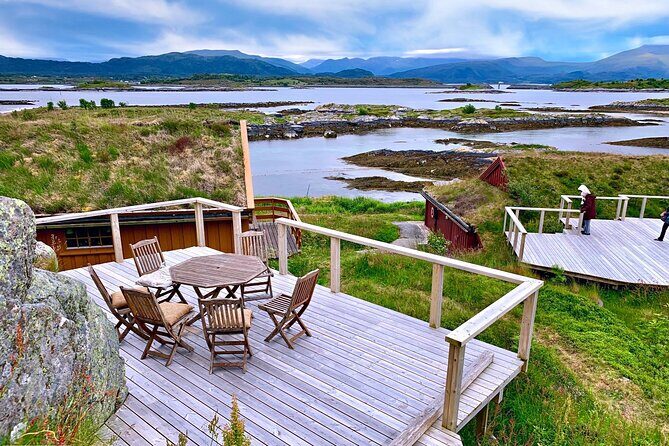
Molde is a great base for road travel. The region mixes fjord edges, mountain views, and coastal islands, and this tour uses that geography instead of fighting it. You’ll ride in an air-conditioned vehicle, with bottled water handled for you, which matters when you’re bouncing between viewpoints and changing weather.
The biggest win is how the route is structured. You start in town with heritage stops, then you shift to the dramatic coastal engineering of the Atlantic Road, and finally you end with a viewpoint that puts Molde, fjords, archipelagos, and a long chain of snow peaks into one view. It’s a clean progression: history → people and place → coast → panorama.
And because it’s private, you’re not stuck trying to match the slowest person’s walking speed while also trying not to feel guilty. The tour is guided, but the group format lets you manage small moments like asking a question, taking an extra photo, or slowing down at a viewpoint edge.
The time plan also helps you avoid the common trap. Some tours feel like they’re always rushing. Here, you get around 4 hours for the sightseeing portion, then the rest of the day is free—so you can still wander Molde’s waterfront or grab lunch on your schedule.
You can also read our reviews of more private tours in Alesund
Price and value: $1,155.29 per group (up to 4) and what that means for you
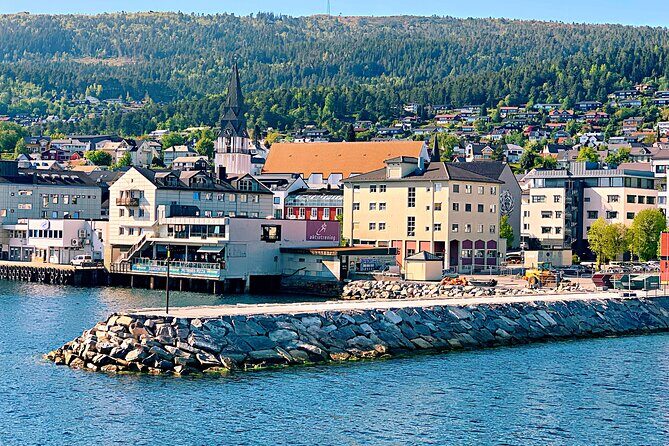
This tour costs $1,155.29 per group for up to 4 people. That price tag is for the whole private vehicle experience, not per person, so the value depends on how many seats you fill.
Here’s the practical math: if you travel as a full group of 4, you’re effectively paying about $288 per person for roughly 4 hours and 40 minutes of guided driving and admissions at key stops. If you’re only 2 people, the cost per person doubles—so you’ll want to be sure you really want the private format (and not just a shared bus tour).
Where the price feels more justified is the combination of:
- Round-trip pier pickup/transfer
- Air-conditioned transport
- Included admissions at Romsdal Museum and the Atlantic Road route portion, plus Varden
- A guide who can explain what you’re seeing while you move between widely spaced points
Also, booking behavior is a clue. This tour is typically booked well in advance (on average 185 days). That often means good availability at the popular timeslots doesn’t last long.
If you’re traveling as a couple and you’ll appreciate a slower, more conversational pace, it can still be worth it. If you’re cost-sensitive and okay with sharing time with strangers, you might compare options. But for families or small groups, private usually feels like the smart move.
Getting started in Molde: pier pickup and the Hamnegata 37 meetup
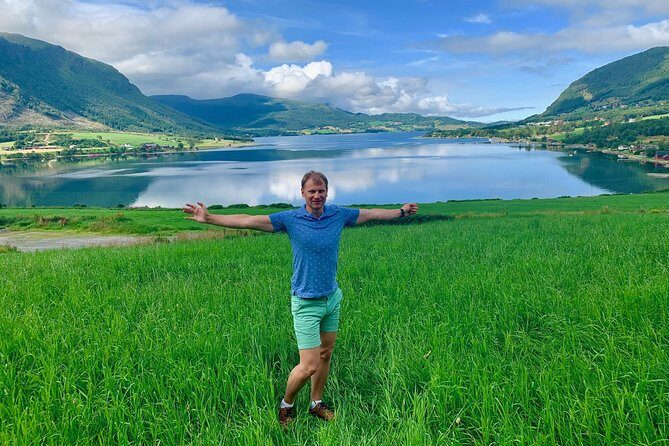
The tour meets at Hamnegata 37, 6413 Molde, Norway, and it ends back at the same place. If you’re coming in by cruise ship, you’ll appreciate the round-trip transfers from the pier, because it reduces the stress of timing your day to public transport schedules.
You’ll also get a mobile ticket, which makes check-in easier once you’re standing on the pier. The tour runs daily (with opening hours listed from 8:00 AM to 4:00 PM), so it’s usable across the day even if your schedule is flexible.
The total duration is about 4 hours 40 minutes, and the guide keeps the route moving. Still, because it’s private, the vehicle is there for you, not for a big bus lineup. That small difference matters when weather turns or when you find a photo spot that’s just too good to skip.
Molde Cathedral (1957): stained glass, rescued art, and a 50-meter bell tower
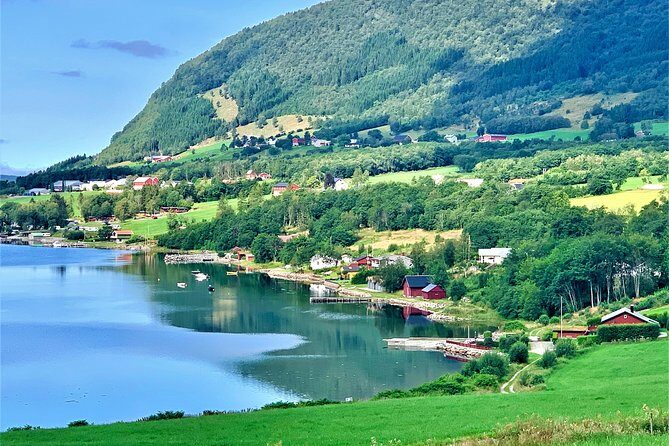
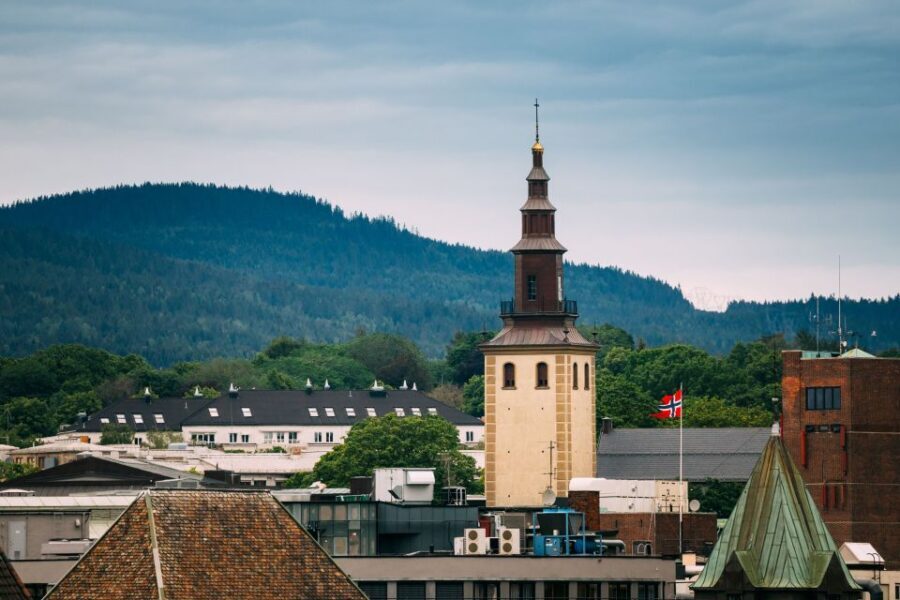
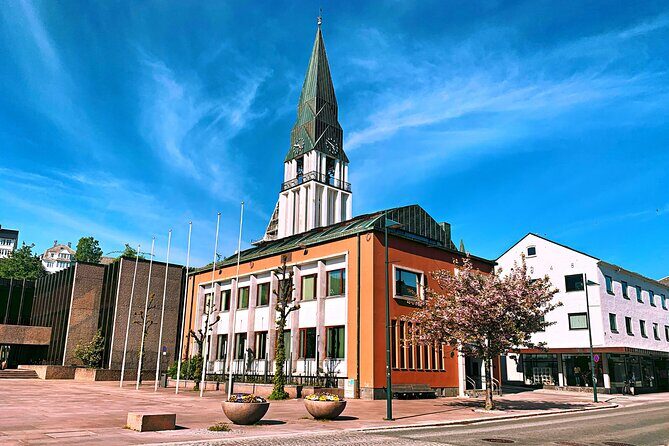
Your first major “feel of place” stop is Molde Cathedral. It was consecrated in 1957 and is a double-nave long church in a Gothic style. If you like architecture, the outside is a strong clue about what’s inside: a 50-meter free-standing bell tower topped with a copper-clad pyramid.
Inside, you’ll find stained glass and lots of Christian symbolism. What makes this church emotionally memorable is what happened to it over time. The Cathedral was destroyed in fires, but an older wooden cross and Axel Ender’s famous Easter Morning altarpiece were rescued from the flames.
That rescue detail adds weight without turning the stop into a lecture. You’ll get the main context while you’re there, and you’ll understand why locals still see the building as more than just a viewpoint photo.
A practical consideration: this is a church stop, so it’s not about shortcuts or speed-walking. If you’re sensitive to crowds or want quiet time, aim to focus on the inside as part of the experience, not as a quick stop-and-go.
Town Hall Square and Rosepiken: roses, a dancing fountain, and the Rosa Maiden legend
Next, you’ll move to Town Hall Square in Molde, often described as the Town of Roses. The centerpiece is the bronze statue Rosepiken, which sits by a dancing fountain. The statue was a gift in 1971 from Gotlib Moe, sculpted by Ragnhild Butenschøn—and Molde Town Hall was completed in 1966.
What makes this stop interesting is that it blends public art with a local story. There’s a legend connected to the Rosa Maiden, and your guide can help you connect the sculpture to that tradition. Even if you don’t catch every detail, you’ll leave with the basic idea: this town has a rose identity, and the art is part of how that identity shows up in daily life.
One more detail I’d pay attention to: the roof of the Town Hall has a rose garden. Even from outside, it helps you understand why this place feels “themed” in a gentle way. It’s not just a random decoration stop; it ties into how Molde presents itself.
The downside? If you’re hoping for a big walkabout, this part is more of a look-and-absorb stop. You’ll enjoy it most if you like short bursts of local culture between scenic driving segments.
Romsdal Museum in Holmarka: old buildings you can actually picture living in
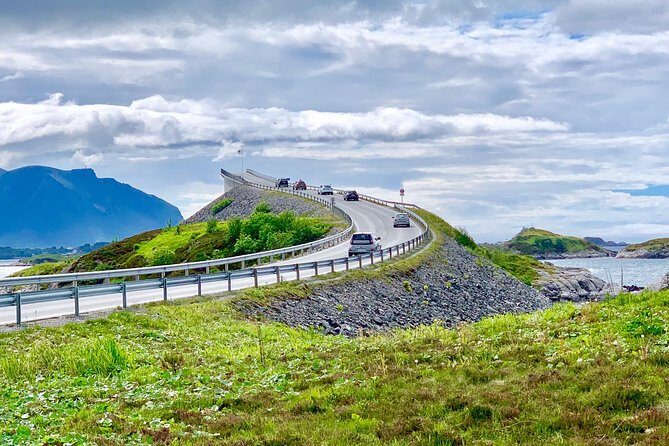
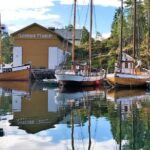
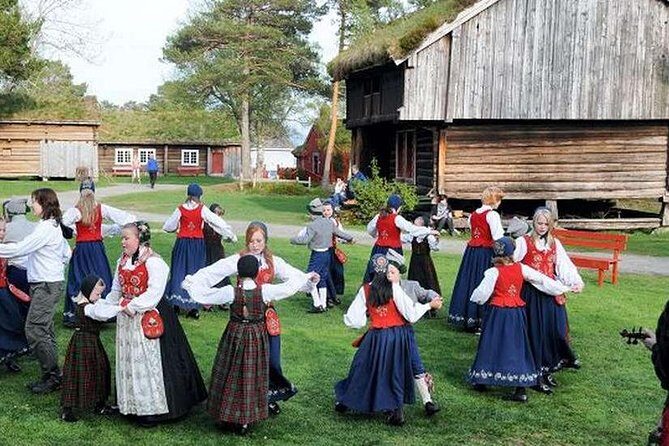
The tour’s biggest cultural time block is Romsdal Museum, and the schedule gives you 50 minutes with admission included. This is one of Norway’s larger folk museums, established in 1912, and it’s built around more than 50 older buildings moved here from across the region.
Instead of one indoor exhibit theme, the museum is about courtyards and farm structure. You’ll see typical farm building arrangements, including open-hearth houses, sheds, outhouses, smokehouses, and even a small chapel. If you like to understand how people lived—how buildings grouped together and how daily work shaped the yard—this is the best stop on the day.
A neat extra: at Holmarka, there’s a stable that houses museum animals like a horse, hens, sheep, and rabbits. That turns the museum from purely historical into something you can connect to immediately.
There’s also a modern connection. During the Molde International Jazz Festival, the museum is used as an open-air stage for major outdoor concerts. So the same courtyard spaces that once held farm life can also host music crowds.
Is 50 minutes enough? Yes, if you focus on the courtyards and the buildings that feel most “complete” to you. If you’re the type who wants to read every label, you’ll want to move slower. The short time is a trade: you get the highlights without losing your day to museum stamina.
Atlantic Road (Atlanterhavsveien): bridges, causeways, and the drunken Storseisundet Bridge
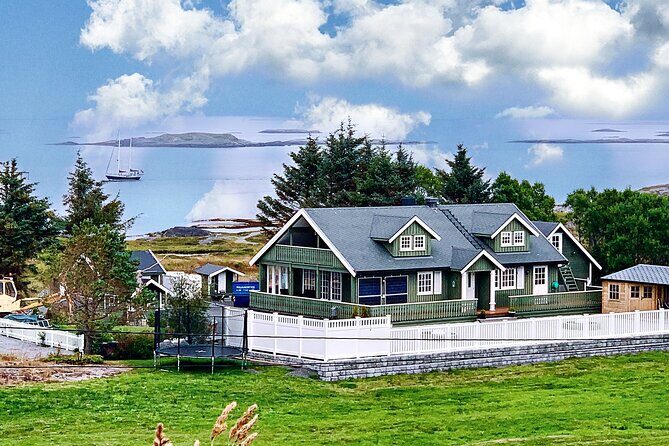
Now for the part most people came for: the Atlantic Road, known as Atlanterhavsveien, which has National Tourist Route status. The route ties together islands and coastal stretches, with the sea close enough that you feel how exposed this area can be.
The famous engineering details are the headline:
- 8 bridges
- Several causeways
- 4 viewpoints
- Even cod fishing spots
And then there’s the star bridge: Storseisundet Bridge (Storseisundbrua). It’s described as the longest bridge stretch at over 260 meters, and it’s also called the road to nowhere. As you ride toward it, at a certain point it can seem like the road suddenly ends into a precipice. That’s not just drama for tourists—it’s a real optical effect created by the bridge’s design and the way the sea sits below you.
It’s also nicknamed the drunken bridge because it twists, arches, and dips rather than staying flat and uniform. That change in angle is why your brain has to keep updating what you think you’re looking at while you’re moving.
You’ll make a few stops for photos, with admission included for the Atlantic Road portion and about 30 minutes there. Expect wind and spray even when the rest of the day looks calm. Bring layers you can handle pulling on quickly, and if it’s rainy, keep your camera strap shorter so it doesn’t get in the way.
A fair warning: this is one of those tours where weather can change the feel dramatically. Low clouds can reduce the drama, but fog can also make the sea look darker and more dramatic. Either way, you’ll want to treat this as a “go with it” stop and plan to enjoy the engineering even if the view isn’t postcard-perfect.
Past marble mines and Eide: mountain legends and fjord photo time
After the Atlantic Road, the route heads into higher country, including stories tied to marble mines and the village of Eide. This part is more about guided interpretation than big-ticket landmarks. You’ll listen to stories and legends from the places you pass, which is valuable because the scenery alone can look similar from one turn to the next.
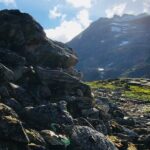
Then you’ll get a quick break at Malmefjorden. The stop is short—around 5 minutes—but it’s framed around the emerald meadows and the spectacular mouth of the Malmefjord. This is one of those “short and sweet” viewpoints. If the light is right, you’ll get a great photo. If it’s grey or windy, you’ll still get a sense of how the fjord opens into the broader coastal area.
Because this stop is brief, you’ll get the most out of it by planning your photo angle quickly—don’t wait too long to line up. The guide keeps the rhythm of the day, so think of Malmefjorden as a moment to capture, not to fully explore.
Varden Molde Panorama: fjords, archipelagos, and 222 snow peaks
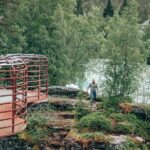
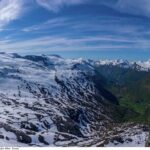
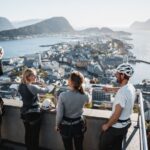
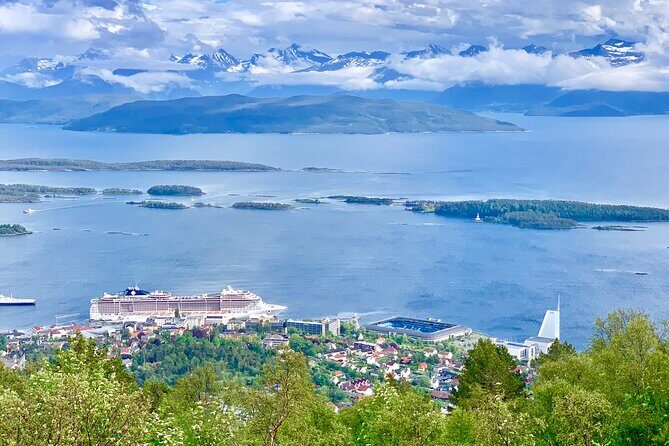
You’ll finish at Varden, the Molde panorama viewpoint. This is a classic wrap-up stop because it brings everything you’ve been driving through into one broad perspective: the city, the fjords, the archipelagos, and a claim of 222 snow peaks you can see from the viewpoint.
The stop is about 10 minutes, with admission included. Ten minutes sounds short, but it’s a good length for a viewpoint where the real work is watching for changes in cloud and light. On clear days, you’ll feel like you can “read” the geography. On hazier days, you still get the framing and understanding of where things sit.
Practical advice: treat the first minute as your scouting time. Find the best angle before you take your main photos. Then you can slow down for the shot you’ll want later.
What the tour feels like: comfortable driving, guided context, and flexible pacing
A lot of road tours are basically transportation with a few stops. This one works better because the guide connects the places. Even when you’re only stopping briefly, you’re not left wondering what you’re looking at.
You also get a clear rhythm:
- heritage and public art stops in town
- museum time where you can actually absorb a setting
- Atlantic Road time where you can photograph bridges and sea edges
- a viewpoint finish where you can zoom out
The vehicle being air-conditioned matters in Norway, because weather can shift fast and you might be damp or wind-tousled when you return. Bottled water is a small comfort win, especially if you don’t want to spend time tracking down a drink between stops.
A drawback to plan around: lunch is not included. With a 4-hour sightseeing block, you’ll likely need to handle your meal right after, or plan something before you start. If food timing matters to you, choose a place near Hamnegata so you don’t waste time.
Who’s this best for? People who want a guided overview without giving up the rest of the day. Families who prefer a private vehicle. Couples who want a calmer experience than bus travel. And anyone who likes mixing engineering photos with real cultural context.
Should you book this Molde Atlantic Road private sightseeing tour?
I’d book it if you want a well-structured day that hits the Atlantic Road highlights and still gives you culture, not just coastline photos. The value improves a lot if you’re traveling as 3–4 people, because the private price becomes manageable and you’re getting admissions included at major stops.
Skip or reconsider if you’re traveling solo and budget matters, or if you only care about the Atlantic Road and would rather spend less time at town and museum stops. Also keep an eye on conditions. This experience is described as needing good weather, and the payoff at viewpoints depends on visibility.
If you’re open to a guided mix of architecture, folk museum buildings, bridge engineering, and panorama views, this is a strong way to spend your Molde time—then you still get the rest of the day back.
FAQ
FAQ
How long is the Molde Atlantic Road private sightseeing tour?
The tour lasts about 4 hours 40 minutes.
What is the meeting point for the tour?
The meeting point is Hamnegata 37, 6413 Molde, Norway.
Does the tour include pickup from the pier?
Yes. Round-trip transfers from the pier are provided.
Is this tour private?
Yes. It’s a private tour/activity, and only your group participates (up to 4 people).
What’s included in the price?
The tour includes an air-conditioned vehicle, bottled water, and admission tickets for Romsdal Museum, the Atlantic Road portion, and Varden. Malmefjorden is free.
Is lunch included?
No. Lunch is not included.
Do I need a paper ticket?
No. You get a mobile ticket.
What should I expect at Romsdal Museum?
You’ll visit Romsdal Museum with admission included and about 50 minutes on site. It’s a folk museum with over 50 relocated buildings and a stable area with animals like a horse, hens, sheep, and rabbits.
Is the tour run daily?
Yes. The listed opening hours run Monday through Sunday from 8:00 AM to 4:00 PM.
What happens if weather is bad?
The experience requires good weather. If it’s canceled due to poor weather, you’ll be offered a different date or a full refund.