REVIEW · ALESUND
Ålesund: Via Ferrata tour
Book on GetYourGuide →Operated by Explore Ålesund · Bookable on GetYourGuide
Ålesund via ferrata turns a normal walk into a rock-climbing viewpoint sprint. You start in the city park and end up at Fjellstua, with ocean, islands, and Sunnmøre Alps views waiting above the rooftops.
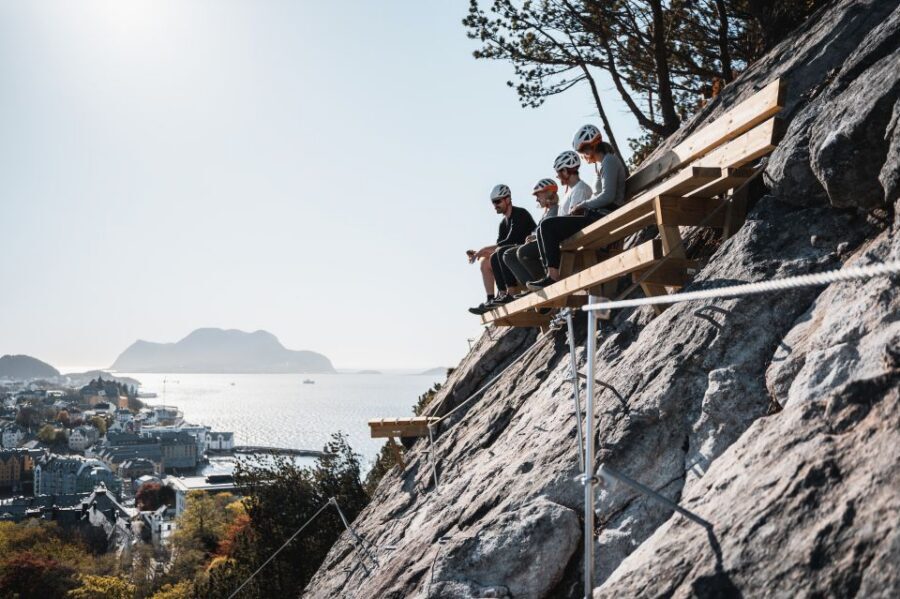
Two things I really like: the placed foot steps and hand holds that keep the route moving, and the mid-climb bench that lets you pause for the view instead of just white-knuckling the climb.
One big consideration: if you have a strong fear of heights, this isn’t for you. The route can feel exposed in steeper sections, even though it never goes fully vertical.
In This Review
- Key things to know before you climb
- Entering the city park: finding your start point and getting geared up
- The route design that makes this ferrata special
- Climbing to the mid-wall bench: steep, safe, and very photogenic
- Second half: easing off the steepness as you move toward Fjellstua
- At the top: guide removes equipment, then you choose your descent plan
- Guides make the difference: safety brief, pace control, and real reassurance
- How hard is it, really? Fitness, footing, and the fear-of-heights filter
- Price and value: $61 for gear, instruction, and a city-top view
- Who should book (and who should skip)
- Should you book the Ålesund via ferrata?
- FAQ
- Where is the meeting point for the Ålesund via ferrata tour?
- How long does the tour take?
- Is equipment provided?
- Are there guides on the climb?
- What languages are available for the instructor?
- Who is the tour not suitable for?
- What are the weight limits?
- Does the route go to a restaurant?
- What should I wear?
- What’s not allowed during the activity?
- FAQ
- Is there free cancellation?
- Can I reserve and pay later?
- What’s the difficulty level like?
- Do I get photos during the tour?
- Can I drink after climbing at the top?
Key things to know before you climb
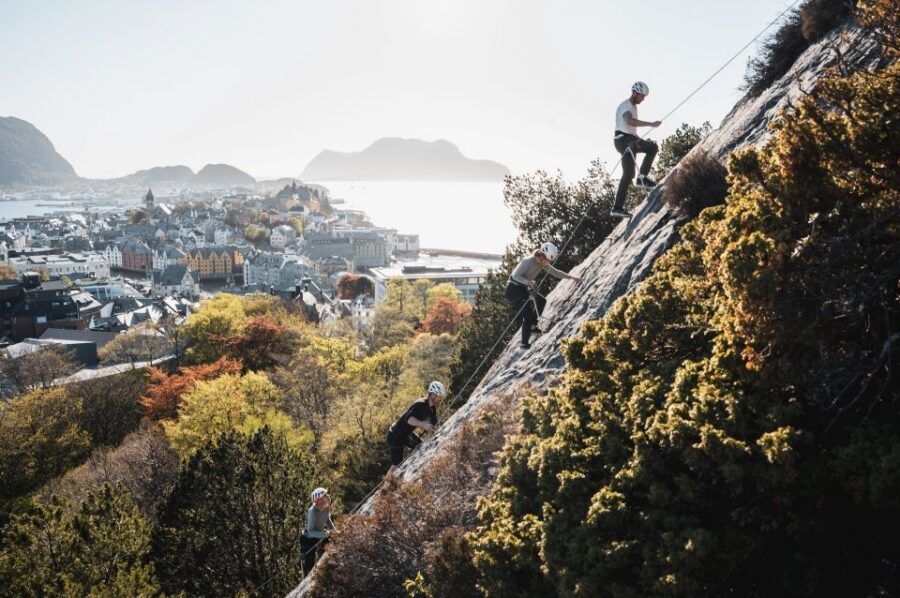
- It starts in the middle of Ålesund: the only ferrata in Norway that begins right in a city park.
- Solid rock with a south-facing wall: you get ocean, islands, Sunnmøre Alps, and city angles as you go.
- The steepest part is first, but it’s never vertical: expect a hard-feeling start with help built into the wall.
- There’s a bench for a breather: you can stop partway up and take in the view.
- You finish at Fjellstua viewpoint restaurant: grab photos, then choose restaurant time or take the stairs back down.
Entering the city park: finding your start point and getting geared up
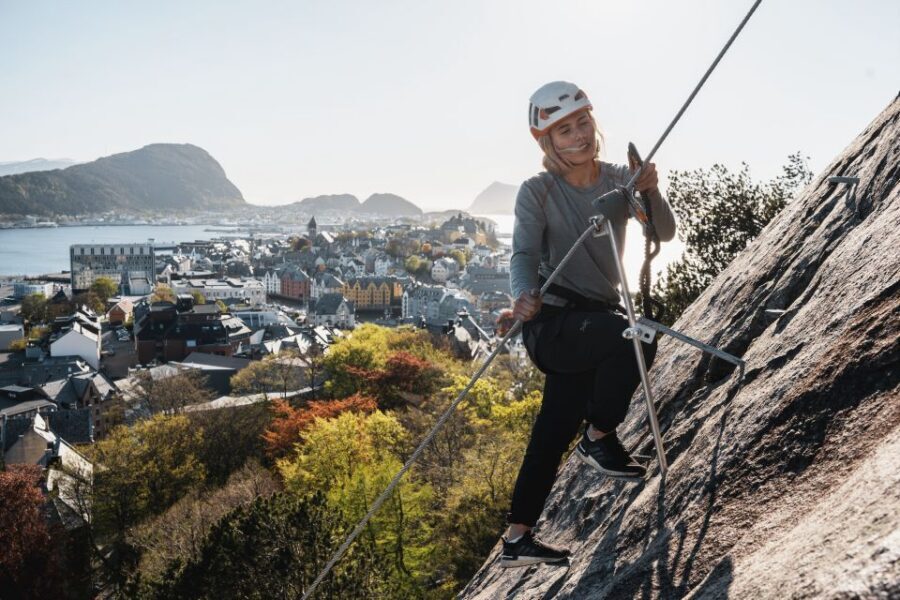
This via ferrata is built for easy arrival and quick setup, which matters because once you start climbing, you want to focus on the wall—not logistics.
You’ll meet at the via ferrata start in the city park, on the east side, to the right of the stairs. Look for a blue cargo bike and blue beach flags. The park isn’t huge, so if you walk in and scan for those details, you’ll spot the right team fast.
Before you climb, you sign a short waiver and then the equipment is handed to you. Plan on a real safety rhythm here: you get a safety brief, you learn how the gear works, and you’re not just sent up there. Depending on group size, one or two guides assist, so you get practical attention rather than a hands-off experience.
Languages are covered too: you can get instruction in English, Norwegian, or German. That matters for confidence, especially if you’re new to via ferrata techniques.
You can also read our reviews of more tours and experiences in Alesund.

The route design that makes this ferrata special
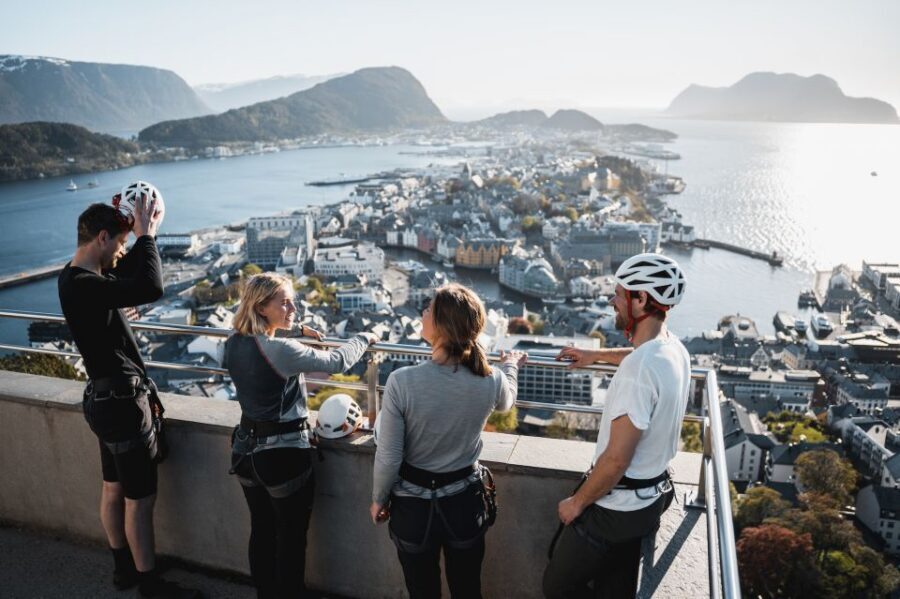
The most memorable part of this tour is how the climbing route is arranged around views.
The whole route is built on solid rock, and the wall faces south. That orientation is why you keep seeing a layered mix of Ålesund rooftops, the ocean, and the islands and mountains of Sunnmøre while you climb. Instead of one distant view at the top, you get angles from multiple heights along the way.
It’s also engineered so you’re not guessing. There are foot steps and hand holds where you need them, so the experience feels like guided movement up a real climbing line—not random scrambling.
A neat detail: the route doesn’t go vertical, but the first half is steep. That combination is what makes it exciting. You feel the steepness in your legs and core, but the design keeps you from getting stranded mid-route.
Climbing to the mid-wall bench: steep, safe, and very photogenic
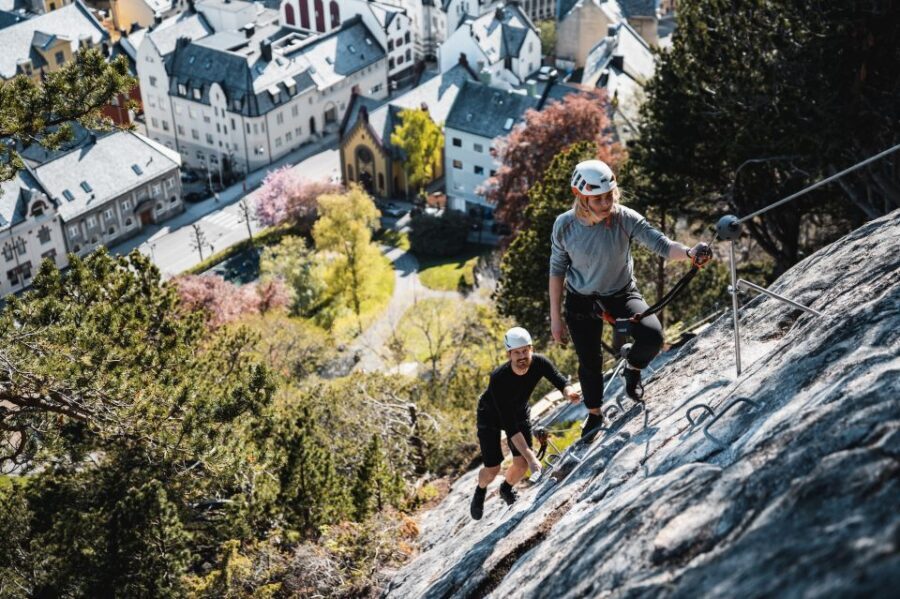
When the climb begins, expect the tougher section first. The first half is described as the steepest, and in practice that matches what you’ll feel when you’re close to the rock.
You may also notice sections that feel more exposed. Some people describe moments where the incline is close to vertical-feeling with limited holds. The key point is this: the route is built so you won’t get stuck, but if you’re easily rattled by height exposure, you’ll want to think twice. One person even warned that the climb includes a moment with a bench hanging over the edge—thrilling, but definitely stomach-turning.
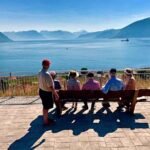
Then comes the break. A large bench is built into the wall so you can stop and take the view seriously. It’s not just a rest spot—it’s a photo moment and a chance to reset your breathing before the final ascent.
This is where the experience turns from effort into reward. Halfway up, the scenery opens up, and the whole “why did I do this” question becomes an easy yes.
Second half: easing off the steepness as you move toward Fjellstua
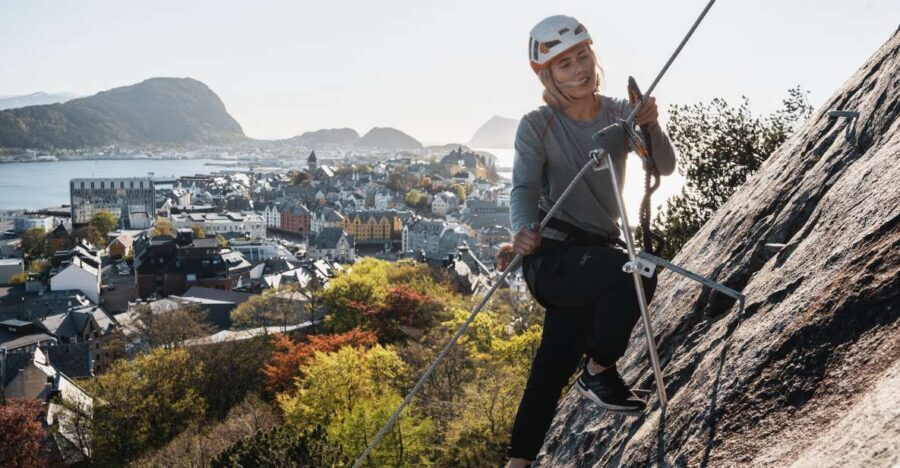
After the steepest section, the second half becomes less steep but stays scenic and satisfying.
You traverse to the right and up toward the famous viewpoint restaurant Fjellstua. This part still keeps you engaged—hands and feet still have work to do—but you’re not fighting the wall at the same full-intensity angle as the beginning.
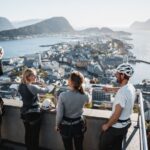
Approaching the top, your views tighten into a “look down the coast” feeling: city lines below, sea and island shapes around you, and mountains framing the distance. If you’re traveling for photos, this is a great stretch because you’re climbing into better angles rather than just topping out and hoping for the best.
At the top: guide removes equipment, then you choose your descent plan
Once you arrive, you’re not left on your own immediately. The guide takes all the equipment at the top, which keeps the process clean and prevents the common end-of-adventure scramble.
From there, you have two options:
- Visit the Fjellstua restaurant and enjoy the viewpoint time.
- Or simply use the staircase to go back down to the park.
The tour is short overall—listed at 1 hour—but it doesn’t feel rushed. In one example, a group reached the top in about 35 minutes, then spent time walking around and taking the return down on foot/stairs. That sounds about right if you factor in a quick gear transition, a safety brief, the climb, and a few photo stops.
One extra perk built into the experience: you’re allowed to celebrate at the restaurant. Just keep in mind alcohol and drugs are not allowed during the activity.
Guides make the difference: safety brief, pace control, and real reassurance
The quality of this tour is heavily tied to the guides. Multiple people specifically praised guides by name—Victoria, Aleena, Ilina (Alina?), Lucas, and Mona—and the common thread is how confidently they explain the gear and support your confidence.
In a via ferrata, technique and timing matter. You don’t just need straps; you need to know how to use them without panic. The guides handle that at the start and stay with you through the climb, adjusting pace when you need a breather.
If you’re afraid of heights, you’ll see mixed guidance in the real world: the tour isn’t marketed for people who are strongly height-phobic, yet some participants said the guide’s reassurance helped them get through steeper moments. That tells me two things:
- You should be honest about your fear level before booking.
- If you do go, pick a time when you can give the instructions your full attention.
There’s also a practical note from someone who mentioned harness needs for larger groups on busier days. The takeaway for you: show up on time so you can get a proper fit and adjust before climbing.
How hard is it, really? Fitness, footing, and the fear-of-heights filter
This is rated as a moderate fitness activity. That fits the structure: a steep first half, a less steep second half, and a short climb time.
If you’re athletic and comfortable using your hands, it’ll feel like a controlled challenge rather than a full endurance grind. If you’re less steady on your feet, the steep start can feel like a lot—especially where holds are smaller or spaced differently.
I’d also plan for traction. One person recommended hiking boots with good traction, because the route can be slippery if there’s any moisture. The activity is on rock with fixed steps and holds, but rock can still be slick. Bring boots you trust, not flat sneakers.
Then there’s the heights question. The tour’s own guidance says it’s not recommended if you’re scared of heights. And you’ll understand why once you reach the exposed steeper section and the bench area. On the other hand, several people said the guide helped them feel safe enough to climb. So I’d treat this as: it might work if your fear is mild and you can follow instructions without freezing; if your fear is intense, don’t try to “push through” it.
Finally, there are weight limits: minimum 40 kg and maximum 120 kg. And it’s not suitable for children under 10.
Price and value: $61 for gear, instruction, and a city-top view
At $61 per person for about 1 hour, the value comes from what’s included, not just the activity itself.
You get:
- All climbing equipment
- A safety brief
- A guide on the route
That combination matters because via ferrata isn’t simply a walking experience—it’s controlled climbing. Paying for trained guidance and proper gear is part of what makes it feel “safe enough” for most people, especially if you’re new.
There’s also a big value angle that’s hard to replace: this is not a mountain hike where you wait until the end. You climb inside the city and finish at a well-known viewpoint restaurant. The payoff is immediate and very visible as you rise.
If you’re on a tight schedule in Ålesund, this is one of the best ways to get an iconic perspective without spending a whole day on transport and hiking.
Who should book (and who should skip)
This is a great fit if you want:
- A unique view of Ålesund from a height, without a long trek
- An activity with clear structure (safety brief, gear, guided route)
- A fun challenge that still feels manageable thanks to placed holds
It’s also a good option for first-timers in the via ferrata world. Some people found it approachable, especially because the route design avoids getting truly vertical and provides support points.
Skip this tour if:
- Heights stress you out badly. If you freeze around exposed ledges, this is a no.
- You have low fitness. Moderate fitness is required, and the steep start is real.
- You’re outside the weight range (40–120 kg) or traveling with kids under 10.
Should you book the Ålesund via ferrata?
If you’re in Ålesund and you want a high-impact experience that feels different from the usual viewpoint stops, I’d book it—especially if you’re comfortable with steep movement and you can focus during the safety briefing.
But be honest with yourself about fear of heights. Even with good guides (and names like Victoria, Aleena, Ilina, Lucas, and Mona come up often for good reason), this route includes exposed-feeling sections and a bench moment where you’re literally above the drop.
If you’ve got solid footwear, a willingness to follow instructions, and you can handle steep first steps, this is one of the most memorable ways to see Ålesund quickly.
FAQ
Where is the meeting point for the Ålesund via ferrata tour?
You meet at the start of the via ferrata in the city park. Look for a blue cargo bike and blue beach flags, east in the park, to the right of the stairs.
How long does the tour take?
The tour is listed at 1 hour. Start times depend on availability.
Is equipment provided?
Yes. All equipment is included, and your guide will also provide an equipment and safety brief.
Are there guides on the climb?
Yes. You climb with a guide, and depending on group size, there may be one or two guides assisting.
What languages are available for the instructor?
The instructor can provide the tour in English, Norwegian, or German.
Who is the tour not suitable for?
It’s not suitable for children under 10 and people with a low level of fitness. It’s also not recommended for anyone who is scared of heights.
What are the weight limits?
Minimum weight is 40 kg and maximum weight is 120 kg.
Does the route go to a restaurant?
Yes. The ferrata finishes at the viewpoint restaurant Fjellstua, where you can visit the restaurant or use the staircase to return down.
What should I wear?
The tour data recommends moderate fitness, and one review suggests wearing hiking boots with good traction because the route can be slippery if there is moisture.
What’s not allowed during the activity?
Alcohol and drugs are not allowed.
FAQ
Is there free cancellation?
Free cancellation is available up to 24 hours in advance for a full refund.
Can I reserve and pay later?
Yes. You can reserve now and pay later to keep plans flexible.
What’s the difficulty level like?
The activity requires moderate fitness. The first half is the steepest and can feel hard, but it never gets vertical and is built with foot steps and hand holds where you need them.
Do I get photos during the tour?
The tour data says nothing specific about photos. One review mentions a guide taking pictures partway up, but that isn’t stated as a guaranteed inclusion.
Can I drink after climbing at the top?
The experience includes the idea of celebrating with a drink at Fjellstua, but alcohol isn’t allowed during the activity itself.