REVIEW · NORWAY
Russian Border Snowshoe Hike
Book on Viator →Operated by kirkenes tours · Bookable on Viator
Stand meters from Russia, then crunch into snow. This Russian Border Snowshoe Hike in Northern Norway mixes quiet Arctic trails with big geopolitical stories, taking you close to the Russian line near Storskog and the frozen Pasvik River. I love how the experience gives you both nature time and a clear sense of why this border area matters.
The second thing I really like is the human side: you’re guided by someone who brings the area’s past to life, including Cold War tensions and spy escapes, plus the modern Norway–Russia relationship. When guide Henrik is running the hike, the storytelling earns top marks. One thing to think about: this outing is weather-dependent, and it’s non-refundable, so you’ll want to be ready for a possible change due to conditions.
In This Review
- Key things that make this hike special
- Kirkenes Snowshoeing: What the 3 km Loop Actually Feels Like
- The Full Route: From Kirkenes Skiklubb to the Edge of Russia
- Cold War Stories in the Snowy Silence
- Storskog and the Pasvik River: When Geography Becomes Real
- Boris Gleb Church: A Border Story Written in Stone and Faith
- Twin Border Markers: The Closest You Can Legally Get
- Hot Drinks, Snacks, and Photo Stops: Comfort That Doesn’t Ruin the Day
- Price and Value: Is $201.88 Worth It?
- Weather, ID, and Your Winter Checklist
- Who Should Book This Snowshoe Hike
- Should You Book the Russian Border Snowshoe Hike?
- FAQ
- Where does the Russian Border Snowshoe Hike start and end?
- How long is the snowshoe hike?
- Do I need prior snowshoe experience?
- Is the hike difficult?
- What language is the tour offered in?
- What identification do I need to bring?
- Is the tour guaranteed to run?
Key things that make this hike special
- A rare legal closeness to Russia at the twin border markers
- Small group size with a maximum of 7 travelers
- 3 km loop with a moderate uphill (about 100 m)
- Storskog and the Pasvik River in one guided route
- Cold War stories + today’s Norway–Russia relationship from your guide
- Hot drinks and snacks in the snow so you’re not just freezing for photos
Kirkenes Snowshoeing: What the 3 km Loop Actually Feels Like
This hike is built for real people, not hardcore athletes. You’ll head out on a 3 km loop through snowy forests in Northern Norway, and right away you’ll feel the difference between “easy walk” and proper snow travel. Snowshoes spread your weight, so it’s less about leg strength and more about footing, balance, and staying warm.
There’s a moderate uphill section of about 100 m. That’s the kind of climb that can feel like nothing… or like something, depending on snow depth and wind chill. The good news is that the overall distance stays short. This works well if you have average fitness and you’re comfortable moving for a few hours outdoors.
One more practical point: no snowshoe experience is required. You’ll start with the setup—fitting you with snowshoes and warm gear if needed—so you’re not expected to arrive knowing exactly how to lace up or stride. If you’ve ever tried winter footwear that didn’t quite fit, you’ll appreciate that someone handles the basics for you.
Group size matters here. With a maximum of 7 travelers, you’re less likely to get lost in a long line and more likely to get quick help if your gear feels off. That also means your guide can slow down for photos without turning the hike into a marathon.
You can also read our reviews of more hiking tours in Norway

The Full Route: From Kirkenes Skiklubb to the Edge of Russia
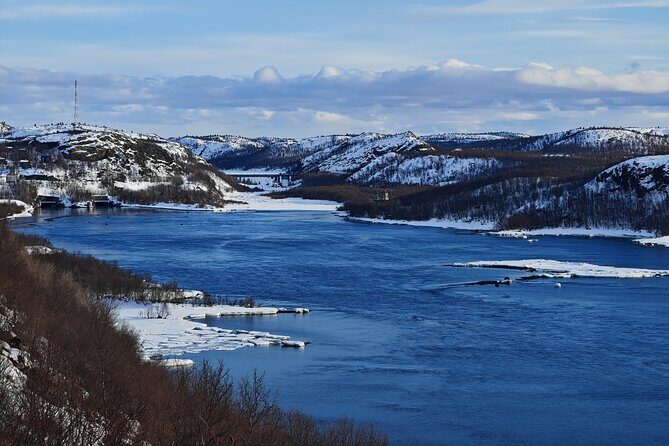
The meeting point is Kirkenes og omegn Skiklubb (Kos), Storgata 5, 9900 Kirkenes. The tour ends back at the same place, so you won’t be planning extra transport after you’re done. The total time is about 3 hours 30 minutes (approx.), which is a sweet spot for people who want a winter experience but don’t want the entire day eaten up.
From there, the day follows a pretty logical flow:
You start in town with gear fitted, then move out into the quiet Arctic trail system for the main loop. Along the way, you’ll pause for views and photos rather than rushing straight through. That matters because this hike’s purpose isn’t just exercise—it’s proximity. You’re traveling through a specific border region, and your guide uses stops to connect what you see with what it meant historically.
As you move closer to the border area, you’ll spot the modern border station at Storskog. You’ll also be able to look across the frozen Pasvik River, which is one of those Northern landscapes where everything feels sharper: less noise, more distance, and a clearer sense of “where you are on the map.”
The route also includes a cultural landmark: the Russian Boris Gleb church, described as influential in where the border was drawn. That’s not just a sightseeing add-on. It’s part of how the guide explains why this line between countries ended up where it did.
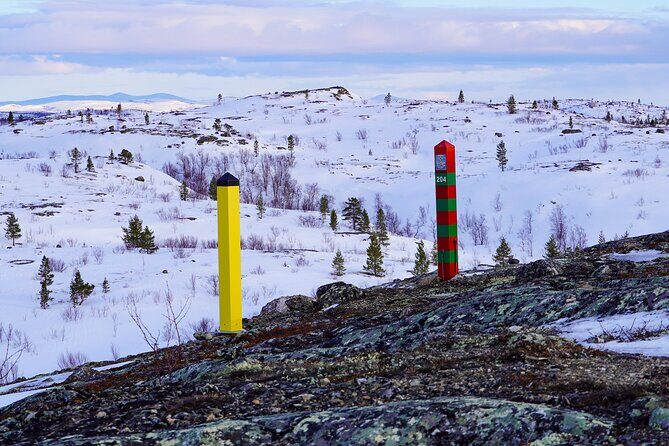
Then comes the highlight: time near the twin border markers, where you can legally get close to Russia. Expect the guide to build up to this moment, because standing there doesn’t just feel scenic—it feels symbolic. The hike also includes hot drinks and snacks in the snow, so you get a break from cold exposure and a chance to warm up while still keeping the day outdoors.
Cold War Stories in the Snowy Silence
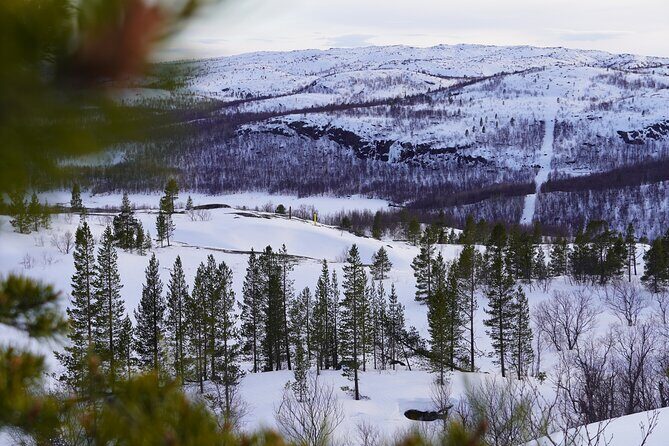
What makes this tour more than a hike is how your guide uses the surroundings like a classroom. You’re not hearing vague history. You’ll get stories about Cold War tensions and spy escapes, then a grounded look at what the Norway–Russia relationship looks like today.
In winter, the pacing naturally slows down. That’s an advantage here. When you’re surrounded by still snow and dark forest depth, the guide’s narrative lands differently. You can actually listen instead of fighting over noise or crowd control. And since the group stays small, your guide can keep the story flowing without turning it into a lecture you can’t hear.
If you’re the type of traveler who likes learning as you go, this style works really well. The border region becomes a living timeline: past tensions, how the boundary was influenced, and how the modern border station and everyday geography connect it all.
Also, the fact that the hike goes to the border and then tells you about it immediately afterward is a big value. You’re not just looking at a photo spot; you’re understanding why that spot exists.
Storskog and the Pasvik River: When Geography Becomes Real
Storskog is one of those place names that sounds distant—until you’re standing close enough to make it out. Seeing the modern border station gives context fast. It changes the story from “countries far apart” to “a real boundary with real infrastructure.”
Then you look across the frozen Pasvik River. Ice does something to your perception. Distances feel longer, edges feel more defined, and you can see how a natural feature like a river can shape political lines. The guide’s explanation of the border logic makes the geography feel less abstract.
This is also where the Arctic setting helps you. Winter strips the scene down. You notice lines, shadows, and the way the terrain channels your movement. You’re walking in a place where weather and distance are part of the border’s reality—so the stories aren’t floating in the air. They have weight.
Boris Gleb Church: A Border Story Written in Stone and Faith
One of the more intriguing parts of the route is the Russian Boris Gleb church—called out as influential in where the border was drawn. Even if you’re not a religion-history specialist, it’s a useful detail because it shows how borders aren’t only decided by paperwork.
Places of faith can matter politically and culturally. The hike gives you time to connect the church’s presence to the border line, instead of treating it as just another landmark. That connection is exactly the kind of travel detail that makes a place feel more specific.
If you’re curious about how history leaves traces, this stop is likely to be one of your “oh, that’s why it’s here” moments.
A few more Norway tours and experiences worth a look
Twin Border Markers: The Closest You Can Legally Get
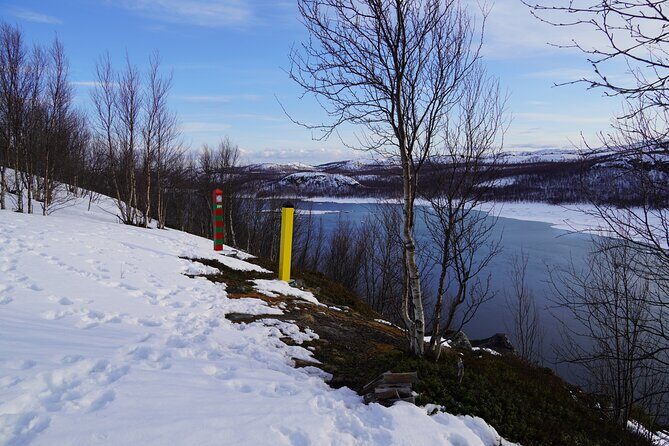
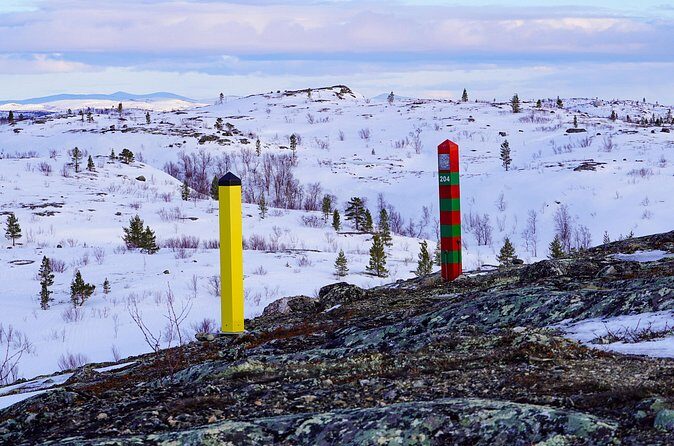
This is the headline moment for a reason. You’ll stand just meters from Russia at the twin border markers, described as the closest you can legally get. That detail is important. It means the experience isn’t about rushing to an unauthorized viewpoint—it’s about getting a meaningful moment with clear boundaries.
Practically, this is also why timing and visibility matter. Cold and light conditions affect how long you can comfortably stand still. The guide builds in pauses, but you’ll still want to dress for Arctic cold so you can actually enjoy the view instead of just tolerating it.
Expect photo time and a chance to take in the border’s physical reality. This is one of those experiences where the landscape (literal and not) plus the geopolitics overlap, and it’s hard to replicate elsewhere.
Hot Drinks, Snacks, and Photo Stops: Comfort That Doesn’t Ruin the Day
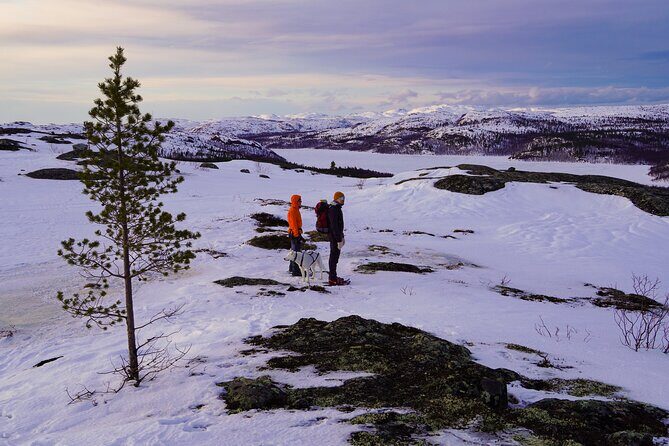
A short winter hike can be brutally efficient: you move, you suffer, you freeze, you go home. Here, you get hot drinks and snacks in the snow, which changes the rhythm.
That break does two things:
- It gives your body a chance to recover so the rest of the loop feels easier.
- It creates a natural pause for photos without turning the whole day into a series of rushed stops.
This is also why the total time of about 3 hours 30 minutes works. You get motion time, story time, and comfort time without spending all day in layers.
Price and Value: Is $201.88 Worth It?
At $201.88 per person, this isn’t a bargain add-on. It’s a paid guided winter activity, and you’re paying for several real components:
- A trained guide who provides context—Cold War tensions, spy escapes, and modern Norway–Russia relations
- Snowshoe fitting and warm gear if needed, which matters more in real winter than you might think
- Access to a route designed around the border area, including time near the Storskog station and the twin markers
- A small group (up to 7), which improves how smoothly the day runs
- Warmth support: hot drinks and snacks during the hike
When you add those together, the price starts to feel more like paying for “infrastructure + interpretation,” not just a walk in the snow. If you’re the type who values guided context and wants a small-group winter experience, the cost makes sense.
If you’re trying to keep your trip budget tight and you mainly want exercise, you might decide differently. But if your goal is the border moment plus the stories that connect it, this is a fair match.
Weather, ID, and Your Winter Checklist
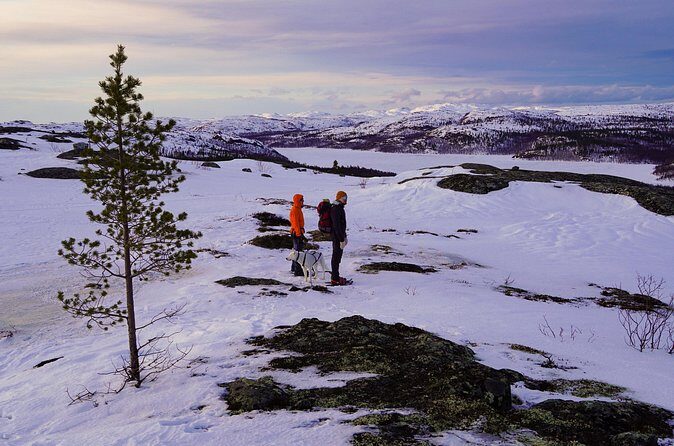
This experience needs good weather. The operator notes it can be canceled due to poor weather, with an offered different date or a full refund. Still, the bigger point for your planning is that the hike depends on conditions being right.
Also, bring the right documents:
- EU travelers must bring an official ID card
- All international guests need to carry a valid passport
Confirmation happens within 48 hours of booking, depending on availability. On the ground, the hike runs near public transportation and you’ll be back at the same meeting spot, which keeps your day from turning into a logistics puzzle.
Two other practical notes:
- Service animals are allowed.
- The hike requires moderate physical fitness, with the uphill section being about 100 m.
Pack for cold. The tour includes warm gear if needed, but your clothing still matters for comfort. If you run cold easily, dress like the day will be colder than you want—winter tends to win that argument.
Who Should Book This Snowshoe Hike
This is a strong fit if you want:
- A guided winter outing that includes meaningful context, not just scenery
- A border-region experience tied to history and today’s reality
- A manageable physical challenge with a short uphill and a short distance overall
It’s also a good match if you’re new to snowshoeing. The guide handles fitting and you keep moving at a winter-friendly pace.
You might reconsider if:
- You’re not comfortable with cold exposure and want a fully indoor alternative
- You hate any uphill at all, even a short one
- You can’t be flexible due to weather risk and the non-refundable nature of the booking
Should You Book the Russian Border Snowshoe Hike?
I think you should book it if the idea of standing near the Russian border markers appeals to you—and if you like your history with real-world geography. The small group size, the guided storytelling (including Cold War tales and spy escapes), and the built-in warmth with hot drinks and snacks are exactly the kind of touches that make a winter tour feel worth the money.
I’d only hesitate if weather uncertainty would ruin your trip plans or if you’re worried about the short but noticeable uphill. Otherwise, this is the kind of Northern Norway experience that feels specific, guided, and genuinely memorable because you’re not just looking at a border—you’re standing beside it, legally, with context in your head.
FAQ
Where does the Russian Border Snowshoe Hike start and end?
The tour starts at Kirkenes og omegn Skiklubb (Kos), Storgata 5, 9900 Kirkenes, Norway, and ends back at the same meeting point.
How long is the snowshoe hike?
The duration is about 3 hours 30 minutes.
Do I need prior snowshoe experience?
No. No snowshoe experience is needed, and you’ll be fitted with snowshoes and warm gear if needed.
Is the hike difficult?
You should have a moderate physical fitness level. The route includes a moderate uphill section of about 100 m, and it’s a 3 km loop.
What language is the tour offered in?
The tour is offered in English.
What identification do I need to bring?
EU travelers must bring an official ID card. All international guests need a valid passport.
Is the tour guaranteed to run?
It requires good weather. If it’s canceled due to poor weather, you’ll be offered a different date or a full refund. The activity also has a minimum number of travelers, and if that isn’t met it will be offered on a different date or refunded.