REVIEW · ALESUND
Molde and Atlantic Ocean Road Audio Tour
Book on Viator →Operated by West Norway Travel · Bookable on Viator
Molde has a way of making you look twice. This 3.5-hour audio tour links town highlights with Norway’s most famous coastal drive, the Atlantic Ocean Road, plus viewpoints and a few stops that feel genuinely local. I especially liked the sweep of eight bridges in 8 km along the Atlantic Road, and the way the route mixes nature with quirky regional details like sand dunes and cheese.
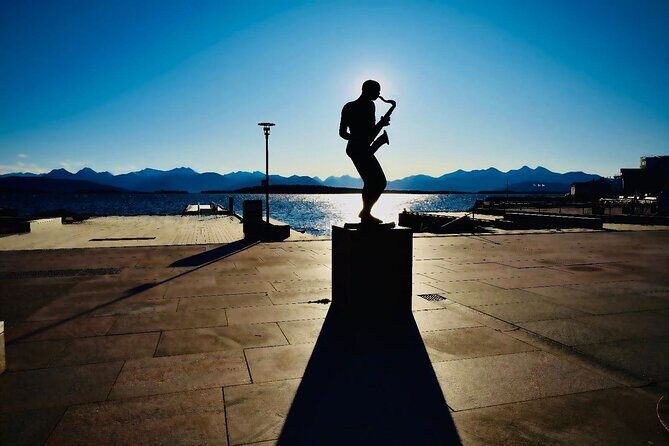
You’ll also get a tight mix of Molde icons before you even hit the coast—things like the Rose Maiden and Jazz Boy—so the trip doesn’t feel like pure driving. The one drawback to plan around: this is an audio experience on your phone, and several departures report app or headphone issues, so you should prep your setup before you board.
If you want scenery first and facts second (with some chances to walk), this is a smart use of a short port day. Just don’t treat it like a fully guided bus with a human lecturer at every stop.
In This Review
- Key points to know before you go
- Why Molde + the Atlantic Ocean Road works so well in one day
- Molde highlights: Rose Maiden, Jazz Boy, and the town you’ll connect to
- The fjord, the freezing winter exception, and why Malmefjorden matters
- Marble mountains, 40 km caves, and Eide’s electricity story
- Atlantic Ocean Road: 8 bridges, Hustadvika, and the best kind of chaos (photos)
- Eldhusøya: the 30-minute photo stop that’s more than a snapshot
- Håholmen: clipfish island past, Viking museum present
- Farstadsanden and the sand-dune flex you might not expect
- Elnesvågen: Jarlsberg cheese roots on a very coastal route
- Varden Panorama (407 m): where Molde and the peaks show up
- Back in Molde: Hotel Seilet and that sail-like silhouette
- Price, audio app, and logistics: how to avoid the common trip headaches
- Who this is best for (and who should look elsewhere)
- Should you book this Molde and Atlantic Ocean Road audio tour?
- FAQ
- FAQ
- How long is the Molde and Atlantic Ocean Road tour?
- Is the audio tour in English?
- What do I need to use the audio guide?
- Are any admission tickets included?
- Where will I be picked up if I’m on a cruise?
- Does the route change in bad weather?
- Can I cancel for a full refund?
Key points to know before you go
- Atlantic Ocean Road in one hit: 8 km with 8 bridges, designed for big photo moments.
- Molde icons early on: Rose Maiden, Jazz Boy, Rosegarden, and other main sights roll by.
- Marble + caves + paper history: marble mining started in 1938 and led to a 40 km cave system used for events.
- Hustadvika can be rough: shallows and sandbanks can make passing it tricky in bad weather.
- Two built-in “time to see” stops: Eldhusøya (about 30 minutes) and Varden viewpoint (about 15 minutes).
- World’s northernmost sand dunes: Farstadsanden is a local summer spot for swimming and surfing.
Why Molde + the Atlantic Ocean Road works so well in one day
This tour is built around a simple idea: show you the parts of the region that are hard to appreciate quickly on your own. Molde gives you the city-side context, then the Atlantic Road delivers the classic coast experience. For a short time window (especially on cruise days), you’re stacking multiple “big scenes” with minimal effort.
What makes it good value is that you’re not only driving. You get dedicated photo/walk time on Eldhusøya and viewpoint time at Varden, plus smaller stops that add character—clipfish history, marble and limestone industry, and even Jarlsberg cheese roots.
The only thing that can spoil the flow is the audio setup. If your phone’s audio isn’t cooperating, you’ll still see the scenery, but you’ll lose some of the planned narration.
A few more Alesund tours and experiences worth a look



Molde highlights: Rose Maiden, Jazz Boy, and the town you’ll connect to
Before you leave the city, you’ll be shown Molde’s main sights—so the coastal scenery lands with more meaning. You pass by the Rose Maiden and Jazz Boy, plus the Rosegarden, the football stadium, and Moldegård. Even if you don’t stop for photos at each one, seeing them from the road helps you understand why Molde is considered one of the region’s identity stops.
This is also when the tour starts building “place memories.” If you later look back at the Atlantic Road photos from your phone, you can match them to the wider Molde setting you learned on the early drive. In other words, it’s not just coast. It’s coast with a frame.
The fjord, the freezing winter exception, and why Malmefjorden matters
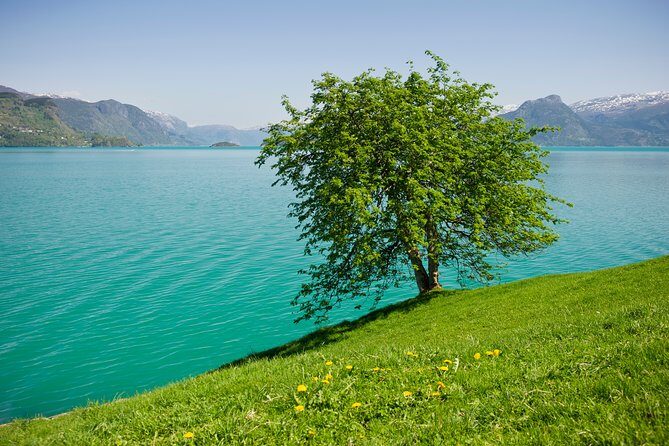
After Molde, you’ll head toward the fjord area, including Malmefjorden. One neat detail is that Malmefjorden is among the fjords that can freeze in winter because of freshwater influence in the last part of the fjord. That’s the kind of local geography fact that makes the scenery feel more than postcard pretty.
You’ll also get a sense of why this region feels “locked in” by water and mountains. The route moves you past hiking and skiing areas, then into heavier stone-country context—setting up the next stops about marble and caves.
Marble mountains, 40 km caves, and Eide’s electricity story
A big part of the region’s identity is stone. The tour area has high-quality marble, with mining beginning here in 1938. You’ll hear that the marble was mainly used for paper production, which is a surprising connection if you mostly associate marble with buildings and sculpture.
Then there’s the cave system: today it’s used for concerts and events, and the system is about 40 km long. Even if you don’t enter a cave on this specific route, the fact that the area turns stone into culture is a good “why this place is different” takeaway.
Next comes Eide, known for a special history about its electricity. The area is also where marble and limestone manufacturing companies operate. This section is less about a single view and more about understanding how the landscape and industry shaped each other.
Atlantic Ocean Road: 8 bridges, Hustadvika, and the best kind of chaos (photos)
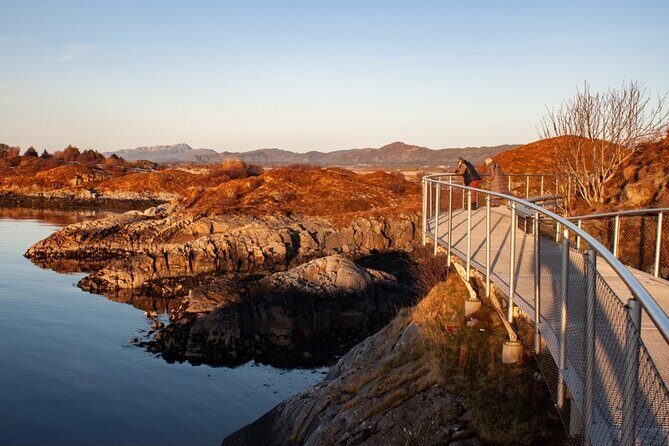
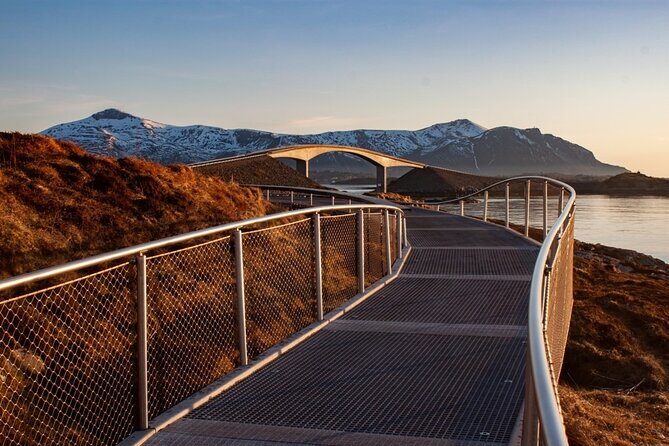
Now you get the headline act: the Atlantic Ocean Road. This stretch is about 8 km long and includes 8 bridges, with views of many little islets. The open stretch by the sea is called Hustadvika, and it’s well known by fishermen and cruise ships.
There’s also a practical caution: Hustadvika can be difficult to pass in bad weather because of shallows and sandbanks. That doesn’t mean you’ll automatically have trouble, but it’s worth mentally preparing that the timing and smoothness of this part can depend on conditions.
What I like about this section is that it’s inherently “stop-and-look” terrain. You don’t need to hunt for angles. The road itself is the viewpoint, and the bridges create natural photo layers: bridge lines in front, water and islets mid-frame, mountains behind.
Eldhusøya: the 30-minute photo stop that’s more than a snapshot
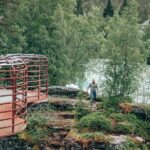
Your Eldhusøya stop is built for both photos and a short stretch of freedom. You’ll get a photo stop with the best views of the bridges, and there’s also the option to walk around the peninsula. With about 30 minutes here, you can do two things: take the classic bridge photos and then reset your eyes by moving your body closer to the shoreline.
This is one of the places where you’ll feel the tour’s “best-of” approach. Some audio tours treat stops like quick roadside pull-offs; Eldhusøya gives you enough time to actually feel the coastal air and scale.
If weather is windy or wet, keep your footing in mind on any peninsula walk. Coastal edges can be slick, and you’ll want that time to be comfortable, not stressful.
Håholmen: clipfish island past, Viking museum present
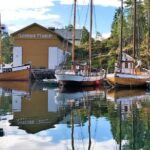
Next up is Håholmen, which has a history as a clipfish island. Clipfish is a traditional drying method for fish used in southwest Norway, and that background helps explain why this kind of settlement makes sense along the coast.
Today Håholmen includes a small hotel and a Viking museum tied to the former owner and adventurer Ragnar Thorseth. The tour adds the human story element here—who he was and why he shaped what you can see now. If you love when local tourism connects to real characters, this part is a nice change from pure scenery.
One thing to watch: the tour structure is still time-limited, so don’t expect a deep museum day. Think of this stop as a “taste + context,” then back on the road.
Farstadsanden and the sand-dune flex you might not expect
Here you’ll find something unusual: the world’s northernmost formation of sand dunes. In summer, locals enjoy Farstadsanden for swimming and surfing. That contrast hits hard—sand dunes in a place that otherwise feels shaped by stone, fjords, and cold weather.
This stop is a reminder that Norway isn’t only cliffs and snow. The coast can also be soft and sandy. It’s a good place to stop, stretch, and soak in the weirdness before heading to the higher viewpoint later.
Elnesvågen: Jarlsberg cheese roots on a very coastal route
Another small but fun pivot happens at Elnesvågen. This municipality is well known as the birthplace of Jarlsberg cheese, one of Norway’s famous brands. If you grew up seeing Jarlsberg in grocery stores, it’s satisfying to connect that product to a specific local origin.
This is one of those stops that won’t dominate your photo roll, but it adds a “taste of home” feeling. It also breaks up the day so the driving doesn’t become monotonous.
Varden Panorama (407 m): where Molde and the peaks show up
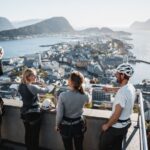
Then you go up. The Varden viewpoint sits at 407 m above sea level, and the goal is big: views of Molde and fjord country with many islands. On a clear day you can even see the Romsdal Alps, with 222 mountain peaks.
This is short on time—about 15 minutes—but it’s the kind of stop that rewards quick attention. Spend the first minute orienting yourself: find the town, track the water channels, then scan for islands. If visibility is good, this is one of the best photo chances of the day because the whole region shows up at once.
If it’s cloudy, don’t panic. Even in dull weather, a viewpoint stop is useful because it clarifies the geography of what you’ve been driving through.
Back in Molde: Hotel Seilet and that sail-like silhouette
To close the day, you’ll drive back through Molde and see Hotel Seilet, a landmark with a sail-like shape. It’s 82 m tall and inspired by the Burj al Arab style in Dubai, which makes it extra memorable. You’ll likely spot it well before you reach it, because that form is hard to miss.
This final segment helps the trip land with a sense of arrival. You go from ocean bridges and dunes back to a city with an iconic structure, then you’re ready to return to your port.
Price, audio app, and logistics: how to avoid the common trip headaches
At about $83.94 per person for roughly 3 hours 30 minutes, this tour can be good value if the route is what you’re after. You’re paying for transportation plus included time at Eldhusøya and Varden, with admissions noted for those stops.
The main question isn’t price. It’s how smooth the audio experience will feel on your device. This tour uses the GuideToGo-offical app, offered in English, and you’re asked to bring your own headphones. Some departures have had major issues with app behavior and setup, including people not realizing it was app-based until it was time to use it.
Here’s how you can make it much more likely to go well:
- Download the app before you board and test audio once you’re offline or in a low-signal area.
- Bring headphones you know work with your phone.
- Take a screenshot of important instructions in case the phone battery or connectivity becomes the problem.
- If you’re on a cruise, double-check which dock is yours and aim to meet pickup where you’re expected.
Also note there are two cruise terminals in Molde. You’ll be picked up at the port where your vessel docks. That detail matters because some confusion happens when multiple ships share the same port area.
Finally, the route can change based on weather and road conditions, with alternatives arranged if there are road restrictions. That’s normal for coastal Norway. Just know you may not see every angle exactly the same way every day.
Who this is best for (and who should look elsewhere)
This is a strong fit if you:
- want a coast highlights drive in a short time window
- enjoy photo-friendly stops like Eldhusøya and the Varden viewpoint
- like local trivia: marble mining history, clipfish background, and Jarlsberg cheese roots
It’s less ideal if you:
- need a fully guided, on-board human narration for the whole ride
- dislike app-based audio tours or don’t want to troubleshoot your phone on vacation
- are very strict about schedules at exact departure moments (timing issues and pickup confusion have shown up for some groups)
Group size is capped at 45 travelers, so you won’t feel like you’re stuck in a giant cattle pen. Still, with lots of other buses at cruise terminals, being prepared matters.
Should you book this Molde and Atlantic Ocean Road audio tour?
Yes, I’d book it if your priority is the Atlantic Ocean Road experience and you’re willing to treat audio as a bonus. The bridges, the views, and the “stop to look” structure are the real win here, and even if audio is imperfect, the scenery is still the main point.
Skip or consider another style of tour if you absolutely require a reliable, professionally narrated guide on board and you don’t want to deal with phone app setup. For the money, you’re paying for the route plus structured viewing time—not a guaranteed expert lecture.
If you can handle a little tech prep and you’re excited by the mix of fjords, stone industry stories, sand dunes, and viewpoint panoramas, this is a very solid way to use a limited port day.
FAQ
FAQ
How long is the Molde and Atlantic Ocean Road tour?
It runs for about 3 hours 30 minutes.
Is the audio tour in English?
Yes, the audio is offered in English.
What do I need to use the audio guide?
You need to use the GuideToGo-offical app on your phone, and you should bring your own headphones.
Are any admission tickets included?
Yes. Admission tickets are included for the Eldhusøya stop (about 30 minutes) and the Varden the Molde Panorama viewpoint (about 15 minutes).
Where will I be picked up if I’m on a cruise?
You’ll be picked up at the port where your ship docks, and Molde has two cruise terminals.
Does the route change in bad weather?
Yes. The itinerary depends on weather and road conditions, and an alternative tour can be organized if there are road restrictions.
Can I cancel for a full refund?
You can cancel up to 24 hours in advance for a full refund.