REVIEW · SKJOLDEN
Glacier Hiking and kayaking Tour on Stygge
Book on Viator →Operated by ICETROLL - Glacier Hiking & Kayaking · Bookable on Viator
Fresh glacier day. Big views, real effort, small group. You’ll start on Styggevatnet high in the mountains, paddle toward the glacier’s 30m front, and then step onto blue ice to explore crevasses up close. Two things I really like: the combo of kayaking plus a guided glacier walk (not just a quick stop), and the way guides make the ice readable—size, cracks, calving, and what you’re actually standing on. One consideration: it’s physically demanding, especially the paddle back, so go in fit and ready to work your arms.
The guides are a major part of the magic. I’ve seen names like Flavia and Tato, plus Jonathan and Jordan, and Marcello and Darwin showing up leading groups—serious about safety, but also big on encouragement when people get tired. With a max of 9 travelers, you don’t feel like you’re floating through a crowd. You feel like the day is managed for people—not just scenery.
If you’re the type who hates cold hands or wet ankles, plan ahead. Warm hat/gloves and proper layers aren’t included, and you’ll want good shoes for glacier walking. Also, if you’re used to grabbing a bathroom right before departure, note that the visitor center may not be open for toilets when you’re getting ready to go.
In This Review
- Key moments that make this glacier day work
- Kayaking Styggevatnet: the scenic warm-up that turns into work
- Austdalsbreen’s 30m front: how the glacier feels when you’re close
- The blue-ice hike: crevasses, footing, and a view that hits hard
- Guides and group size: why the day feels controlled (not chaotic)
- What’s included vs what you must bring (so you don’t get miserable)
- Price and value: what $244.39 is really paying for
- Weather and fitness: the two big filters
- Getting ready: small choices that make a big difference
- Full day vs Glacier Half Day: how to match the day to your group
- Should you book ICETROLL Glacier Hiking & Kayaking on Stygge?
- FAQ
- How long is the Glacier Hiking and kayaking Tour on Stygge?
- Where do I meet for the tour?
- What is included in the tour price?
- What should I bring?
- How physically demanding is it?
- When does the tour run?
- What if weather is bad?
- Are there accessible or family-friendly options?
Key moments that make this glacier day work
- Kayak across Styggevatnet before you ever see the glacier up close
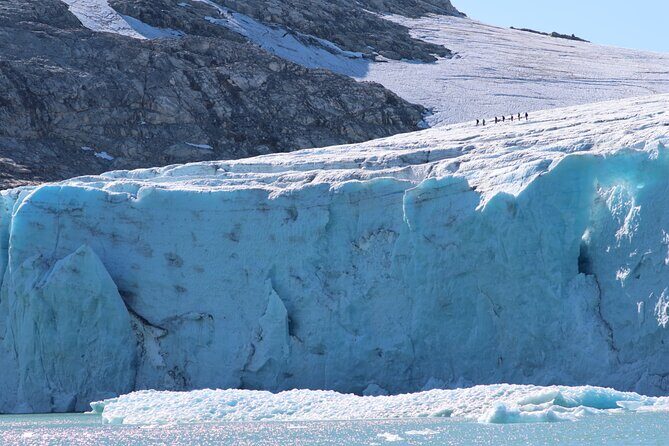
- 30m-high calving front with icebergs that may have just dropped into the lake
- Blue-ice glacier hike around crevasses, with guide explanations built in
- Small-group pace (max 9) so you’re not lost in the back of a pack
- Time on the ice (about 1.5–2 hours) gives you more than a photo stop
- Lunch with a glacier view so the effort has a reward
Kayaking Styggevatnet: the scenic warm-up that turns into work
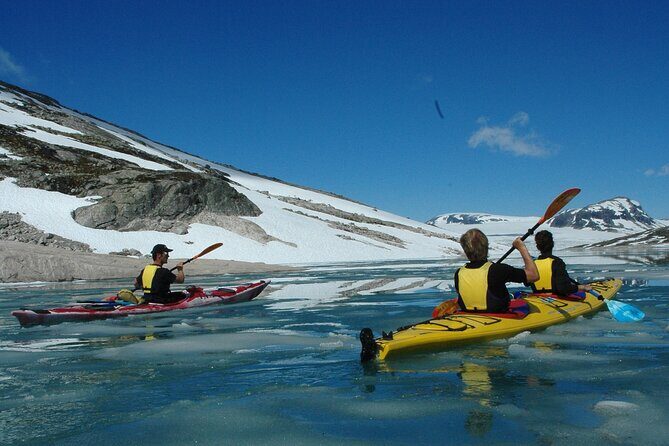
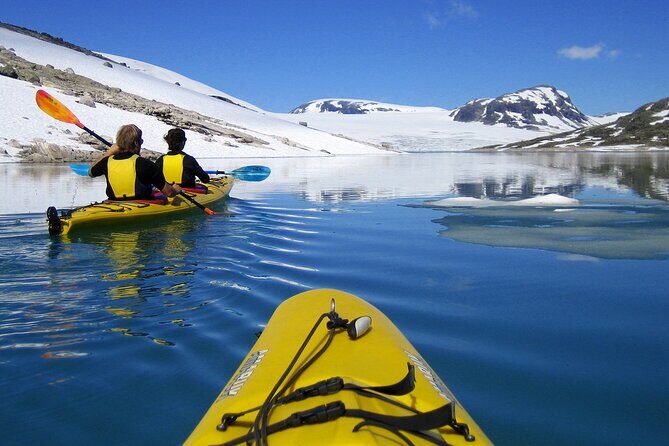
This day is built around a simple idea: first you reach the glacier by water, then you approach it on foot. You start in the Styggevatnet area, which sits about 1,200m above sea level. That altitude matters. Even in good weather, you’ll feel the chill, especially once wind gets involved on the water.
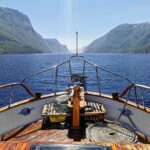
After you meet up near LABBEN at the LabJostedalsvegen address in Jostedal, you’ll begin the paddle once the lake has thawed. The season window is early July through the end of September, with the best chances for opening based on when conditions allow. On a typical day, it’s roughly 1.5 hours of paddling out toward Austdalsbreen.
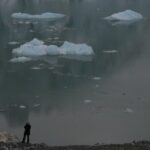
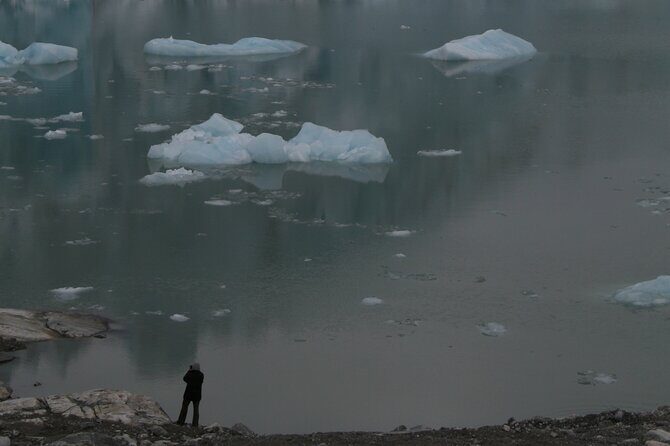
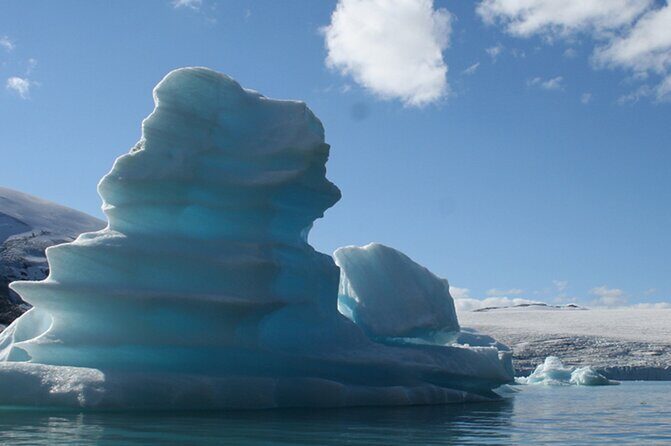
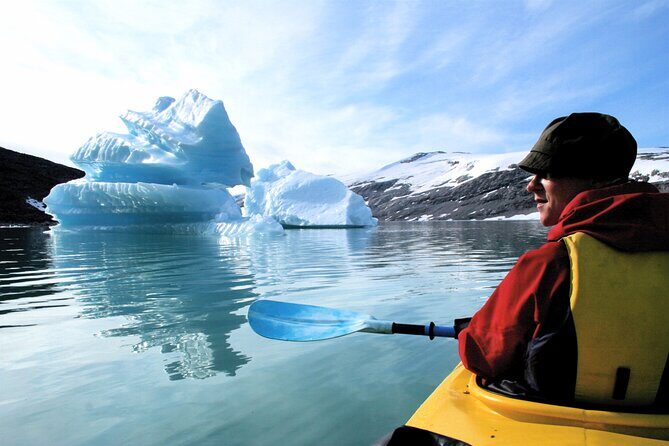
Here’s what makes the first stretch special: you’re not just “kayaking to a view.” You’re moving through the same water where the glacier’s ice has been calving. During the paddle, you look for icebergs that broke off in the days before. It’s a weirdly moving detail—this glacier isn’t a backdrop, it’s actively changing in your field of view.
And yes, it’s still exercise. One of the most honest notes you’ll hear is that untrained arms can feel it, and the return paddle can be tough. So I’d think of this as a long kayaking day with a big hiking payoff, not a light stroll.
You can also read our reviews of more hiking tours in Skjolden
Austdalsbreen’s 30m front: how the glacier feels when you’re close
When you reach Austdalsbreen, the glacier front is not subtle. You’re looking at something on the order of a 30m-high face, and the calving events are dramatic—ice towers can collapse and throw new chunks into the lake.
This is where the guides earn their pay. They don’t just point at ice and say “pretty.” They explain what you’re seeing and what it likely means for the glacier’s behavior. That matters because people often walk onto glaciers thinking it’s static. It isn’t. It’s a living system with cracks, movement, and regular shedding.
There’s also a lunch moment here. After the kayak part, you stop and eat with the glacier front in view. It turns the whole day from effort-only into effort-plus-a-reward. If you’re the kind of person who gets cranky when the schedule is all go-go-go, that pause helps a lot.
The blue-ice hike: crevasses, footing, and a view that hits hard
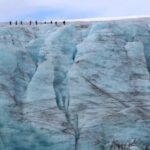
The hike happens on the blue ice near the glacier front. Expect an unsteady surface in the sense that it’s glacier travel, not a groomed path. Still, the walk itself is designed to be manageable for people who can follow instructions and move confidently with the group.
You’ll spend roughly 1.5 to 2 hours on the glacier. That time window is important. It’s long enough to feel like you actually explored something, not just crossed a line and headed back. You’ll walk around huge crevasses while your guide talks through features of the glacier—how it forms, what cracks suggest, and why the area looks the way it does.
The highlight is the commanding view over the lake and across the broader Jostedalsbreen National Park area. From the ice, the scale really lands. From ground level, glaciers can look like a wall. From close range, you understand the structure—the shadows in the ice, the way the front drops toward the water, and how the ice systems connect.
A practical note: you’ll want to respect the guidance on where to step and how to move. Running shoes can work for some people, but on glacier surfaces they’re not as comfortable as better footwear. If you’ve ever had sore feet after a long day, I’d bring shoes you trust.
Guides and group size: why the day feels controlled (not chaotic)
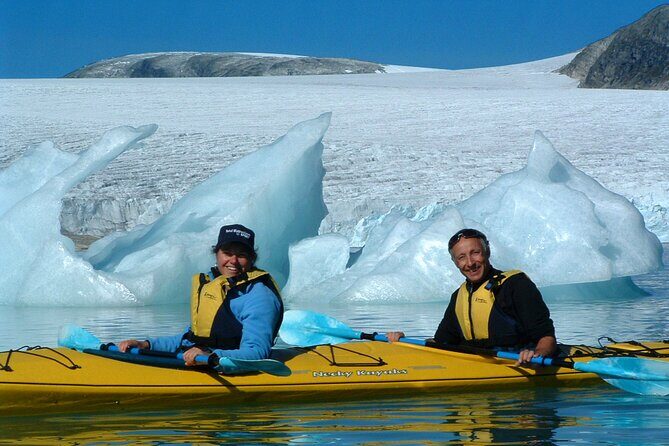
This is a maximum of 9 travelers. That’s a sweet spot. It gives the guides enough flexibility to manage slower walkers and tired paddlers while still keeping everyone in a coordinated flow.
The standout in the best days is the balance between safety and humor. One group had guides who kept the mood light—there was even a joke about the boss buying cider at the center after the day’s work. That kind of energy matters when you’re cold, when your arms burn, or when you’re concentrating on footing.
You’ll also notice the guides are supportive if you feel anxious. People often worry they’re not athletic enough or that they’ll slow the group. The tone on this kind of tour is usually: get your bearings fast, follow instructions, and you’ll be okay. And when equipment fits well and guidance is clear, confidence grows quickly.
What’s included vs what you must bring (so you don’t get miserable)
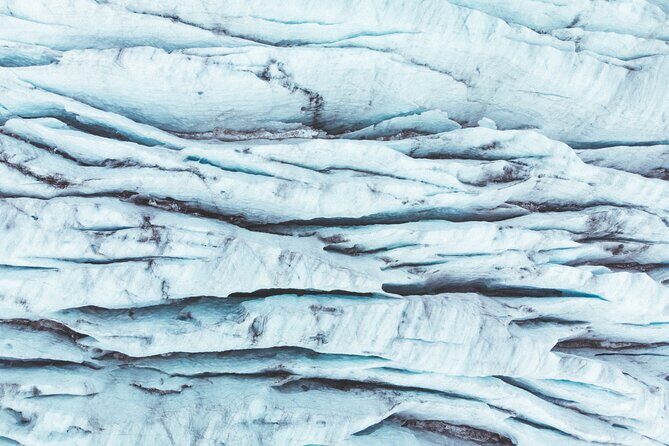
The tour includes kayak equipment, glacier equipment, and glacier information. That’s the core value: you get the right gear and the right explanations, and you’re not left guessing what you need for glacier travel.
What isn’t included is where most comfort problems start. You should plan to bring:
- Warm hat and gloves
- Warm clothing, including a rain jacket
- Good shoes (running shoes can be possible, but not ideal for glacier comfort)
- Sunglasses
- Water (or at least a water bottle)
- Snacks if you want extra energy
- If possible: woolen under layers, waterproof trousers, and a sun hat
If you do only one thing, make it this: dress in layers that block wind. Wind is the real battery drain. Even on a bright day, water + altitude + wind can make you feel colder than you expected.
Also, bring a plan for lunch calories. Lunch is included as a stop with views, but the tour doesn’t promise extra snacks. If you know you crash after a hard physical effort, pack something small that you can eat quickly.
A few more Skjolden tours and experiences worth a look
Price and value: what $244.39 is really paying for
At about $244.39 per person, this tour costs less than you might expect for a full glacier day—mainly because the day is high-effort but small-group, and the operator supplies the key equipment. Your money covers kayak gear and glacier gear, plus guided glacier instruction.
What you’re not paying for is comfort extras. Warm gear and water are on you. So the real value depends on whether you show up ready to be cold and active for hours.
The length also helps justify the price. You’re getting a 7 hours 30 minutes experience (approx.), combining two activities that most people do separately: paddling and glacier hiking. If you love nature photography, the time on the glacier plus the paddle views can feel like two different trips folded into one.
In plain terms: if you’re comfortable paying for guides, safety, and equipment so you don’t have to figure out logistics yourself, this price can feel fair. If you need to buy a lot of gear you don’t already own, your total cost goes up.
Weather and fitness: the two big filters
This experience requires good weather. If weather forces a cancellation, you’ll be offered a different date or a full refund. That’s exactly what you want for glacier travel, because conditions change quickly.
Fitness-wise, the tour asks for a strong physical fitness level. That doesn’t mean you need to be an athlete. It means you should be comfortable with:
- a long paddling stretch (about 1.5 hours one way)
- glacier walking for 1.5 to 2 hours
- the return paddle, which can feel hard if you’re not used to kayaking
One review note that matches the math: the paddle back can feel heavy, even when the hike is easier. So train for your arms more than you train for your legs. And if you’re anxious, be honest with the guide; the support is part of how the day goes well.
Getting ready: small choices that make a big difference
Before you go, I’d do a quick checklist:
- Confirm you’ve got rain protection. Weather can shift fast in mountains.
- Bring wool or warm under layers if you run cold.
- Wear shoes you can trust on uneven surfaces.
- Pack sunglasses. Ice glare is real.
- Bring water and a snack if you like a safety net.
Also, one practical heads-up: the visitor center may not be open right at departure, so toilets might not be available when you’re ready to leave. If that matters to you, don’t assume you’ll have a last-minute window.
Full day vs Glacier Half Day: how to match the day to your group
If you’re traveling with young families, there’s a purpose-designed Glacier Half Day option. That’s the smart move if you want glacier magic without committing to the full paddling + long ice time + return effort.
For mixed ages, this tour can still work when everyone is ready for the physical side and the group stays coordinated. The small-group setup helps. But if your goal is maximum comfort, the half-day format is the safer pick.
Should you book ICETROLL Glacier Hiking & Kayaking on Stygge?
Book it if you want a day that feels real, not staged: paddle to the glacier, see the ice front up close, then walk on blue ice long enough to actually understand it. The best part is the guided layer—crevasses and calving aren’t just scenery, they’re explained in a way that makes the whole day stick.
I’d think twice (or consider the half-day) if:
- kayaking sounds like it might be tough for you physically
- you don’t have warm layers or you hate cold wind
- you want an easy, low-effort outing
If you’re the type who likes to earn views and enjoy nature with structure and support, this is a strong choice. With a small max group size, serious equipment, and guides who keep the tone encouraging, you’re set up for a glacier day that’s memorable for the right reasons—ice scale, guided understanding, and a finish that feels earned.
FAQ
How long is the Glacier Hiking and kayaking Tour on Stygge?
It runs for about 7 hours 30 minutes (approx.).
Where do I meet for the tour?
The start meeting point is LABBEN – The LabJostedalsvegen 2889, 6871 Jostedal, Norway. The activity ends back at the meeting point.
What is included in the tour price?
The tour includes kayak equipment, glacier equipment, and glacier information.
What should I bring?
Bring warm hat and gloves, warm clothing including a rain jacket, good shoes for glacier walking, sunglasses, and water/water bottle. It can also help to bring woolen under layers, waterproof trousers, and a sun hat. Lunch extra snacks are a good idea.
How physically demanding is it?
It requires strong physical fitness. The experience includes about 1.5 hours of paddling and a 1.5 to 2 hour hike on the glacier.
When does the tour run?
Trips operate from early July (hopefully around 11 July) until the end of September, depending on when the lake defrosts.
What if weather is bad?
The tour requires good weather. If it’s canceled due to poor weather, you’ll be offered a different date or a full refund.
Are there accessible or family-friendly options?
There are accessible trips available if you call to ask what’s possible. For young families, there’s a purpose-designed Glacier Half Day tour.