REVIEW · ANDALSNES
Via Ferrata Åndalsnes West Wall
Book on Viator →Operated by Norwegian Mountaineering Centre - Norsk Tindesenter · Bookable on Viator
Metal holds, big air, Norway’s drama. The Via Ferrata Åndalsnes West Wall turns the Romsdalen Valley into a real hands-on adventure, with a guide who helps you stay calm and move well. I especially love that the price includes all technical equipment plus a professional guide’s supervision. I also like that the group stays small (max 16), so you get attention when the wall gets steep.
One thing to consider: this is not a casual walk. You need a strong fitness base, and the route can include steep uphill stretches and sections that feel tight if you’re on the shorter side or new to via ferrata climbing.
In This Review
- Key Things I’d Plan Around
- Via Ferrata Åndalsnes West Wall: Why This One Works
- Start at Norsk Tindesenter: Gear Check, Rules, and Real Confidence
- The Walk-In and First Steep Moves: Where Legs Get Tested
- Climbing the West Wall: Bars, Overhangs, and Exposed Vertical Moves
- The Biggest Reward: Views All the Way Through
- Finishing With the Nesaksla/Rampestreken Descent
- Equipment and What You Should Bring (Because Not Everything Is Included)
- Timing: Plan for a 6-Hour Half-Day, Not a Quick Stroll
- Price Value: Why $214.64 Can Make Sense
- Who Should Book This (and Who Might Rethink It)
- Should You Book the Via Ferrata Åndalsnes West Wall?
- FAQ
- FAQ
- Where does the tour start?
- What time does the experience begin?
- How long is the Via Ferrata Åndalsnes West Wall?
- Is the tour in English?
- What’s included in the price?
- Do I need to bring gloves or hiking shoes?
- Is food and drink included?
- How big is the group?
- What kind of fitness level is required?
- What if my plans change?
Key Things I’d Plan Around
- All equipment included: harness, lanyards, and the gear you need, so you can travel light.
- Small groups (max 16): you’re less likely to be stuck waiting for the slowest climber.
- Steep start and demanding sections: vertical walls, overhangs, and uphill moves make this feel like real climbing.
- A full half-day format: about 6 hours, with a walk-in and a hike-down back toward Åndalsnes.
- Guides really matter: you’ll get route guidance and hands-on help on tricky bits.
Via Ferrata Åndalsnes West Wall: Why This One Works
If you want via ferrata in a place that feels serious, this is a strong pick. The Romsdalen Valley setting is all about exposure and big mountain walls, and the West Wall gives you that mix of fun climbing and sightseeing.
What makes it work for most people is how structured it is. You don’t just get tossed onto the ironwork. You meet at Norsk Tindesenter (Norwegian Mountaineering Centre), get checked out, and then climb with a guide overseeing your safety.
The climb also has a good sense of progression. You start with steeper sections to warm up your legs, then you settle into longer stretches where technique and balance matter more than brute force. And when it’s over, you’re not done: you hike down through Nesaksla/Rampestreken back toward town.
You can also read our reviews of more tours and experiences in Andalsnes.
Start at Norsk Tindesenter: Gear Check, Rules, and Real Confidence
Your tour begins at Norsk Tindesenter, at Havnegata 2, in Åndalsnes. The start time is 9:30 am, and you’ll end back at the same meeting point.
Before anyone clips in, the guide goes through safety declarations and checks the equipment you’ll use. This matters more than people think. Via ferrata systems can feel confusing the first time, and a solid walkthrough helps you stop worrying about the gear and start focusing on movement.
You’ll then walk about 20 minutes to the start of the via ferrata route. Treat that walk-in as part of the experience, not dead time. It’s your chance to get your grip routine started, adjust what you’re carrying, and ask quick questions before the wall demands attention.
The Walk-In and First Steep Moves: Where Legs Get Tested
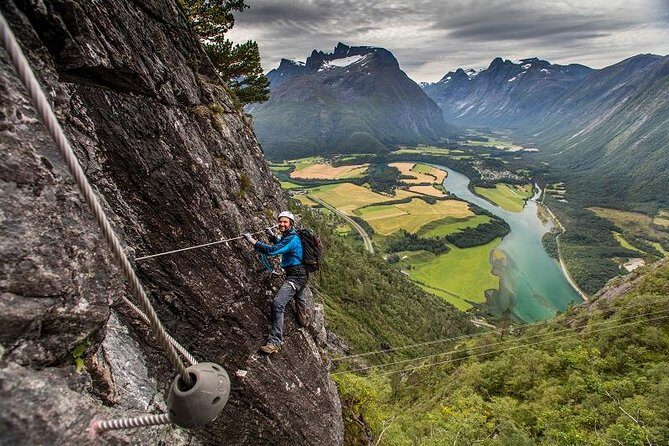
Right away, this route asks for effort. Some sections include a noticeable steep uphill climb before you’re even deep into the technical rhythm.
That’s where the “strong physical fitness” note becomes real. Even if you’re comfortable with heights, your calves and lungs need to be ready for uphill work and sustained movement.
If you’re short or new to climbing, the first tricky moments can feel sharper. Reviews and tips point out that you may have to put in extra effort in sections where the distance to the next attachment or hold is tight. The good news is that good guides can help you choose the safest body position and pacing so you don’t rush and get stuck.
Climbing the West Wall: Bars, Overhangs, and Exposed Vertical Moves
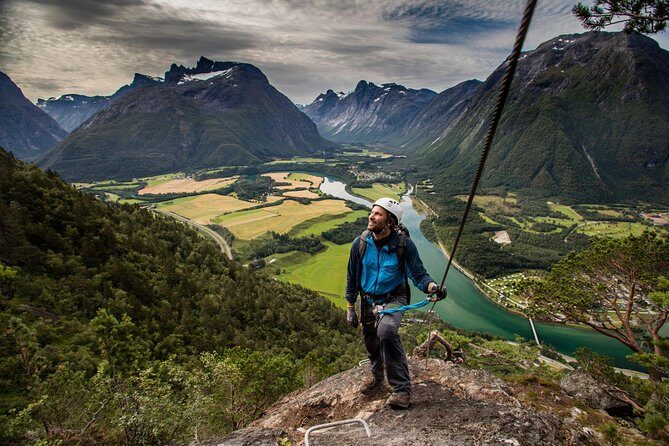
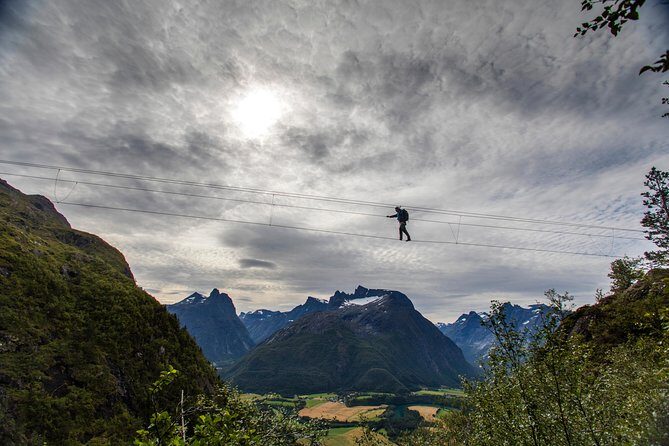
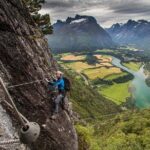
This via ferrata is heavy on purpose-built climbing hardware. Expect lots of traditional metal bars, rings, and foot holds, with some brief sections that rely more on the natural rock.
The West Wall has multiple vertical sections and a handful of overhang areas. These are the parts that feel different from a straight-up climb. Overhangs demand upper-body strength and smart foot placement, because you can’t just lean and go.
Even on days with mist or fog, the structure of the route still works. One helpful detail: misty conditions can keep the wall cooler, which makes long climbs more manageable. After rain, though, you should assume things can be wet and slippery, especially if there’s mud on approach paths or near the start.
If you’re the type who gets nervous at heights, remember this: you’re supervised. Having a guide like Mathias, Isaac, or Axel (names you may see with this operator) can change the whole experience. A good guide gives route cues, reminds you where to place your feet, and keeps you calm when a move feels harder than expected.
The Biggest Reward: Views All the Way Through
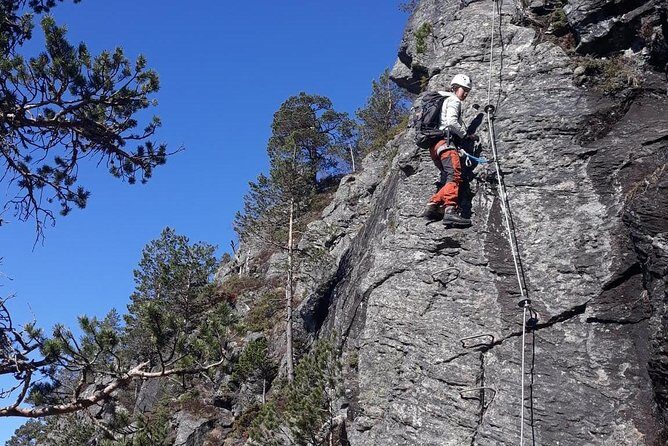
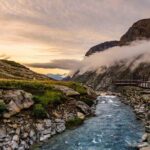
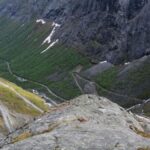
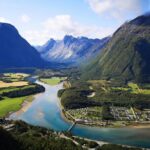
The payoff is consistent. As you climb, you’re exposed to wide mountain views, and the wall’s design keeps you moving between outlook points rather than stuck in one flat section.
You should also expect the “moment shift” at the top or near the end. Some days you finish into clouds or fog, and the world goes gray. That can still feel dramatic and worth it, just different from the crisp clear-day photos people hope for.
If the weather is unstable, build a mindset for Plan B. You’ll still get the climbing and the experience, but the visuals may be more atmospheric than postcard-perfect.

Finishing With the Nesaksla/Rampestreken Descent
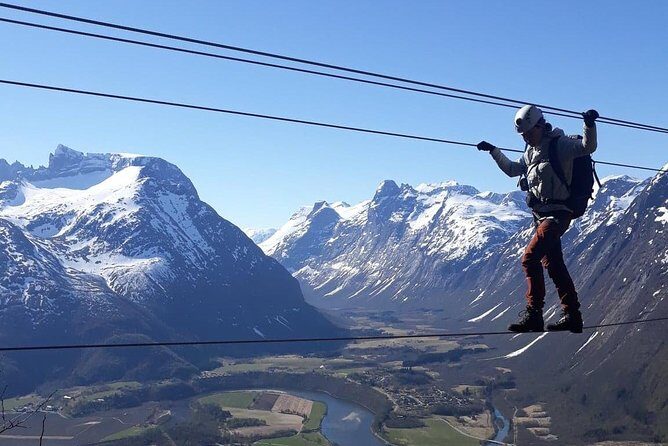
After you complete the wall climb, the day continues. You’ll hike down Nesaksla/Rampestreken back toward Åndalsnes town, and then return to the centre.
This is not just a stroll. Your legs are already tired from climbing, and the hike-down asks for careful footing, especially if the ground is damp. Think of it as part of the “full circuit” vibe: you climb, you move back down under your own control, and then you’re back to town life.
Also, this area has options like a gondola in the broader system around Åndalsnes. The tour you’re booking is described as a hike-down, so don’t assume any gondola is included. But it’s useful context: if someone in your party wants a faster return next time, the local infrastructure exists.
Equipment and What You Should Bring (Because Not Everything Is Included)
The tour includes all technical equipment and a professional guide, which is the big value play. You don’t need to source harness gear, lanyards, or the climbing system.
But there are a few items not included:
- Rubber gloves (not provided)
- Hiking shoes (not provided)
That glove detail matters if conditions are wet. Metal bars can chew up hands fast, and several people highlight glove use as a way to prevent blisters, especially when the wall is damp.
For footwear, choose shoes that you’d feel comfortable walking on rocky, uneven ground in. The descent hike adds strain, and you want grip you can trust.
One smart add-on: carry water in a way that lets you drink without stopping the whole flow. A camelback-style water system is specifically suggested as a practical choice, since you’re busy and it’s hard to fumble gear mid-climb.
One more thing to plan around: you can’t take the harness off during the trip. That’s a real constraint, so use facilities before you start and avoid starting the day thirsty or rushing your prep.
Timing: Plan for a 6-Hour Half-Day, Not a Quick Stroll
The duration is listed as about 6 hours. That’s a good target to build your day around.
In real life, your time can change. If the group is moving smoothly and you’re not held up by slower pacing, you might finish earlier than expected. If you’re learning in your first via ferrata and you need more time on transitions, it can stretch out.
The good part is that you’re not doing this alone. The guide sets the pace, points out the route logic, and helps you handle the sections that feel most difficult.
Price Value: Why $214.64 Can Make Sense
At $214.64 per person (with GST included), the cost is not low. But it doesn’t pretend to be cheap either.
You’re paying for three things that matter on a via ferrata:
- A professional guide who supervises safety and technique.
- Technical equipment that you otherwise would need to buy or rent.
- A structured route in a tough environment where “winging it” isn’t the move.
If you were to rent gear elsewhere and hire instruction separately, the math often gets worse. Here, the pricing is bundled around the essentials. That’s why the value feels fair for many climbers, including people who hadn’t done via ferrata before.
Who Should Book This (and Who Might Rethink It)
This tour fits best if you:
- enjoy outdoor climbing challenges
- have a solid fitness base and can handle steep work
- want a guided route where you feel supported on exposed sections
- are okay with some route difficulty, including overhang moves
If you’re very new to climbing, it can still be doable with the guide’s help. The key is mindset. You’ll need patience for tight sections and you might work harder if you’re smaller in stature, because reach affects how easily you can clip and step.
If you hate being uncomfortable physically, or you’re not ready for a half-day of exertion and a hike-down on tired legs, you might look for something gentler in the region.
Should You Book the Via Ferrata Åndalsnes West Wall?
Yes, you should book it if you want a real via ferrata day in Norway that’s guided, structured, and built for confidence. The small group size, the included technical equipment, and the way the route moves through vertical and overhang sections make this feel like a full experience, not a short novelty.
I’d be more cautious if you’re unsure about your fitness level or you’re uncomfortable with steep, exposed climbing moments. In that case, you may still enjoy the day, but go in with the right expectations and give yourself extra time to adjust on the wall.
FAQ
FAQ
Where does the tour start?
The tour starts at Norsk Tindesenter (Norwegian Mountaineering Centre), Havnegata 2, 6300 Åndalsnes, Norway.
What time does the experience begin?
The start time is 9:30 am.
How long is the Via Ferrata Åndalsnes West Wall?
The duration is listed as about 6 hours.
Is the tour in English?
Yes, this experience is offered in English.
What’s included in the price?
The price includes GST, a professional guide, and all technical equipment.
Do I need to bring gloves or hiking shoes?
Yes. Rubber gloves are not included, and hiking shoes are also not included.
Is food and drink included?
Food and drinks are not included unless specified.
How big is the group?
The tour/activity has a maximum of 16 travelers.
What kind of fitness level is required?
You should have a strong physical fitness level.
What if my plans change?
This experience is non-refundable and cannot be changed for any reason. If it’s canceled because a minimum number of travelers isn’t met, you’ll be offered a different date/experience or a full refund.