REVIEW · NORDLAND COUNTY
Lofoten Islands: Guided Snowshoeing Tour – Uphill version
Book on GetYourGuide →Operated by Polar-folk.com · Bookable on GetYourGuide
Snowshoe uphill, then watch Lofoten open up. I love the payoff: the steady uphill snowshoeing workout with views that only show up when you gain elevation, and I also love the human part, where a certified nature guide leads you with safety and pacing in mind. The one thing to plan for: weather and snow conditions can affect how high you’ll go, so don’t treat the peak as guaranteed.
In good hands, the climb stays fun. Guides like Timea and Paul are praised for adjusting to group speeds and handling changing conditions, even when the day isn’t perfectly clear. And yes, the trip can include an extra bundle of joy: the friendly dog Luna, showing up as a real mood-lifter on snowy trails.
This tour fits best if you can walk uphill for a snowy stretch at a medium fitness level. It’s not for kids under 16, and it’s not set up for people with mobility impairments, so choose it for your body type and your comfort with effort.
In This Review
- Key highlights worth your attention
- Gimsøystraumen meeting point: the red building at Gimsøy bridge
- The 4-hour plan: safety briefing, uphill snowshoeing, and photo stop
- Step 1: Safety briefing (about 10 minutes)
- Step 2: Guided tour (about 2 hours)
- Step 3: Break time and photo stop (about 20 minutes)
- Step 4: Guided tour (about 1 hour)
- How uphill snowshoeing feels in Lofoten winter
- What makes the uphill version different
- When conditions affect the route
- The local guide factor: nature, wildlife, and culture in the cold
- Real guide examples from past trips
- What you should watch for
- What to bring: clothing you can actually move in
- Clothing and footwear
- Personal items
- Snack and drink
- A quick reality check on fitness
- Price value: what $118 buys you in Lofoten
- Who should book this uphill snowshoe tour
- Should you book it?
- FAQ
- FAQ
- Where do I meet the guide?
- How long is the tour?
- Is previous snowshoeing experience required?
- What’s included in the price?
- What should I bring?
- Is this tour good for beginners or families?
- Can I cancel if weather changes my plans?
Key highlights worth your attention
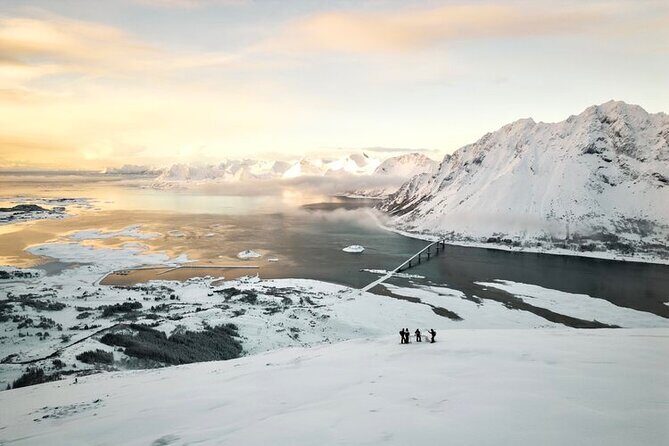
- Uphill route for a real workout with the goal of getting higher for the best Lofoten views
- Certified English-speaking nature guides who teach what you’re seeing, not just where to step
- Gear included: snowshoes, poles, and spikes when needed for traction
- Small groups or private options, so your pace can actually matter
- Dog companion moments (Luna shows up in multiple guide-led experiences)
- Up to four hours total, with a built-in photo stop so you can breathe and reset
Gimsøystraumen meeting point: the red building at Gimsøy bridge
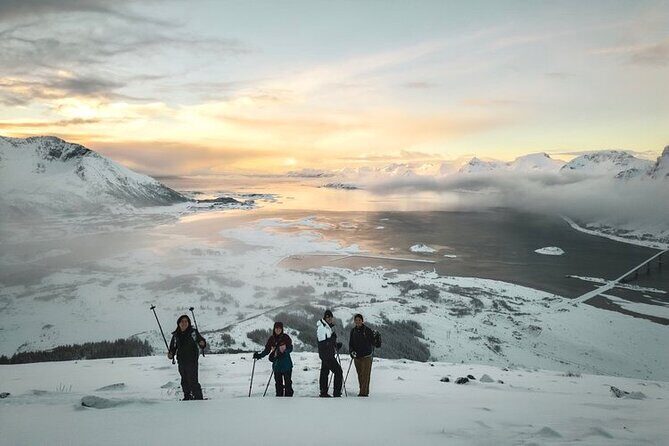
Your day starts in the Nordland County area of Lofoten, with the meeting point at Gimsøystraumen—specifically the rest place at Gimsøy bridge. When you arrive, look for the large parking area and the red building with seating nearby. The guide from Polar-folk.com will be waiting at the entrance.
This matters more than it sounds. In winter, you want a quick, calm start. If you arrive late, you lose time for the safety briefing and warm-up pacing that helps everyone climb comfortably. Also, if you’re driving, winter daylight can disappear fast—so give yourself a buffer for snow-covered roads.
Dress so you can move immediately after you park. You’ll likely want to get your boots on correctly before you start walking, and you’ll need gloves and warm layers ready for wind. This isn’t a sit-and-stare tour. It’s a walk. Even the best view comes after effort.
You can also read our reviews of more guided tours in Nordland County
The 4-hour plan: safety briefing, uphill snowshoeing, and photo stop
The structure is simple and well-timed. You’ll have about 10 minutes for a safety briefing, then the climbing starts. The total duration is four hours, built around two guided walking blocks and one break.
Here’s how the rhythm typically feels:
Step 1: Safety briefing (about 10 minutes)
You’ll get the basics first—how to wear and use the snowshoes, and how to walk with control on snowy ground. Guides also handle safety talk in a practical way: what to do when conditions change, how to keep spacing on uphill sections, and how to manage footing on steeper patches.
If you’ve never snowshoed before, this is the part that helps the rest of the day feel manageable. The goal isn’t to teach you mountaineering. It’s to keep you stable, comfortable, and confident.
Step 2: Guided tour (about 2 hours)
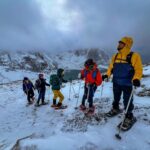
This is the main body of the experience: two hours of guided uphill walking through snowy terrain. Your guide chooses a route based on conditions and group pace. In review stories, routes have included reaching ridges connected to trails such as Glomtinden, when the day allows it.
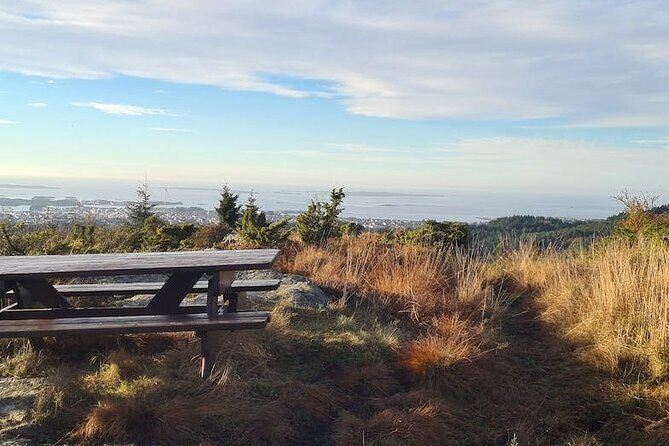
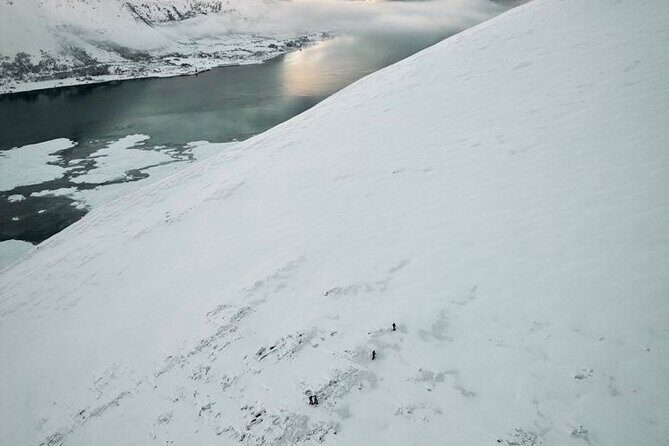
This section is where your effort pays off. As you climb, you start looking out over the winter spread of Lofoten—frozen lakes, snow-covered fjord-area scenery, and the feeling that the world gets bigger the higher you go.
Step 3: Break time and photo stop (about 20 minutes)
You get a breather—enough time to warm up a bit, regroup, and take photos. This matters on an uphill day because your body keeps working while your brain starts asking, is this far enough yet?
The photo stop also gives you a moment to appreciate the views from above. You’re not racing. You’re collecting memories.

Step 4: Guided tour (about 1 hour)
The final hour is about continuing the climb (or finishing it at the highest safe point) and then working back down to complete the loop within the time limit. The day’s plan includes a practical “up to the maximum height” idea: if conditions allow, you’ll go higher; if not, the guide aims for as high as possible while keeping the four-hour schedule.
On days with less-than-ideal visibility, the guide’s job becomes even more important. The best experiences I’ve seen like this are the ones where someone knows where footing is best and where the air opens enough to make the work feel worth it.
How uphill snowshoeing feels in Lofoten winter
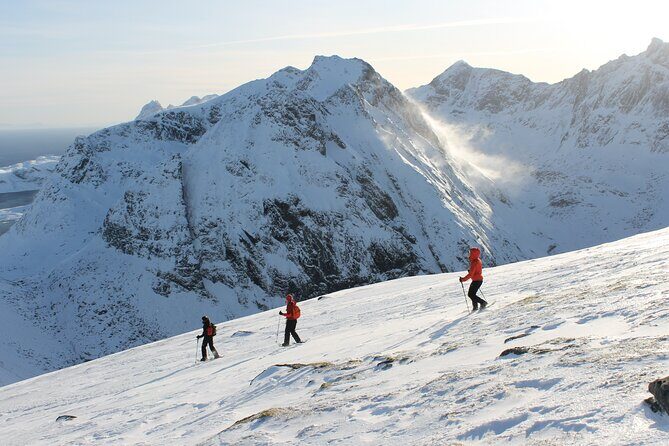
Uphill snowshoeing is not “just walking.” It’s walking with traction and resistance, where your legs do extra work to keep you moving through powder and uneven snow.
That’s why this tour is described as a good match for people who want some workout and can handle walking uphill on snowy terrain. You don’t need prior snowshoe experience, but you do need medium fitness. Think: you exercise at least once a week, and you can keep a steady effort without stopping every few minutes.
What makes the uphill version different
- You’re gaining elevation, so the air feels colder and the effort feels greater.
- Snowshoes change your stride. Once you learn the rhythm, you get used to it fast.
- Traction becomes everything. Guides can provide spikes when needed, which helps with confidence on steeper or icier patches.
In multiple guide-led stories, the pacing is called out as a real strength. Guides adjusted to different hiking speeds and kept groups together without turning it into a sprint-fest. That’s what you want: a climb you can sustain, not a workout that overwhelms you.
When conditions affect the route
Sometimes visibility or snow conditions limit how high you can go. The plan is flexible, and that’s a plus. The experience goal stays the same: safe uphill snowshoeing with big Lofoten views, not a stubborn push to a summit regardless of the day.
The local guide factor: nature, wildlife, and culture in the cold
The “guided” part isn’t filler. It’s how you turn a white walk into a real understanding of place.
You’ll learn about nature, wildlife, and local culture during the snowshoe route. It’s not delivered as a lecture where you stand still and freeze. It’s woven into what you’re seeing around you—snow texture, winter terrain features, and the ways people in Lofoten live with seasonal changes.
Real guide examples from past trips
Names you may hear during your tour include Timea and Paul, both noted for safety and pacing. One guide led hikers to a higher point around 530 meters when conditions allowed. Another group reached a ridge tied to the Glomtinden trail. Your exact high point may differ, but the pattern is consistent: the guide makes a call based on what the mountain is handing you that day.
And again, the dog—Luna—appears in multiple experiences. Even if you come for the views, a friendly companion can make the cold feel less sharp and the walk feel lighter.
What you should watch for
Even without a biology degree, you’ll start noticing winter details when someone points them out. Keep your eyes open for animal signs in snow, how the wind shapes snowdrifts, and how the terrain changes as you climb. These are the small clues that make the “nature and wildlife” part feel real.
What to bring: clothing you can actually move in
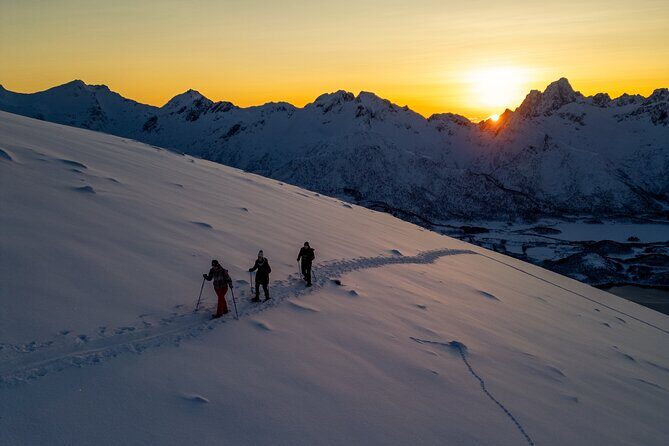
This tour includes snowshoes with poles, plus spikes if needed, and it’s led in English by an English-speaking certified nature guide. That’s great. But you still have to show up ready for winter weather.
Here’s the essentials you should plan around:
Clothing and footwear
You’ll want warm, comfortable winter clothing, ideally water-repellant. Boots should be warm and waterproof. Add a hat and gloves you can actually tolerate with the wind. If your layers are bulky, that’s not always better. The key is warmth plus mobility while hiking uphill.
Bring waterproof shoes and snow-ready outdoor clothing in general. Think layers you can adjust as your body warms up during the climb.
Personal items
You’ll need a daypack and water. Also bring a windbreaker. Wind is the hidden “time thief” in winter—you can feel fine until gusts hit and suddenly your face and hands want upgrades fast.
Snack and drink
Snack and drink are not included. I’d treat this as a must, not a maybe. Even on a four-hour outing, you’ll work hard uphill and then spend a chunk standing around for a photo stop.
A quick reality check on fitness
This is not designed for low-fitness days, and it’s not suitable for children under 16. If you have mobility impairments, this may not be a good fit either, since the route involves uphill snowy walking.
If you can handle a steady uphill climb for a stretch, you’ll likely enjoy it.
Price value: what $118 buys you in Lofoten
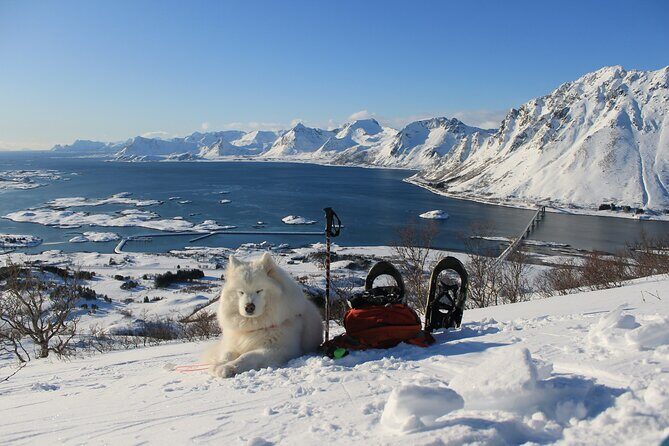
At $118 per person for a four-hour guided uphill snowshoe tour, you’re paying for more than movement. You’re paying for a guide who knows winter terrain, a plan that adapts to conditions, and the equipment that makes your body’s job easier.
Here’s where the value comes from:
- Included gear: snowshoes, poles, and spikes if needed. That removes a lot of friction and expense compared to renting everything yourself.
- Safety and pacing: guides manage group spacing and uphill rhythm. Multiple past experiences praised the way guides accommodated different speeds.
- Interpretation of the place: nature, wildlife, and culture talk turns views into understanding.
- Big-view payoff: the whole reason it’s uphill is to reach better vantage points when the day allows it.
If you’re visiting Lofoten and want winter scenery plus real effort, this price can feel fair. If you want a gentle walk with zero exertion, you might find uphill snowshoeing too demanding.
Who should book this uphill snowshoe tour
Book it if you want:
- a guided winter walk with real uphill effort
- help with gear so you don’t have to figure out snowshoes on your own
- a local nature guide who adds meaning to the scenery
- a small-group or private feel (available options)
You might skip it if:
- you’re not comfortable walking uphill on snowy terrain
- you’re traveling with kids under 16
- mobility is a major constraint for you
This tour also makes sense as part of a Lofoten winter plan where you want at least one day that gets you outdoors and into the mountains rather than only coastal viewpoints.
Should you book it?
I think this is a strong choice if you’re the type who likes a workout with a payoff, and you want your guide to handle the cold-weather details. The repeated praise for pacing, safety, and route choice suggests the experience is run with care, not guesswork. Add the possibility of getting higher points when conditions allow, plus the extra warmth of a dog companion like Luna, and you’ve got a winter outing that feels personal rather than robotic.
If you’re deciding last-minute, go for it when you can dress properly and you’re ready for an uphill day—even if the peak isn’t guaranteed. In winter, flexibility is part of the deal.
FAQ
FAQ
Where do I meet the guide?
Meet at the rest place at Gimsøy bridge (Gimsøystraumen area). Look for the large parking area and the red building. The guide from Polar-folk.com will be waiting at the entrance.
How long is the tour?
The tour lasts about 4 hours total.
Is previous snowshoeing experience required?
No. You do not need prior snowshoeing experience. The guide explains the gear and how to walk.
What’s included in the price?
Snowshoes with poles are included. If needed, you’ll also get spikes for traction. The tour also includes an English-speaking certified nature guide.
What should I bring?
Bring warm winter clothing (preferably water-repellant), warm waterproof winter hiking boots, a hat and gloves, a windbreaker, a daypack, and water. You also need waterproof shoes suitable for snowy conditions. Snack and drink are not included.
Is this tour good for beginners or families?
It’s suitable for people with no prior snowshoeing experience, but it is not suitable for children under 16 and it requires at least a medium fitness level.
Can I cancel if weather changes my plans?
Yes. There is free cancellation up to 24 hours in advance for a full refund, and you can also choose reserve and pay later for flexibility.