REVIEW · KIRKENES
Kirkenes: Northern Lights Chase Tour
Book on GetYourGuide →Operated by TF TAXI · Bookable on GetYourGuide
Seeing Northern Lights is all about timing.
This Aurora chase tour from Kirkenes is built for the hunt: you get hotel pickup, a local guide, and a plan that follows the sky conditions (darkness, cloud cover, and the KP index) so you’re not just hoping for a clear view. I also like the small group size—max 7 people—because it keeps the experience more focused and gives your guide room to adjust the route quickly.
I really like that you’re not stuck doing it alone. The guide explains what causes the Northern Lights and why colors shift (green, red, blue/purple), then takes you to spots with less light pollution so you can actually see what’s happening overhead. Plus, you get light snacks with coffee/tea/hot water, and the guide will help with photos when the lights show up.
One consideration: this is an aurora chase, so the outcome depends on weather and visibility. If conditions don’t cooperate, you may end up with fewer chances or a shorter look—plan your expectations around that reality.
In This Review
- Key highlights I’d circle first
- Kirkenes Northern Lights chase: what makes this one practical
- The plan in 3 hours: how the night actually plays out
- Aurora Borealis basics you’ll actually use under the sky
- Pickup and route flexibility: value you feel immediately
- The cold-weather reality: what’s included and what’s on you
- Stop style: why spots like Neiden and Pasvik matter
- Group size and guide communication: where experiences can vary
- Price and value: $786 per group up to 7
- Who this tour fits best (and who should choose something else)
- What you should bring for better photos and less frustration
- The “should I book” decision: make it with clear expectations
- FAQ
- How long is the Northern Lights chase tour?
- Is hotel pickup available in Kirkenes?
- How big is the group?
- What languages is the tour guide available in?
- What’s included during the tour?
- What should I bring for the tour?
- Are winter boots and overalls included?
- Is the tour suitable for children or wheelchair users?
Key highlights I’d circle first
- Hotel pickup in Kirkenes for a low-stress start and easy return
- Small group (up to 7), which helps your guide manage the night on the fly
- KP index + sky conditions guiding where you drive (not random sightseeing)
- Aurora color education (oxygen vs nitrogen, altitude, and why colors differ)
- Hot drinks and light snacks to keep energy up during cold waiting
- Photo help from your guide so you’re not fiddling alone in the dark
Kirkenes Northern Lights chase: what makes this one practical
Kirkenes sits far up in the Arctic, so the sky can be dramatic when conditions line up. This tour leans into that with a car-based chase, meaning you’re not stuck at one viewpoint hoping the aurora shows up right there. The whole point is to keep moving toward better viewing chances—clearer skies, darker patches, and higher aurora activity.
You also get more than just driving and staring. The guide walks you through how the lights form—solar wind particles collide with gases in Earth’s atmosphere—and how that leads to different colors. That’s a big part of the value for me, because it turns the night from a once-a-year photo-op into something you can actually understand while you’re watching it happen.
And because it’s a small group with pickup from any hotel in Kirkenes, you can keep the evening simple. You don’t need to rent a car, figure out where the best dark sky spots are, or coordinate a group in subzero conditions.
You can also read our reviews of more tours and experiences in Kirkenes.
The plan in 3 hours: how the night actually plays out
The listed duration is 3 hours, and you should treat that as a baseline. The experience can stretch depending on weather and visibility, and that matters because aurora viewing isn’t linear—you might drive, stop, wait, and then reposition if the sky shifts.
Here’s the flow you can expect:
1) Pickup from your hotel in Kirkenes
Your guide calls you before pickup time, then comes to collect you. This is a real convenience in Kirkenes, where winter evenings can be cold and dark fast. It also means you start already bundled up and ready, rather than losing time walking between transportation options.
2) A comfort-first car ride with a local guide
You’ll ride in a car with a local guide, keeping you warm while you move between viewing areas. The tour is explicitly designed around finding the best chances, which is why the driving is part of the experience, not a commute.
3) The aurora education while you wait
At some point during the chase, you’ll learn how the Northern Lights form and what to look for. This is more than trivia. When you understand that auroras come from charged particles interacting with oxygen and nitrogen, and that altitude affects color, you’ll notice details in real time—like the difference between common green displays and higher-altitude red, or the blue/purplish hints tied to nitrogen.
4) Driving to darker areas for the best view
Your guide takes you to locations with the highest chance of seeing the aurora. The exact area can include places such as Neiden, Pasvik, and Jarfjord, or other spots with minimal light pollution. Even if you’ve seen auroras online, the darkness level is what makes them feel alive in person—fewer competing lights means the sky glow looks cleaner and more dramatic.
5) Photo time (with help)
When the lights appear, the guide will happily take photos of you with the aurora. That’s a practical benefit: aurora photos often require fast framing and quick settings. If you’re standing in the cold fumbling with a camera while your hands freeze, having someone who’s focused on getting the shot makes a big difference.
6) Return drop-off to your hotel
After the chase, you’ll be dropped back at your starting point in Kirkenes, so you can get warm and recover without figuring out transportation late at night.
Aurora Borealis basics you’ll actually use under the sky
Let’s talk physics in plain terms, because it changes how you watch.
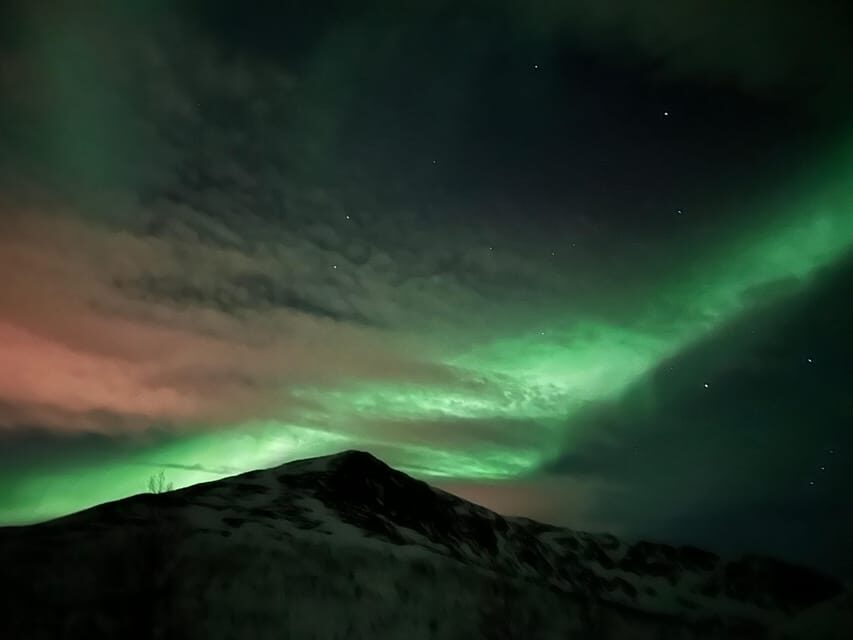
Northern Lights (Aurora Borealis) happen mainly in polar regions at night. The core driver is solar wind—electrically charged particles coming from the sun. When those particles collide with gases in Earth’s atmosphere—especially oxygen and nitrogen—you get the light shows.
Here’s the color logic the guide shares, and why it matters:
- Green is the most common color. It’s usually tied to oxygen at lower altitudes.
- Red appears at higher altitudes, also linked to oxygen.
- Blue or purplish light comes from nitrogen.
In the field, those differences help you “read” what’s happening as it moves and shifts. When you see color changes, you’re not just watching static curtains—you’re seeing altitudes and atmospheric interactions evolving.
You’ll also hear that three things need to align for a good chance:
- Clear sky (or at least fewer clouds)
- Darkness (night conditions)
- Activity on the KP index (a measure of geomagnetic activity)
That’s why this is a chase tour. The KP index might be promising, but if clouds roll in or you’re stuck in light-heavy areas, the view can fall flat. Driving to better conditions is how you give yourself multiple shots at the sky.
Pickup and route flexibility: value you feel immediately
Hotel pickup in Kirkenes is more than convenience—it’s time and energy saved. With a start-to-finish car plan, you avoid the typical winter problem: coordinating transport after dusk.
This also supports the “chase” concept. Your guide can respond quickly if the sky improves somewhere else. And when you’re in a group of up to 7, it’s easier to manage stops and keep everyone together at each viewing spot.
The tour provider is TF TAXI, and the feel of the experience depends heavily on the guide’s approach—where they take you, how they time stops, and whether they explain what you’re seeing.
In the feedback, one driver named Magne Gerhard Andreassen stood out for professionalism and local knowledge, and the group size being just four people made it feel personal. That’s the kind of execution that turns the same aurora conditions into a genuinely memorable night.
The cold-weather reality: what’s included and what’s on you
The tour includes light snacks plus coffee/tea/hot water, which is exactly what you want when you’re standing outside and waiting for the sky to cooperate. Staying warm and slightly fed helps you focus on seeing the aurora instead of counting minutes until you can move again.
What’s not included: winter boots and overalls. That’s important. In Arctic conditions, “warm enough” depends on layering and insulation, not just a decent jacket. If you don’t already have Arctic-suitable footwear and outer insulation, you’ll feel it fast during waiting stops.
What to bring (as the tour recommends):
- Comfortable shoes
- Warm clothing
- Camera
- Gloves
If you can, I’d treat gloves as non-negotiable. Camera use plus cold hands is a fast way to end up with blurry photos or fewer shots attempted.
Stop style: why spots like Neiden and Pasvik matter
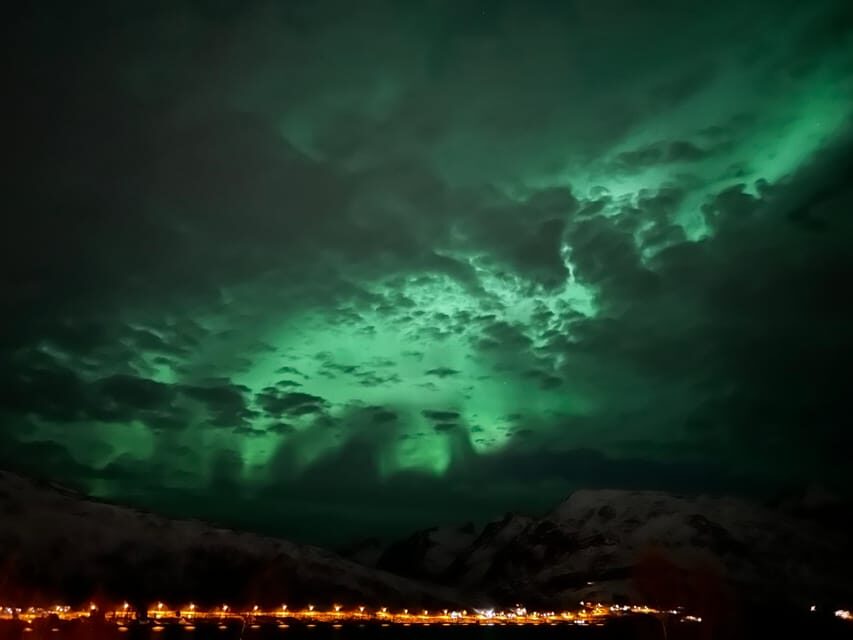
The tour may include areas such as Neiden, Pasvik, and Jarfjord, or other low-light locations. You don’t need to memorize each place to understand the strategy.
These are the kinds of areas where light pollution drops, so the aurora can show up as an actual sky event rather than a faint wash behind streetlights. It also means your camera has a better chance—because bright nearby lights can overwhelm the darker sky glow.
One thing I’d keep in mind: the best spot might be different depending on cloud cover and where the aurora is strongest at that moment. That’s why your guide looks for the highest-chance locations instead of treating every stop like a fixed “must-see.”
Group size and guide communication: where experiences can vary
This is a small-group tour limited to 7 participants, which is generally a good thing for winter nights: fewer people means shorter logjams at stops and more chance for your guide to adjust plans.
But communication is a factor. In some feedback, a booking described the guide as polite but with limited English, leading to less information about where they were going or what to expect. Another issue in one case was that the guide did not show up. Those are not the most common problems, but they’re real reminders to check your confirmation details and be ready at pickup time.
Meanwhile, the most positive feedback lines up with one consistent theme: when the guide is confident, speaks clearly, and explains the aurora while positioning the group well, you get a smoother night and better results. If you’re choosing between similar tours, guide performance matters.
Price and value: $786 per group up to 7
At $786 per group up to 7, this isn’t priced like a solo budget activity. But the structure helps the math. You’re paying for a guided drive, hotel pickup/drop-off across Kirkenes, snacks and hot drinks, and the extra skill of an Aurora chase strategy guided by KP activity and real-world conditions.
So value depends on how you travel:
- If you’re coming with friends or family, the per-person cost can make this feel like a smart deal—especially because you avoid renting a car in winter and you’re getting a guide’s decision-making.
- If you’re solo, you may feel the price more, but you still gain a lot: pickup, a warm car, and photo help when the lights show.
The biggest “value kicker” for me is that included snacks and hot drinks keep people patient without turning the night into suffering. The best aurora chase tours aren’t just about sightings—they’re about making the waiting livable.
Who this tour fits best (and who should choose something else)
This experience is a good match if:
- You’re in Kirkenes for a short stay and want a focused aurora plan
- You want real explanations, not just a drive and a stare
- You’re comfortable getting out in winter gear to view the sky
- You prefer a small group over larger bus-style tours
Not suitable (per tour info):
- Children under 5 years
- Wheelchair users
It’s also best for people who understand the core reality of auroras: visibility isn’t guaranteed. You’re buying guided chances, not a promise.
What you should bring for better photos and less frustration
You don’t need to be a pro photographer to get good aurora images, but a few basics help:
- Camera ready before the chase starts, not after
- Gloves that let you use your camera buttons
- Warm clothing you can layer without restricting movement
- Comfortable shoes for standing during stops
If you’re hoping for photos with you in them, take advantage of the fact that the guide will help take pictures. That reduces the juggling act between composition, settings, and keeping your hands warm.
The “should I book” decision: make it with clear expectations
Here’s my straight take: book it if you want a guided, flexible aurora chase and you’re traveling with enough people to share the group cost. The combination of hotel pickup, a small group, hot drinks and snacks, and a guide who can explain the science while also helping with photos makes this feel like a complete night—not just transportation.
Don’t book it expecting guaranteed lights. Even with a great guide and a good KP index, clouds and visibility can still spoil the view. If that sounds like a risk you can live with, this tour is a solid choice in Kirkenes because it gives you multiple chances in one evening instead of banking on one viewing spot.
FAQ
How long is the Northern Lights chase tour?
The tour is listed as 3 hours, and it may take longer depending on weather and visibility.
Is hotel pickup available in Kirkenes?
Yes. The guide provides pickup and drop-off at any hotel in Kirkenes, and the guide will call before pickup time.
How big is the group?
It’s a small group limited to up to 7 participants.
What languages is the tour guide available in?
The guide is available in English and Norwegian.
What’s included during the tour?
Included items are guided experience with a local guide, light snacks, coffee/tea/hot water, and pickup/drop-off. The guide will also help take photos with the Northern Lights.
What should I bring for the tour?
Bring comfortable shoes, warm clothing, a camera, and gloves.
Are winter boots and overalls included?
No. Winter boots and overalls are not included, so you’ll need to plan for your own cold-weather gear.
Is the tour suitable for children or wheelchair users?
It is not suitable for children under 5 and wheelchair users.
If you’d like, tell me your travel month and how many people are in your group, and I’ll help you judge whether this price structure makes sense for your exact situation.