REVIEW · HELLESYLT
From Hellesylt: The Best of Geiranger Shore Excursion
Book on GetYourGuide →Operated by Excursions.no · Bookable on GetYourGuide
Mountains first, then glacier views. I like how this day trip strings together big-name viewpoints around Geiranger UNESCO with a real guide who explains what you’re seeing, not just where to stand. I also love the pay-off at the heights—Dalsnibba at about 1,500 meters—where the waterfall-and-village scene snaps into focus. The main drawback: you’re on a bus for a long stretch, with short breaks, so it can feel like a lot of sitting if you’re traveling with very young kids or you just hate long rides.
What makes this excursion work especially well for a cruise port visit is the timing mindset. You start from Hellesylt, you’re moving on scenic mountain roads, and there’s a back-to-ship guarantee designed for people who must be aboard on time. Just be aware that weather can affect which viewpoint you get, particularly the access to Dalsnibba.
This is priced at about $188 per person, and the value comes from what’s included: bus transportation, a live English guide, and even the Dalsnibba road toll fee. Food and drinks are on you, so plan for snack breaks rather than expecting a full sit-down lunch every time.
In This Review
- Key points before you go
- Hitting the road from Hellesylt without missing your ship
- Hornindal Lake, Stryn, and the quick hits that set the tone
- Jostedalsbreen Nasjonalparksenter and Øvstefossen: short stops, big meaning
- Djupvatn and Dalsnibba: the two stops that do the heavy lifting
- Djupvatn Lake
- Dalsnibba at about 1,500 m
- The Geiranger Skywalk: panoramic views that feel like a shortcut to the classics
- Nibbevegen and the road-access reality
- When weather shifts your schedule (and how to handle it)
- Price and timing: is $188 worth it for a cruise shore day?
- Who this excursion suits best (and who should skip)
- Small practical tips that make the day smoother
- Should you book this Geiranger shore tour?
- FAQ
- How long is this excursion?
- Where do I meet the guide in Hellesylt?
- What’s included in the price?
- How does the back-to-ship guarantee work?
- Which major stops should I expect on the route?
- Can the Dalsnibba stop be skipped or changed?
- Is Nibbevegen always available?
- Is the tour suitable for everyone?
Key points before you go
- Hornindal Lake depth facts (514 m) with real scale that make the scenery feel bigger than a postcard.
- Stryn as a practical legs-stretch break before the higher-elevation viewpoints.
- Jostedalsbreen Nasjonalparksenter and the glacier angle so the UNESCO story has context.
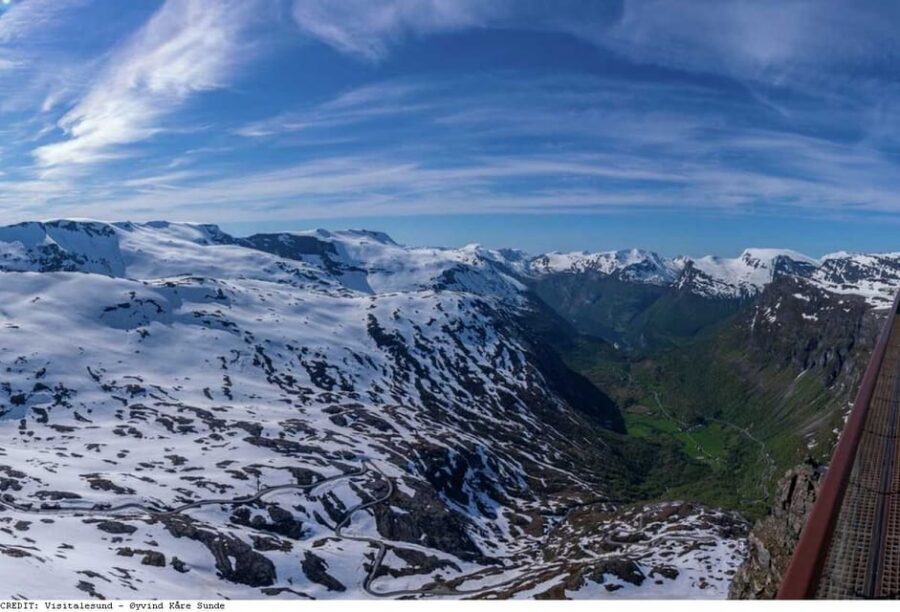
- Dalsnibba at 1,500 m for the big “from above” look over Geiranger, waterfalls, and the Eagle Bend area.
- Weather can swap stops, especially at Dalsnibba, so you should pack flexibility.
- Long but structured day with multiple short breaks—great for active sightseeing, less great for little legs.
Hitting the road from Hellesylt without missing your ship
Your day starts at Coop Marked Hellesylt (Hellesyltvegen 45–47), right by the main road. You’ll find it next to the local school and beside the Joker market, and it’s a very short walk from the pier. Plan to arrive about 15 minutes early—this tour is built to run on cruise schedules.
The guide wears a light blue jacket, and the company name you’ll see is EXCURSIONS.NO. That sounds small, but in Norway shore excursions, easy identification matters. When the bus is ready, it’s ready.
You can also read our reviews of more tours and experiences in Hellesylt.
Hornindal Lake, Stryn, and the quick hits that set the tone
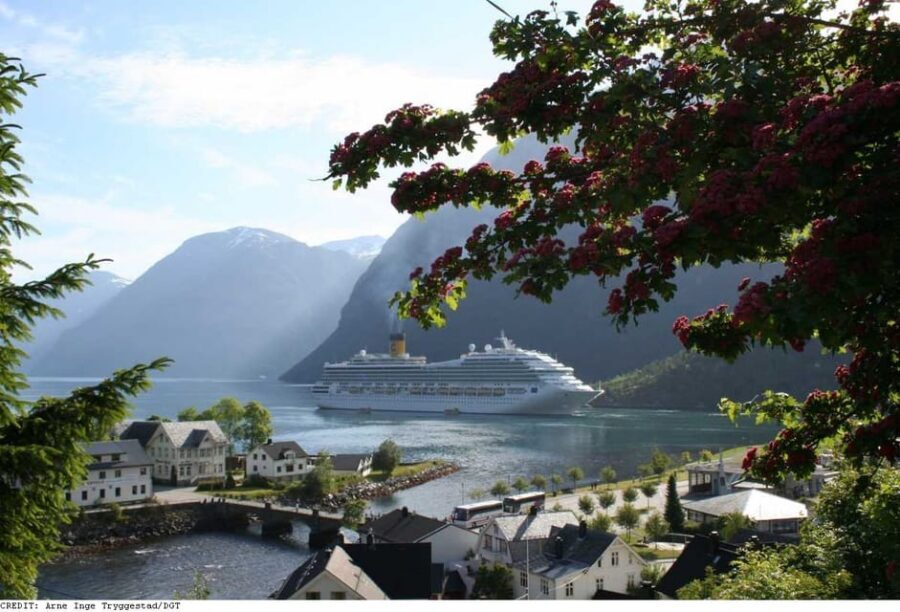
After pickup at the port area, the route heads toward Geiranger with a series of “eyes-on” stops that build a story as you go. One of the first big moments is Hornindal Lake, famous for being Europe’s and Norway’s deepest lake—measured at 514 meters. Even if you don’t stand for long, it’s the kind of fact that changes how you look at the water once you’re close.
Next comes Stryn, a charming small town where you can stretch your legs and usually find clothing stores and easy walking streets. I like this kind of pause because it breaks up the bus time without derailing the day. It also gives you a chance to grab something for later if you want to avoid paying for snacks only at the end.
You’ll also pass Oppstryn Lake along the way, and that helps connect the dots between the fjord-region look and the deeper mountain valleys ahead. It’s not a “one stop, one view” kind of tour. It’s a layered route.
Jostedalsbreen Nasjonalparksenter and Øvstefossen: short stops, big meaning
One of the most useful photo and learning stops is Jostedalsbreen Nasjonalparksenter. If you care about glaciers (and you’re in Norway, so you probably should), this is where the day shifts from pure scenic sightseeing into why these places matter. With your guide pointing out glacier and UNESCO Heritage Area context, you’ll be better at reading the terrain when you’re later looking down from high points.
You’ll also make a short photo stop at Øvstefossen waterfall. This one is quick by design, so don’t plan a long linger. Think of it as a visual punctuation mark—something to remind you that the waterfalls aren’t just a rumor in Geiranger, they’re a recurring theme along the route.
The pace here is real. Stops tend to be just long enough to look, take a few photos, and reset for the next drive.
Djupvatn and Dalsnibba: the two stops that do the heavy lifting
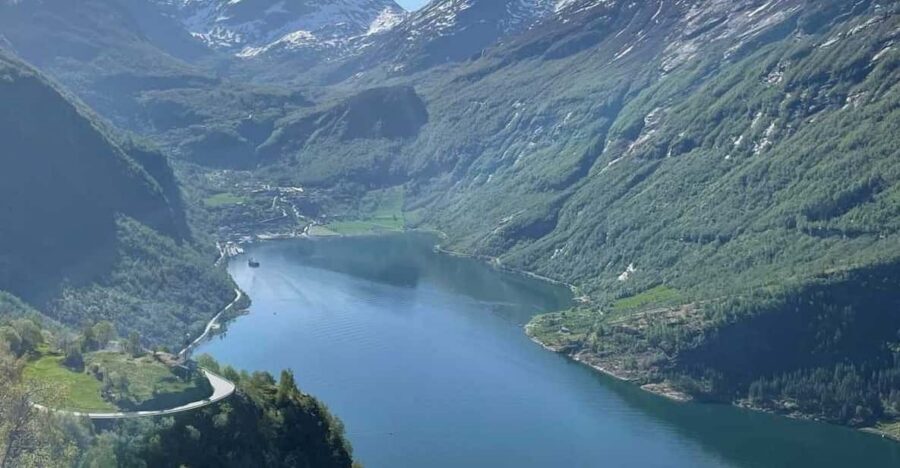
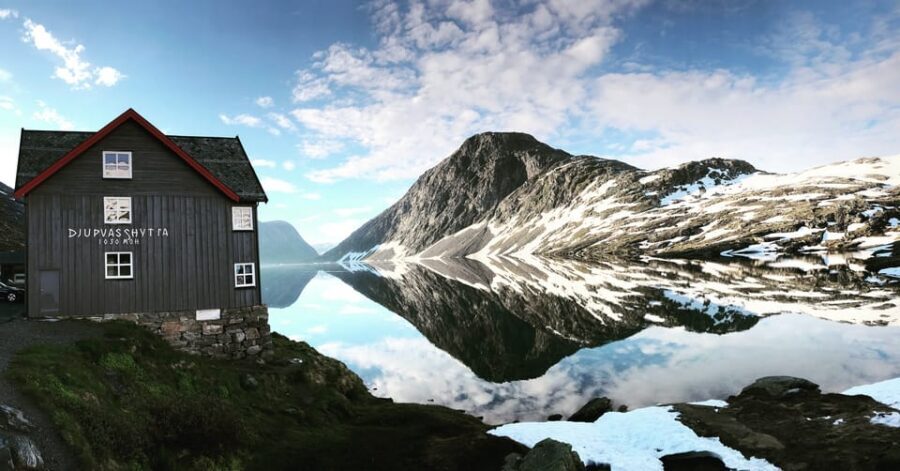
Eventually you reach two of the most impressive highlights: Djupvatn Lake and Dalsnibba. Djupvatn lands early enough to get you excited, but it’s the mountain-top finale that usually earns the biggest reactions.
Djupvatn Lake
Djupvatn is a “sit up and pay attention” moment. It’s dramatic and it’s one more reminder that the fjord country is also deep, high, and rugged inland—not just coastal cliffs and cruise ships.
Dalsnibba at about 1,500 m
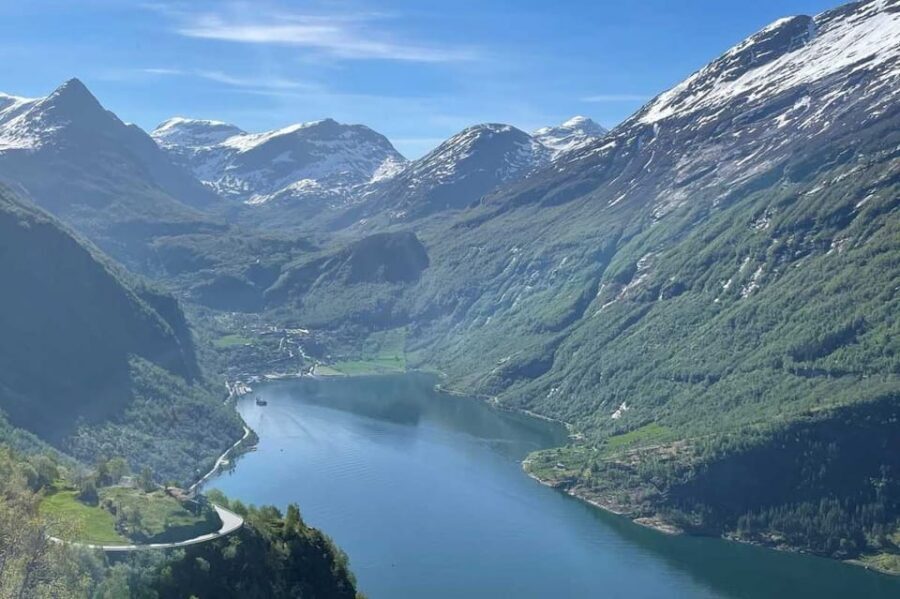
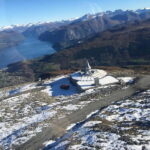
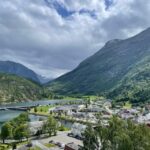
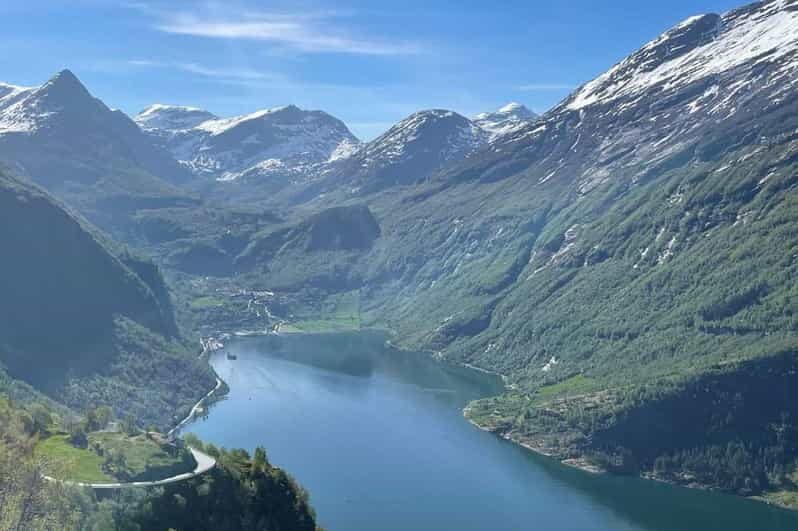
Then you climb to the top of Dalsnibba, at roughly 1,500 meters above sea level. From there, you can see the village of Geiranger, the Eagle Bend area, and surrounding waterfalls. If you want the classic Geiranger perspective—wide, layered, and a little mind-bending—this is the stop that gives it to you.
In bad visibility, you still get the experience of being up there, but you may wish for clearer weather. On one recent run, even snow showed up and visibility wasn’t great. The takeaway is simple: your best photos are weather-dependent.
The Geiranger Skywalk: panoramic views that feel like a shortcut to the classics
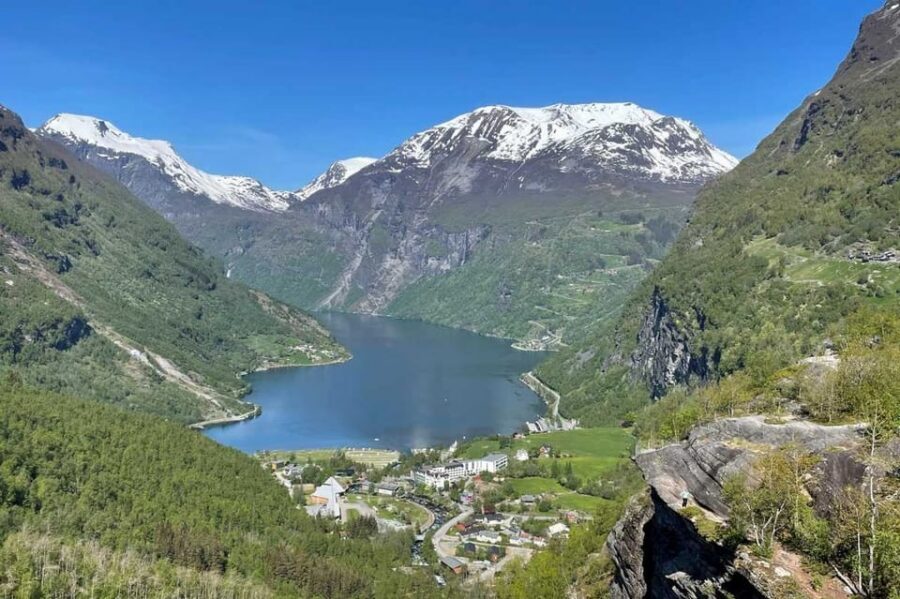
This tour includes a chance to cross the Geiranger Skywalk for panoramic views. That matters because Skywalk-style viewpoints compress a whole bunch of “where should I look first” confusion into one guided moment.
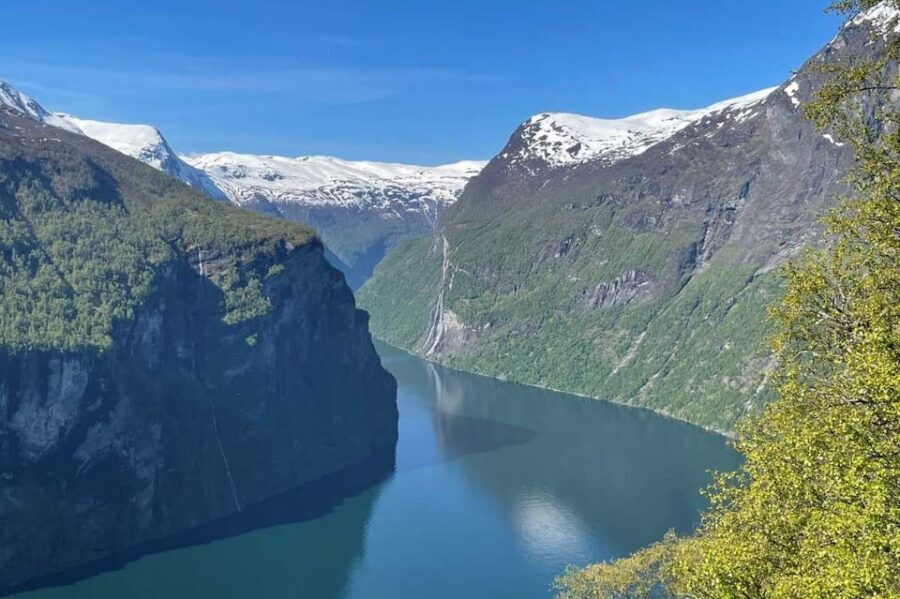
From up there, you can orient yourself quickly: where the village sits, how waterfalls spill through the slopes, and how the curves and bends relate to the roads below. If you’ve ever looked at Geiranger photos and wondered how everything fits, the Skywalk angle helps you understand it in minutes.
The photos often come out best when you move thoughtfully and don’t rush. Give yourself a minute to find your direction, not just your camera.
Nibbevegen and the road-access reality
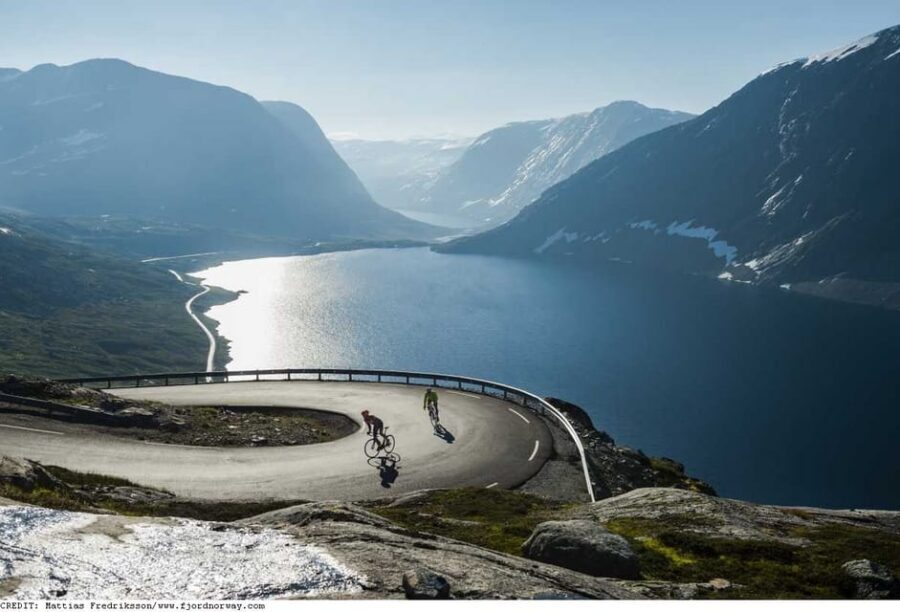
A key operational detail is Nibbevegen—the road that goes off the main road and up toward Dalsnibba’s highest point. It’s open from mid-May to mid-September, and opening hours depend on weather.
If it isn’t open, the tour may skip that stop and substitute an alternative viewpoint in Geiranger instead. This is good to know because it protects your expectations: even if you’ve bookmarked the Dalsnibba-highest-point photo, the day might change.
When weather shifts your schedule (and how to handle it)
Geiranger weather can change quickly. That affects more than comfort—it affects which places you actually reach. The tour also notes that the Dalsnibba visit depends on favorable weather. If access or conditions don’t work, it will be substituted.
In practice, delays from sun, rain, or even snow can push the day behind schedule. On at least one run, that meant missing later Geiranger viewpoints like Seven Sisters waterfalls due to the weather-driven timing. You can’t control that part, but you can control your attitude: go in expecting that the order of stops can vary, and your overall score will stay high.
Price and timing: is $188 worth it for a cruise shore day?
At $188 per person, this isn’t a budget outing. The value comes from what you’re buying: a full day of guided transport around multiple high-impact sights, plus the Dalsnibba road toll fee and transportation itself.
You’re also getting something that matters on cruises: a back-to-ship guarantee. The tour must end 1 hour prior to your ship’s departure (as long as your cruise ship name is registered during booking). That’s a big deal for stress levels. Time anxiety kills fun fast, and this tour is built to reduce it.
What’s not included is equally important. Food and beverages are not provided. That means you should budget for snacks and simple meals during stops. One downside I’d plan for: breaks can be short, and lunch may end up being more grab-and-go than a long sit-down meal.
So the “value math” is: you pay for guided transport and high viewpoints, and you handle your own eating. If that fits your style, the price makes sense for a cruise day.
Who this excursion suits best (and who should skip)
This tour is best if you:
- Want big scenery without renting a car
- Like guided context about glaciers and the UNESCO area
- Enjoy panoramic viewpoints from higher elevations
- Can handle a long bus day with regular but brief stops
It’s also a good fit for people who want a structured route with clear meeting instructions and a guide who’s part storyteller, part logistics manager. In the team dynamic, names like Malina (guide) and Tom (driver) have shown up for recent departures, and that kind of consistent operating matters on a tight cruise schedule.
You might want to skip this one if you have back problems or heart problems, since the day involves significant riding and the reality of mountain roads. Also note the restrictions: pets aren’t allowed, and non-folding wheelchairs aren’t allowed.
And for families: this is not a stroller-friendly “tiny walk, big breaks” type of outing. If your child needs frequent longer pauses, the structure may feel tight.
Small practical tips that make the day smoother
A few things I’d do to make this tour feel easier:
- Bring a layer. Mountain viewpoints plus changing weather can go from chilly to colder fast.
- Plan snacks. Food isn’t included, and stops can be short.
- Aim for quick photos, then pause to actually look. The Skywalk and Dalsnibba views reward a slower scan.
- Be ready for substitution. If Dalsnibba access or specific viewpoints change, go with the flow and you’ll still get the core experience.
- If you booked around your cruise, make sure your cruise ship name and a working mobile number are correct. The tour notes there’s no refund if you can’t be contacted with the registered number.
Should you book this Geiranger shore tour?
I think you should book if your priority is classic Geiranger viewpoints with guided context, and you like the idea of a cruise-day plan that’s built to get you back on time. This is one of those excursions where the “big payoff” moments—Djupvatn, Dalsnibba, and the Skywalk—do most of the work for your photos and your sense of place.
I’d skip it if you hate long bus days, need long meal stops, or have mobility/health constraints that make mountain driving and short walking breaks hard. Also consider weather: if you’re going in peak fog/rain or you’re extremely sensitive to schedule changes, you’re taking a small gamble with visibility and which stops make it.
If that trade-off sounds okay, this is a strong way to see Geiranger’s UNESCO world without the stress of arranging your own transport for a single cruise day.
FAQ
How long is this excursion?
The duration is listed as 450 minutes, about 7.5 hours.
Where do I meet the guide in Hellesylt?
You meet at Coop Marked Hellesylt (Hellesyltvegen 45-47), next to the local school and beside the Joker market. It’s a very short walk from the pier.
What’s included in the price?
Included items are the sightseeing bus trip, transportation, guide, Dalsnibba privat road toll fee, and a back-in-time guarantee for cruise passengers.
How does the back-to-ship guarantee work?
For cruise passengers, the tour ends 1 hour prior to your ship’s departure. The guarantee is offered if your cruise ship name is registered during booking.
Which major stops should I expect on the route?
You’ll travel via the Hornindal Lake area, stop in Stryn, pass Oppstryn Lake, visit Jostedalsbreen Nasjonalparksenter for a photostop, see Øvstefossen waterfall, and then reach Djupvatn Lake and Dalsnibba.
Can the Dalsnibba stop be skipped or changed?
Yes. The visit to Dalsnibba depends on favorable weather. If it can’t be accessed, it will be substituted.
Is Nibbevegen always available?
No. Nibbevegen is open from mid-May to mid-September, and opening depends on weather conditions. If it’s not open, the tour may skip that stop and offer an alternative in Geiranger.
Is the tour suitable for everyone?
It’s not suitable for people with back problems or heart problems. Pets aren’t allowed, and non-folding wheelchairs aren’t allowed.