REVIEW · BERGEN
Bergen: paint Norwegian landscape with watercolor
Book on GetYourGuide →Operated by Markowska Art · Bookable on GetYourGuide
Bergen can feel big and busy. Then this turns it into something quiet and hands-on: painting the fjords on paper with guidance from Joanne at JM Atelier. I really like the small-group feel (limited to 6) and the fact you leave with a finished souvenir that actually looks like your time in Bergen. One consideration: there are no aprons provided, so plan on having at least some paint-safe clothing.
This 2.5-hour class keeps things moving, but it never feels rushed. You’ll practice core watercolor skills, including how to build things like a sky and trees, with English instruction that works whether you’ve never painted or you already know your way around pigments. If you’re hoping for a big sightseeing tour with lots of walking, this isn’t it. This is time inside an atelier making art you can frame.
In This Review
- Quick hits before you go
- Entering JM Atelier: a calm pocket in the city center
- What you paint in Bergen: fjords, sky, and trees on paper
- The 2.5-hour flow: how the class actually moves
- Watercolor techniques you’ll understand, not just copy
- Why the small group (6 max) changes everything
- Value check: is $89 worth a 2.5-hour workshop?
- Who this is best for in Bergen
- Should you book this fjord watercolor class?
- FAQ
- Do I need any prior painting experience?
- What is included in the ticket price?
- How long is the workshop?
- Is the class taught in English?
- What should I wear if I’m worried about paint?
- Is it accessible for children or wheelchairs?
Quick hits before you go
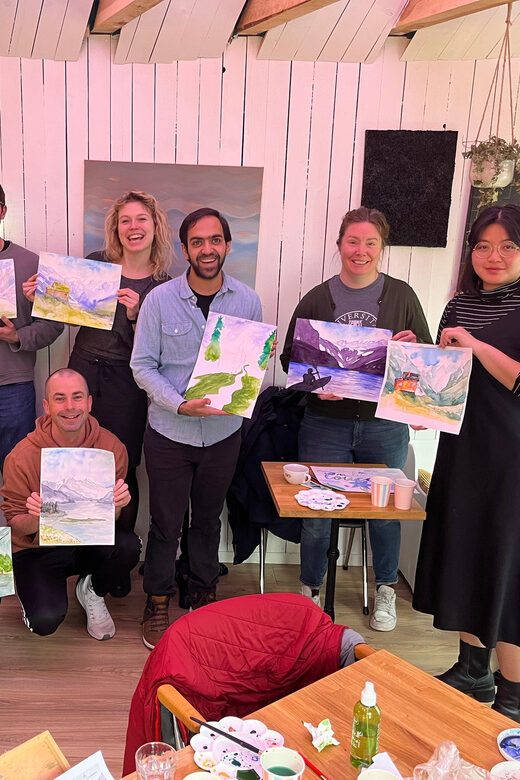
- A fjord scene you can take home: you’ll paint a typical Norwegian outdoor view as a personal keepsake.
- All materials included: brushes, paint, and paper are provided, so you can show up ready.
- Small group of 6: you get hands-on help while you work.
- Joanne’s teaching style: patient, encouraging, and practical, with guidance step-by-step.
- Coffee, tea, and water are included, which makes the session feel relaxed.
- No skill level required: it’s set up for both beginners and more experienced painters.
Entering JM Atelier: a calm pocket in the city center
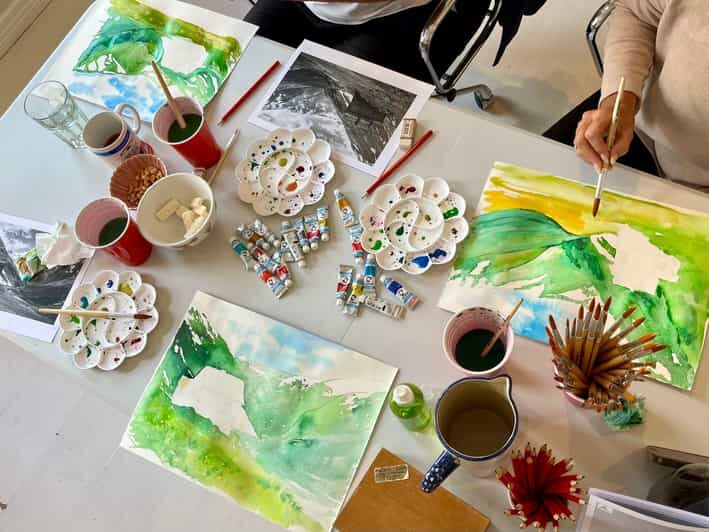
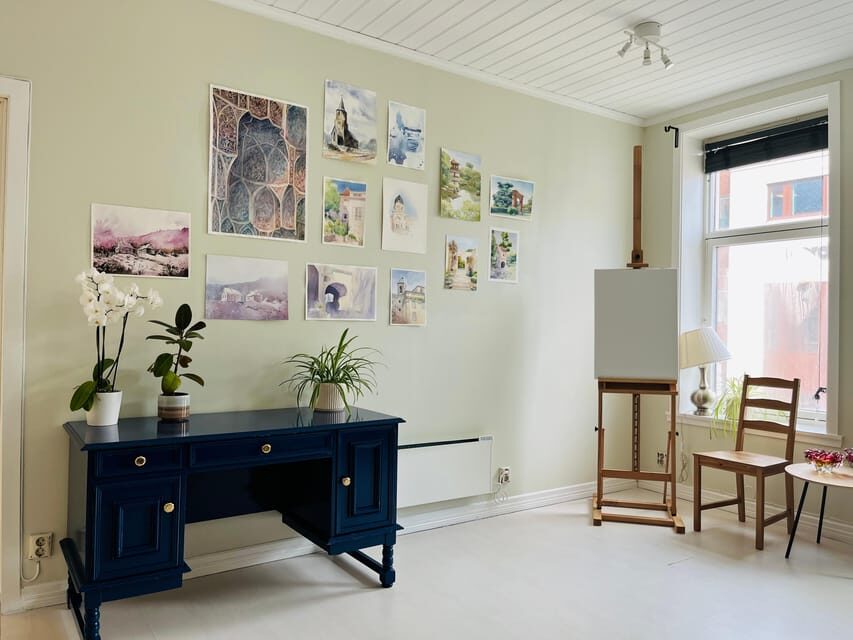
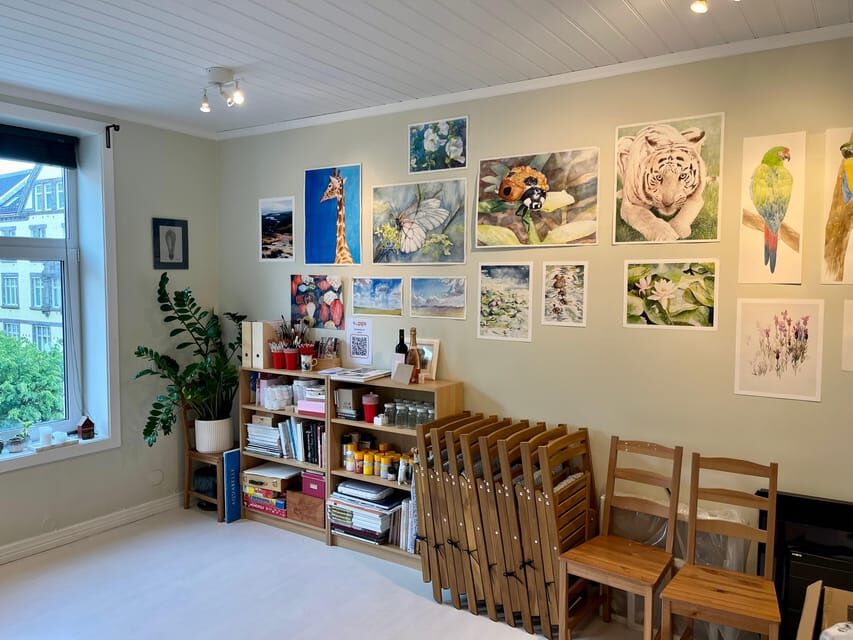
The class happens at JM Atelier, a private art studio in the heart of Bergen. When you arrive, look for the door on the corner of the building—that’s your meeting point. It’s the kind of place that makes you slow down the second you walk in. Reviews highlight a studio that feels cosy, bright, and atmospheric, with enough quiet focus that you can actually hear the instructor’s tips.
You’ll also appreciate the setup right away: everything needed for watercolor is there, so you’re not trying to hunt down supplies on a tight travel schedule. And because the group is capped at six, the room doesn’t feel crowded or chaotic. That matters, because watercolor rewards patience, and you need a little space to experiment.
Plan to arrive 10–15 minutes early. Not for a strict reason, but so you can settle, pick up materials, and start without stress. One of the best parts of this workshop is how smoothly it flows once everyone is seated and painting.
You can also read our reviews of more tours and experiences in Bergen.
What you paint in Bergen: fjords, sky, and trees on paper
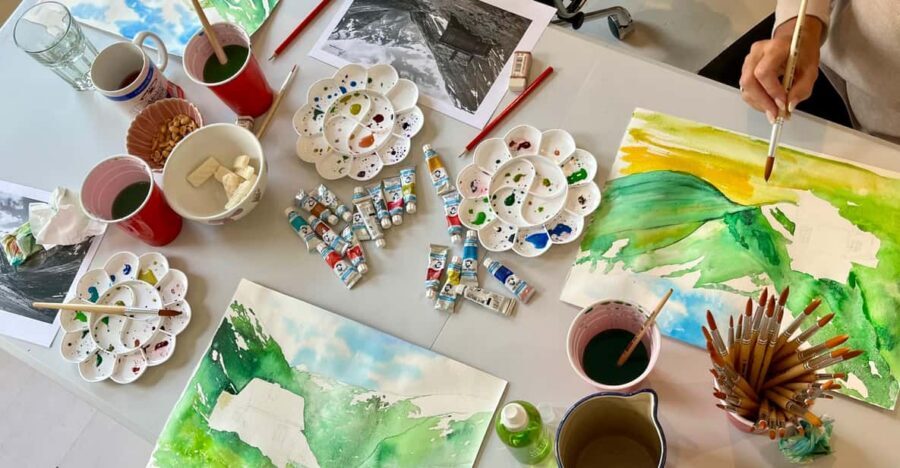
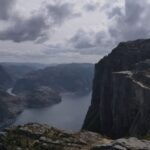
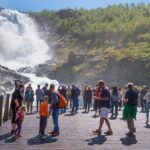
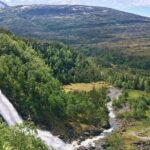
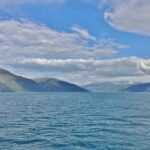
The goal is simple and satisfying: create your own painting inspired by Bergen’s fjords and typical Norwegian outdoor scenery. The subject is chosen so you can translate what you see in Norway into shapes, tones, and layers—even if you’ve never held a brush before.
From what I see in the lesson style and what people report after class, the instructor focuses on real-world components of the scene: sky and trees show up as key elements. Even people starting from zero say they got help figuring out how to paint those parts, which is exactly where most beginners get stuck.
What you end up with isn’t just a generic watercolor card. The workshop is meant to help you build a recognizable fjord view, with enough guidance that your result looks like you did something on purpose. It’s also a great memory-maker. Instead of only collecting photos, you’ll have something you can frame and keep in your home.
A small but meaningful detail: you’ll experiment with different papers, brushes, and pigments during the class. That gives you a feel for how watercolor behaves depending on materials, which is half the magic of the medium. You’ll notice differences in how edges soften, how colors spread, and how layers interact.
The 2.5-hour flow: how the class actually moves
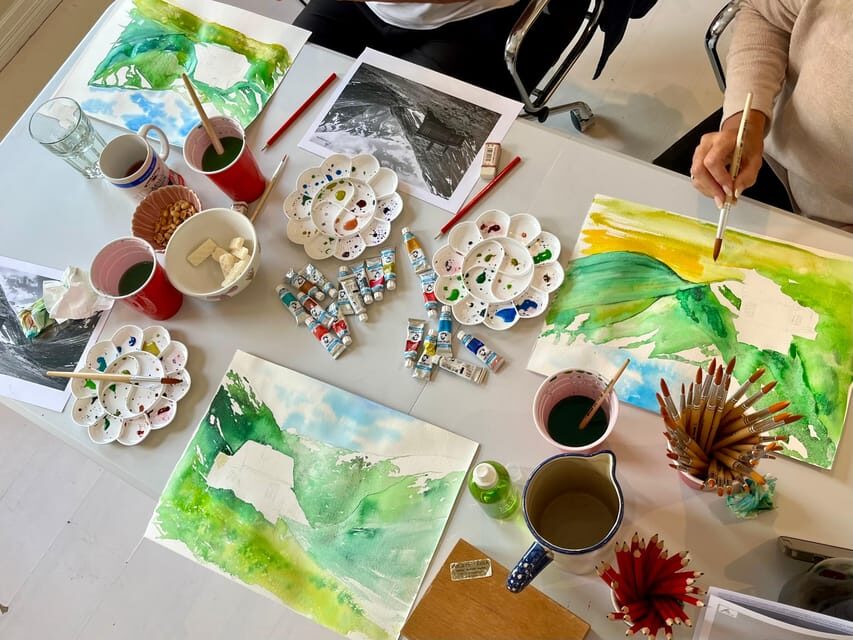
This is a short workshop by design. Two and a half hours gives you enough time to learn, make mistakes, and still finish with a piece you feel proud of. Here’s how the experience typically unfolds in a way that helps you stay calm and productive.
First, you start with basic orientation. You’ll receive guidance on how watercolor works, and you’ll use the supplies provided rather than worrying about what to bring. Then you begin painting, with support as you go. People mention that the teaching is easy to follow and that Joanne takes the time to guide each person through the exercise. In practice, that means you’re not left staring at your paper hoping it turns out.
Next comes the technique part. The class includes practice with different papers and materials, so you can feel how your choices affect the final look. If you run into trouble—like getting trees or sky to look right—you get help on the spot. This is one of those activities where the guidance is the difference between messy and meaningful.
Finally, you reach the finish line. The workshop is structured to get you to a completed souvenir rather than a half-done study. That matters for value: at $89, you don’t just want to try a hobby. You want a tangible result you’ll keep.
And yes, you’re not painting the whole time without a pause. Coffee, tea, and water are included, which helps keep the energy steady, especially if you arrive after a day of Bergen walking.
Watercolor techniques you’ll understand, not just copy
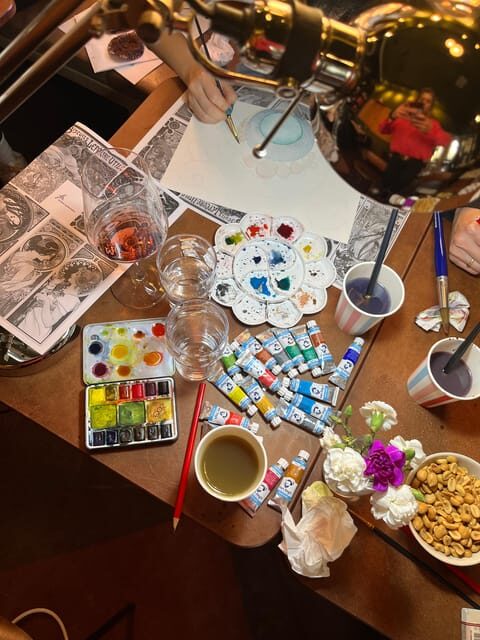
Many classes teach steps. This one tries to make you understand what’s happening. That’s why people who were total beginners still talk about learning a lot and feeling confident by the end.
Joanne explains core watercolor techniques and then has you apply them during the session. That format works because you can ask questions while you still have the problem in front of you. Reviews repeatedly mention instruction that is clear, patient, and encouraging—so you don’t feel judged for your first attempt at a sky wash or a tree shape.
Here are the practical takeaways you can reasonably expect to carry beyond the workshop:
- How to handle water and paint so you don’t end up with muddy color.
- How to layer for depth, instead of trying to get everything right in one pass.
- How to build recognizable elements (like trees and sky) through simpler shapes.
- How paper choice changes the look—so you can make better decisions next time you paint.
You don’t need prior skill to benefit. The class is set up for both beginners and advanced artists, which also means the pacing and feedback adjust to the room. One review describes a quieter day with undivided attention, which is a reminder that small group size can translate into more hands-on feedback for you.
If you’re an art person, you’ll likely enjoy the material experimentation. If you’re not, you’ll appreciate how the instructor turns watercolor from a mystery into a set of controllable moves.
Why the small group (6 max) changes everything
I’m a big fan of activities that limit group size. Not because it’s fancy, but because it affects your learning. Here, the group is limited to 6 participants, and it shows.
With fewer people, Joanne can watch what each person is doing and offer targeted guidance. Reviews highlight this directly: people say she takes the time to guide them, and she helps during exercises instead of hovering from a distance.
This also changes the emotional tone of the class. Several reviews mention feeling welcomed, comfortable, and encouraged. That’s important in a painting workshop because the fear of doing it wrong can freeze people. When you get personal feedback early, you relax and start experimenting—which is when watercolor starts working the way you want.
If you prefer a low-pressure souvenir activity, this is it. You’re not competing with anyone’s style. You’re building skills and a piece of art at your own pace, with the instructor close enough to help you fix problems before they get too far out of hand.
Value check: is $89 worth a 2.5-hour workshop?
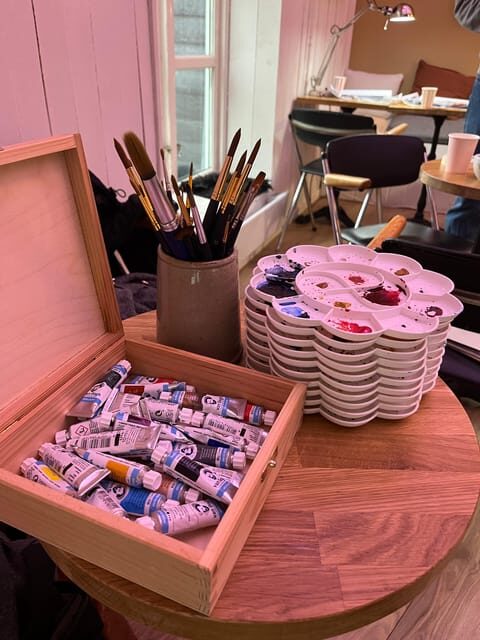
At $89 per person for 2.5 hours, this isn’t a budget “try it once” activity. But it doesn’t feel overpriced either, mainly because of what’s included.
You’re getting:
- all supplies (brushes, paint, paper),
- instruction in English,
- coffee, tea, and water,
- and a finished painting you can take home.
That combination is the value equation. You’re not paying for a lecture and then buying materials separately. You’re paying for guided making, in a small studio, with materials included. For many travelers, the finished souvenir is the biggest payoff. It’s something personal that you’ll keep longer than a postcard.
One more way to look at it: watercolor is a skill you can reuse. Even if you never become an artist, the workshop teaches you enough about the medium that you can understand why certain watercolor looks the way it does. That makes the experience feel more useful than a one-off craft.
If you’re short on time in Bergen, a 2.5-hour session is also a practical length. You can fit it around museums, the harbor, or day trips without blowing your whole schedule.
Who this is best for in Bergen
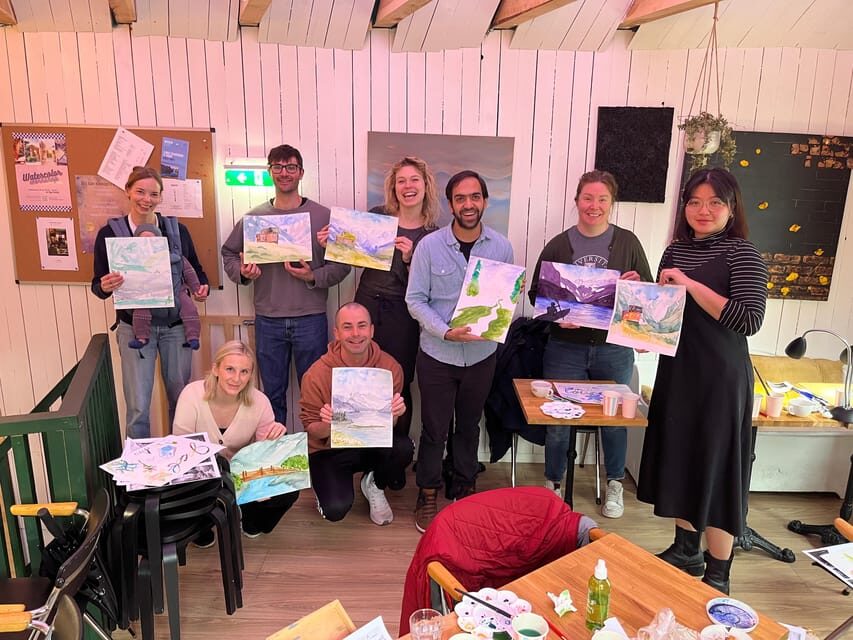
This workshop is built for a wide range of people. You do not need a specific skill set. Beginners can start from scratch, and more experienced artists can still benefit from material choices and technique focus.
It’s a good fit if you:
- want a distinctive Bergen keepsake you can frame,
- like hands-on activities more than long tours,
- prefer learning with one-on-one guidance in a small room,
- and enjoy calm, creative time during a trip that may otherwise feel fast.
It’s less of a fit if you want an outdoor-heavy excursion with lots of stops. This is inside an atelier making art.
Also note the limits: it’s not suitable for children under 8 and it’s not designed for wheelchair users. If mobility is a concern for you, double-check before booking.
Should you book this fjord watercolor class?
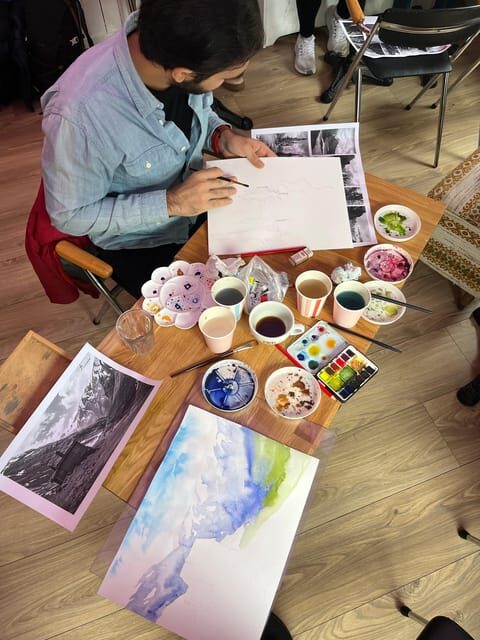
Yes, I think you should book it if you want something memorable that’s truly yours. The biggest reasons are practical: materials are included, the group stays small, and Joanne’s teaching approach is described as patient, encouraging, and specific. You don’t have to fake confidence or worry you’ll be left behind with a blank page.
Skip it if you’re looking for a sightseeing tour, or if you’re highly sensitive about clothing (since there are no aprons provided). For most people, watercolor stains are easier to manage than oil-based ones, but it’s still smart to wear clothes you won’t mind if a spot happens.
FAQ
Do I need any prior painting experience?
No skill set is required. The workshop is suitable for both beginners and advanced artists, and you’ll receive guidance throughout the class.
What is included in the ticket price?
All necessary supplies are included, including brushes, paint, and paper. Coffee, tea, and water are also served during the workshop.
How long is the workshop?
The duration is 2.5 hours.
Is the class taught in English?
Yes, the instructor teaches in English.
What should I wear if I’m worried about paint?
Aprons are not provided. Watercolor stains are generally easier to remove than oil-based paint stains, but it’s still smart to wear clothing you can comfortably risk.
Is it accessible for children or wheelchairs?
It is not suitable for children under 8 years, and it is not suitable for wheelchair users.